

Understanding How Long vs How Much Time can feel confusing at first. Many people mix them up, even adults. But don’t worry—this guide will make it super easy. By the end, you’ll know exactly when to use each one without guessing.
Let’s break it down in a simple and friendly way. No hard grammar rules. Just clear ideas, real examples, and easy tips.
Why People Get Confused About How Long vs How Much Time
Many learners struggle with How Long vs How Much Time because both talk about time. At first glance, they seem the same. But they are not.
The confusion usually happens because both questions ask about duration. They both deal with time. So people think they can use them in the same way. That’s where mistakes begin.
In real life, we use them differently. One is used for duration. The other is used for quantity. If you don’t know this difference, your sentences can sound strange.
I remember when I was learning English. I used “how much time” for everything. It sounded okay to me, but native speakers used “how long” more often. That made me curious, and I learned the difference.
The good news is this: once you understand the basic idea, it becomes very easy.
What Does “How Long” Mean?
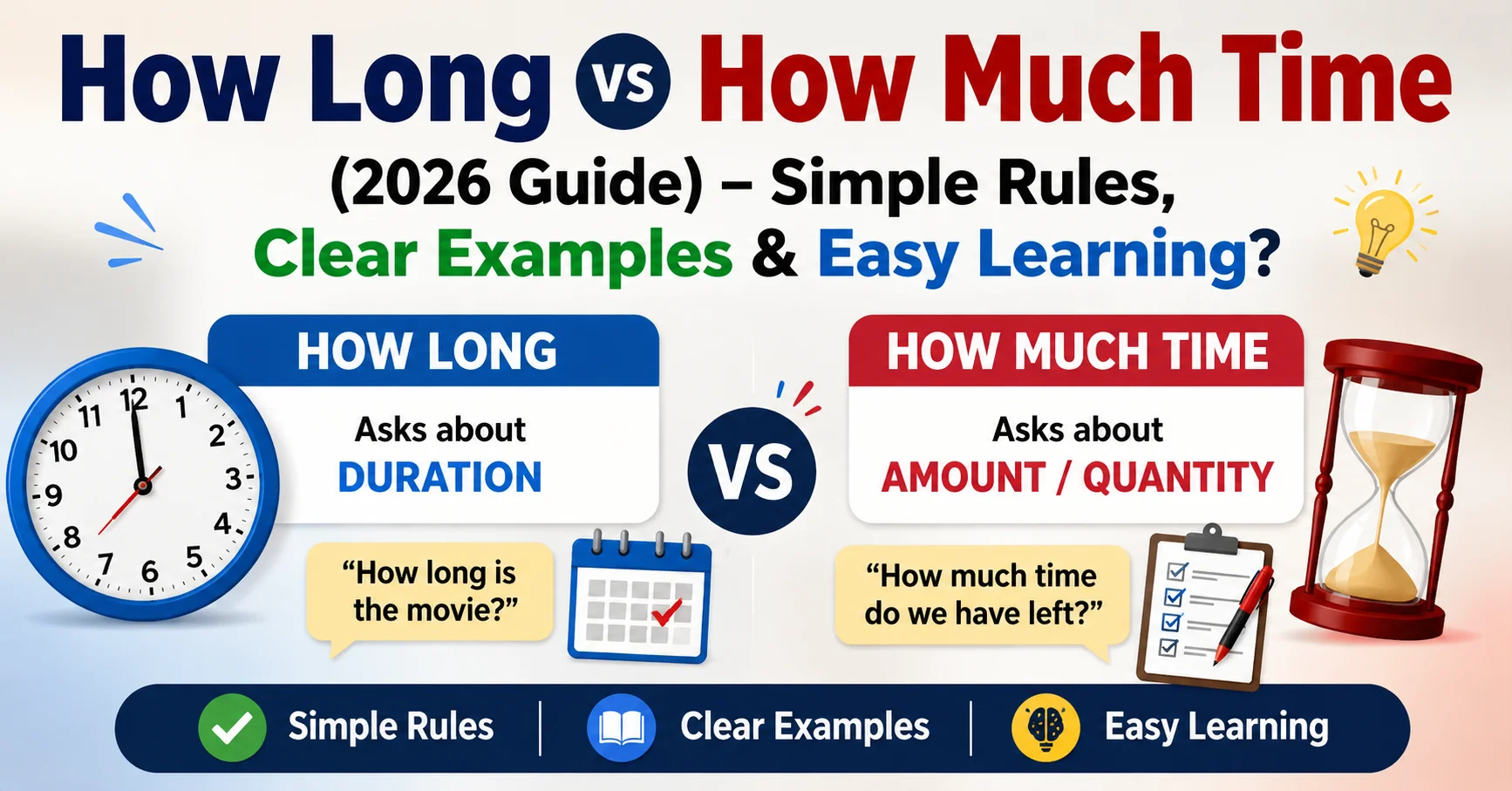
“How long” is used to ask about duration. It means the length of time something takes or lasts.
When you ask “how long,” you want to know the total time. It could be minutes, hours, days, or even years.
For example:
- How long is the movie?
- How long will the trip take?
- How long did you study?
In each case, you are asking about duration. You want a clear answer like “2 hours” or “3 days.”
Think of “how long” as a measuring tool. It measures time from start to end.
This is why “how long” is used more in daily conversation. People often talk about how long things take.
So, when you think of How Long vs How Much Time, remember this:
👉 “How long” = duration or total time.
What Does “How Much Time” Mean?
“How much time” is used to ask about the amount of time available or needed.
It focuses more on quantity, not duration. It often sounds more formal or specific.
For example:
- How much time do we have left?
- How much time do you need?
- How much time is required for this task?
Here, you are not just asking for duration. You are asking about how much time is available or needed.
This phrase is common in planning, work, or school settings. It is used when talking about limits or requirements.
When comparing How Long vs How Much Time, think of this:
👉 “How much time” = amount or quantity of time.
Key Difference Between How Long vs How Much Time
Let’s make it super simple.
| Feature | How Long | How Much Time |
|---|---|---|
| Meaning | Duration | Quantity |
| Use | General | Specific |
| Tone | Casual | Slightly formal |
| Example | How long is the meeting? | How much time do we have? |
The main difference is clear. One asks about length. The other asks about amount.
If you remember just this, you will avoid most mistakes.
When to Use “How Long” in Daily Life
You will use “how long” very often in daily conversation. It is simple and natural.
You can use it when asking about time for activities, events, or actions.
Examples:
- How long does it take to cook rice?
- How long is your class?
- How long did you sleep?
These questions are common. People use them every day.
From my experience, “how long” feels more natural in friendly talks. It is quick and easy to say.
So, if you are unsure in casual conversation, “how long” is usually a safe choice.
When to Use “How Much Time” Correctly
“How much time” is better when talking about limits or needs.
It works well in situations where time is controlled or measured carefully.
Examples:
- How much time do we have before the exam?
- How much time is needed to finish this project?
- How much time should I spend on homework?
This phrase is common in school and work. It helps when planning tasks.
When learning How Long vs How Much Time, this is a key tip:
👉 Use “how much time” when talking about availability or requirements.
Easy Trick to Remember the Difference
Here’s a simple trick that works every time.
Ask yourself:
👉 Am I asking about length or amount?
- If it’s length → use “how long”
- If it’s amount → use “how much time”
Let’s test it:
- ___ is the movie? → length → “How long”
- ___ do we have left? → amount → “How much time”
This trick is easy and quick. Even kids can use it.
Common Mistakes in How Long vs How Much Time
Many learners make small mistakes. Let’s fix them.
❌ Wrong: How much time is the movie?
✔ Correct: How long is the movie?
❌ Wrong: How long time do we have?
✔ Correct: How much time do we have?
❌ Wrong: How long do you need for homework? (sometimes okay, but less clear)
✔ Better: How much time do you need?
These mistakes are common. Don’t worry if you’ve made them before.
The important thing is to learn and improve.
Real-Life Examples for Better Understanding
Let’s look at real situations.
Imagine you are planning a trip. You ask:
👉 How long is the journey? (duration)
Now imagine you are late. You ask:
👉 How much time do we have before the train leaves? (amount)
Another example:
- How long was the meeting?
- How much time did you spend preparing?
Both are correct, but they focus on different things.
This is why understanding How Long vs How Much Time is so useful.
Practice Table for Quick Learning
Here’s a quick practice table:
| Situation | Correct Phrase |
|---|---|
| Asking about a movie duration | How long |
| Asking about free time | How much time |
| Asking about study duration | How long |
| Asking about time needed | How much time |
Use this table to test yourself.
How Native Speakers Use These Phrases
Native speakers mostly use “how long” in daily speech. It is more common and sounds natural.
“How much time” is used when they want to be more clear or specific.
For example, teachers often say:
👉 “How much time do you need?”
Friends usually say:
👉 “How long will it take?”
Understanding this difference helps you sound more natural.
Why Learning This Difference Matters
You might think this topic is small. But it is very important.
Using the wrong phrase can confuse people. It can also make your English sound less natural.
When you use the correct phrase, your communication improves. People understand you better.
Also, it builds confidence. You don’t have to guess anymore.
That’s why learning How Long vs How Much Time is worth it.
Advanced Tip for Better Fluency
Here’s a simple tip to improve faster.
Listen to how people speak. Watch movies or videos in English.
Notice when they use “how long” and “how much time.”
Try to copy their style. Practice speaking out loud.
From my experience, this method works very well. It helps you learn naturally.
Quick Comparison Table
| Question Type | Example | Meaning |
|---|---|---|
| How long | How long is the class? | Duration |
| How much time | How much time is left? | Quantity |
| How long | How long did it take? | Duration |
| How much time | How much time do you need? | Amount |
Keep this table in mind while practicing.
FAQs About How Long vs How Much Time
1. Can I use “how long” and “how much time” in the same sentence?
Yes, but it’s rare. They usually serve different purposes. It’s better to use one clearly.
2. Which one is more common in daily speech?
“How long” is more common in casual conversation.
3. Is “how much time” more formal?
Yes, it often sounds more formal or specific.
4. Can both be correct in some cases?
Sometimes yes, but the meaning changes slightly. One focuses on duration, the other on amount.
5. What is the easiest way to remember the difference?
Think: length = “how long,” amount = “how much time.”
Conclusion: Master How Long vs How Much Time Easily
Learning How Long vs How Much Time is not hard. You just need to understand one simple idea.
“How long” asks about duration.
“How much time” asks about amount.
Once you know this, everything becomes clear.
Practice daily. Use real examples. Listen to how others speak.
Soon, you will use both phrases naturally without thinking.
Now it’s your turn—try making your own sentences and test yourself.
