


Introduction
Language can be tricky, especially when two phrases sound similar. One common confusion is “Double Check or Double Confirm.” Many people use both in daily conversation, emails, and work chats, but they are not always used correctly. Understanding the difference helps you sound more natural and professional in English writing and speaking.
In this guide, we will clearly explain Double Check or Double Confirm in a simple way. You will learn when to use each phrase, what grammar experts say, and how real people use them in daily life. We will also share examples, tables, and easy tips so even beginners can understand without confusion.
By the end, you will confidently know how to use Double Check or Double Confirm in the right situation. Let’s make English easier, clearer, and more practical for everyday use.
What Does “Double Check or Double Confirm” Really Mean?
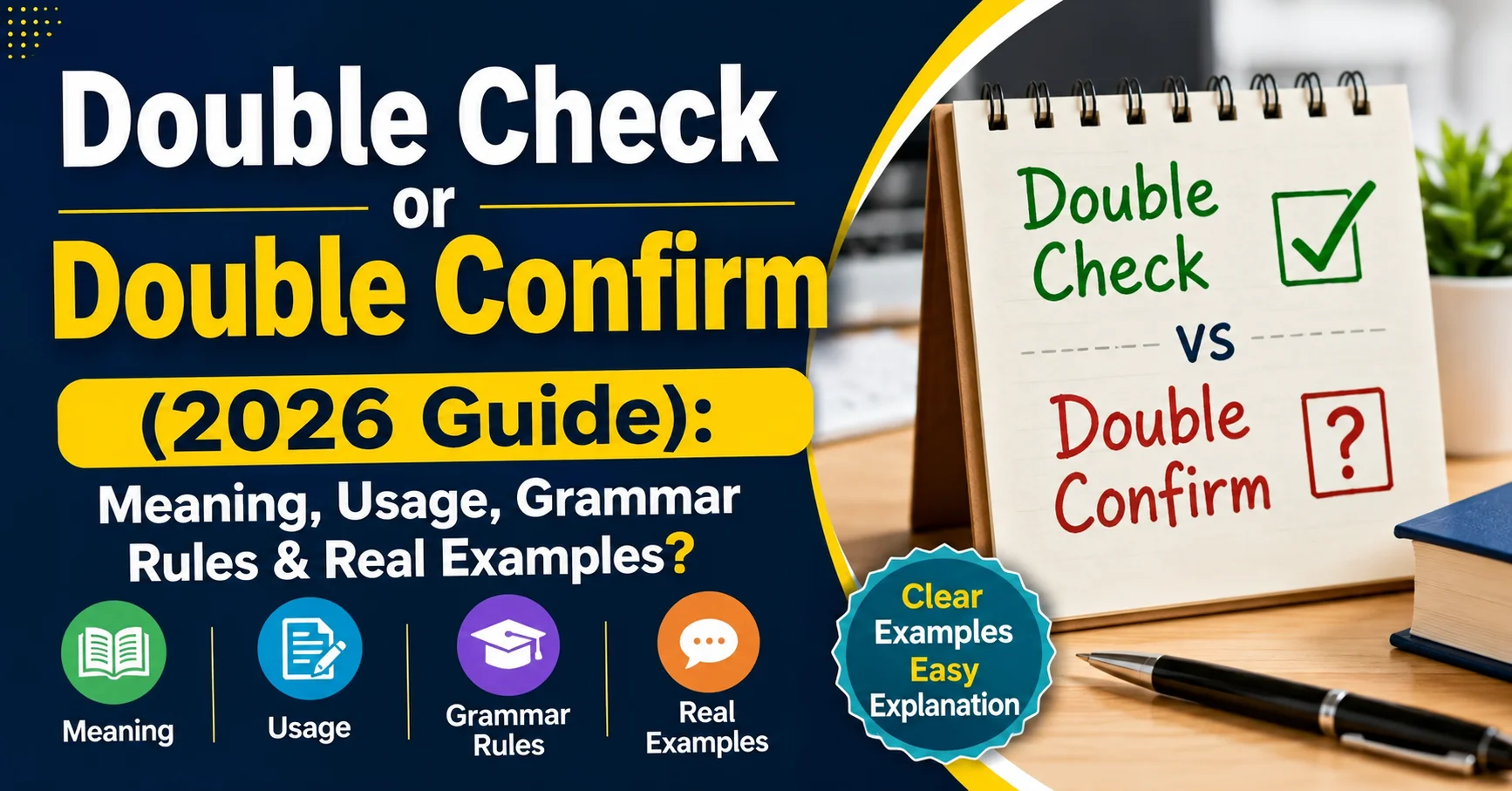
The phrase Double Check or Double Confirm is often used when someone wants to make sure something is correct. “Double check” means to verify something again. It is widely accepted in standard English. On the other hand, “double confirm” is less formal and not always considered grammatically correct in professional writing.
When people say Double Check or Double Confirm, they usually mean checking something twice to avoid mistakes. For example, you might double check an address before sending a parcel. However, native speakers prefer “double check” instead of “double confirm” in most cases.
The key idea behind Double Check or Double Confirm is accuracy and caution. It shows that the person wants to avoid errors and ensure everything is correct before moving forward.
Grammar Explanation: Is “Double Confirm” Correct?
When we look at grammar rules, Double Check or Double Confirm is not equal in correctness. “Double check” is accepted in modern English. “Double confirm,” however, is considered redundant because “confirm” already means to verify something.
So saying “double confirm” is like repeating the same idea twice. It is not commonly used in formal English writing. Instead, people prefer phrases like “confirm again” or simply “verify.”
In everyday speech, you may still hear Double Check or Double Confirm, especially in informal conversations. However, in professional or academic writing, “double check” is always the safer and more correct choice.
Grammar Summary Table
| Phrase | Correct Usage | Formal? | Meaning |
|---|---|---|---|
| Double check | Yes | Yes | Verify again |
| Double confirm | No (redundant) | No | Repeating confirmation |
Understanding this difference helps you use Double Check or Double Confirm more accurately in writing.
Key Difference Between Double Check and Double Confirm
The main difference between Double Check or Double Confirm lies in grammar and clarity. “Double check” is a standard phrase used in English. “Double confirm” is often seen as unnecessary repetition.
When you say double check, you mean reviewing something carefully again. When people say double confirm, they are trying to emphasize extra certainty, but it is not grammatically needed.
Comparison Table
| Feature | Double Check | Double Confirm |
|---|---|---|
| Grammar status | Correct | Incorrect/Redundant |
| Usage frequency | Very common | Rare |
| Formal writing | Acceptable | Not recommended |
| Meaning clarity | Clear | Slightly confusing |
So when choosing Double Check or Double Confirm, always prefer “double check” in writing and professional communication.
When Should You Use “Double Check”?
You should use Double Check or Double Confirm, specifically “double check,” when you want to ensure accuracy. It is common in emails, schoolwork, business communication, and daily life.
For example, you might double check a phone number before calling someone. You might also double check travel details before booking tickets. It helps reduce mistakes and misunderstandings.
Using Double Check or Double Confirm correctly improves communication quality. It shows that you are careful and responsible. That is why many professionals prefer this phrase in workplace conversations.
Usage Context Table
| Situation | Example Action | Use Phrase |
|---|---|---|
| Emails | Check attachments again | Double check |
| Travel booking | Verify flight details | Double check |
| Work reports | Review data accuracy | Double check |
| Messaging | Confirm meeting time | Double check |
When People Say “Double Confirm”
Even though Double Check or Double Confirm is often used together, “double confirm” appears mostly in informal speech. Some people use it when they want to stress strong confirmation.
For example, someone might say, “Can you double confirm the time?” However, in formal English, this is not recommended.
Instead of saying Double Check or Double Confirm, you can use better alternatives like “please confirm again” or “reconfirm.”
The important thing is clarity. If your message is clear, you avoid confusion. That is why language experts suggest using “double check” instead of Double Check or Double Confirm in professional situations.
Real-Life Examples of Usage
Understanding Double Check or Double Confirm becomes easier with real-life examples. In daily communication, people often use it without thinking about grammar rules.
For example:
- “Let me double check the address.”
- “Can you double check the meeting time?”
- “Please double confirm the order details.” (informal usage)
These examples show how Double Check or Double Confirm appears in conversations. However, only “double check” is grammatically preferred.
Using real examples helps learners understand context better. It also improves speaking confidence and writing clarity in English.
Workplace Usage of Double Check or Double Confirm
In professional environments, accuracy is very important. That is why Double Check or Double Confirm is often heard in offices, meetings, and emails.
Employees are usually asked to double check reports, documents, and data before submission. It helps avoid costly mistakes. However, managers typically prefer the term “double check” instead of “double confirm.”
Using Double Check or Double Confirm correctly in the workplace shows attention to detail. It also builds trust with colleagues and clients.
Email and Chat Communication Examples
In digital communication, Double Check or Double Confirm is very common. People use it in emails, WhatsApp messages, and workplace chats.
For example:
- “Please double check the attached file.”
- “Kindly double check the schedule.”
- “Can you double confirm the timing?” (informal tone)
In emails, it is better to use polite and correct grammar. So “double check” is always preferred when using Double Check or Double Confirm in professional writing.
Clear communication reduces misunderstandings and improves response accuracy.
Common Mistakes People Make
Many learners make mistakes when using Double Check or Double Confirm. The most common mistake is thinking both phrases are equally correct.
Another mistake is overusing “double confirm” in formal writing. This can make sentences sound unprofessional or repetitive.
Some people also use Double Check or Double Confirm without understanding the meaning. They assume both mean the same thing, which is not fully correct.
Avoiding these mistakes improves your English fluency and writing quality.
Better Alternatives to Use Instead
Instead of repeating Double Check or Double Confirm, you can use better alternatives. These phrases sound more natural and professional.
For example:
- Verify again
- Recheck
- Confirm once more
- Review carefully
- Cross-check
Alternatives Table
| Original Phrase | Better Alternative |
|---|---|
| Double check | Verify again |
| Double confirm | Confirm again |
| Double check | Recheck |
| Double confirm | Cross-check |
Using these alternatives makes your communication stronger and clearer than Double Check or Double Confirm.
Tips to Remember the Correct Usage
To avoid confusion with Double Check or Double Confirm, remember one simple rule: “double check” is correct, and “double confirm” is not preferred.
Think of “check” as reviewing again. That makes it easy to remember. Whenever you feel unsure, just use “double check.”
Practicing real sentences daily will help you master Double Check or Double Confirm naturally. Over time, it becomes part of your writing habit.
Conclusion
Understanding Double Check or Double Confirm helps improve your English communication skills. While both phrases are commonly heard, only “double check” is widely accepted in formal English.
Using the correct phrase shows clarity, confidence, and professionalism. Whether you are writing emails, chatting with friends, or working in an office, choosing the right wording matters.
Now you know the difference clearly, you can avoid common mistakes and use Double Check or Double Confirm more effectively in daily life. Keep practicing, and your English will become more natural and accurate over time.
FAQs
1. What is the correct phrase: double check or double confirm?
“Double check” is correct. “Double confirm” is not grammatically preferred.
2. Is double confirm wrong in English?
It is not strictly wrong in speech, but it is redundant and informal.
3. Why do people say double confirm?
People use it for emphasis, but it is not needed in formal English.
4. Can I use double check in emails?
Yes, “double check” is perfect for emails and professional writing.
5. What are better alternatives to double confirm?
You can use “confirm again,” “recheck,” or “verify again.”
