


Introduction
If you’ve ever received a message that simply says “DW,” you might pause and wonder what it means. Don’t worry—you’re not alone. Text slang changes fast, and new abbreviations pop up all the time. One of the most common and friendly ones you’ll see today is dw meaning in text.
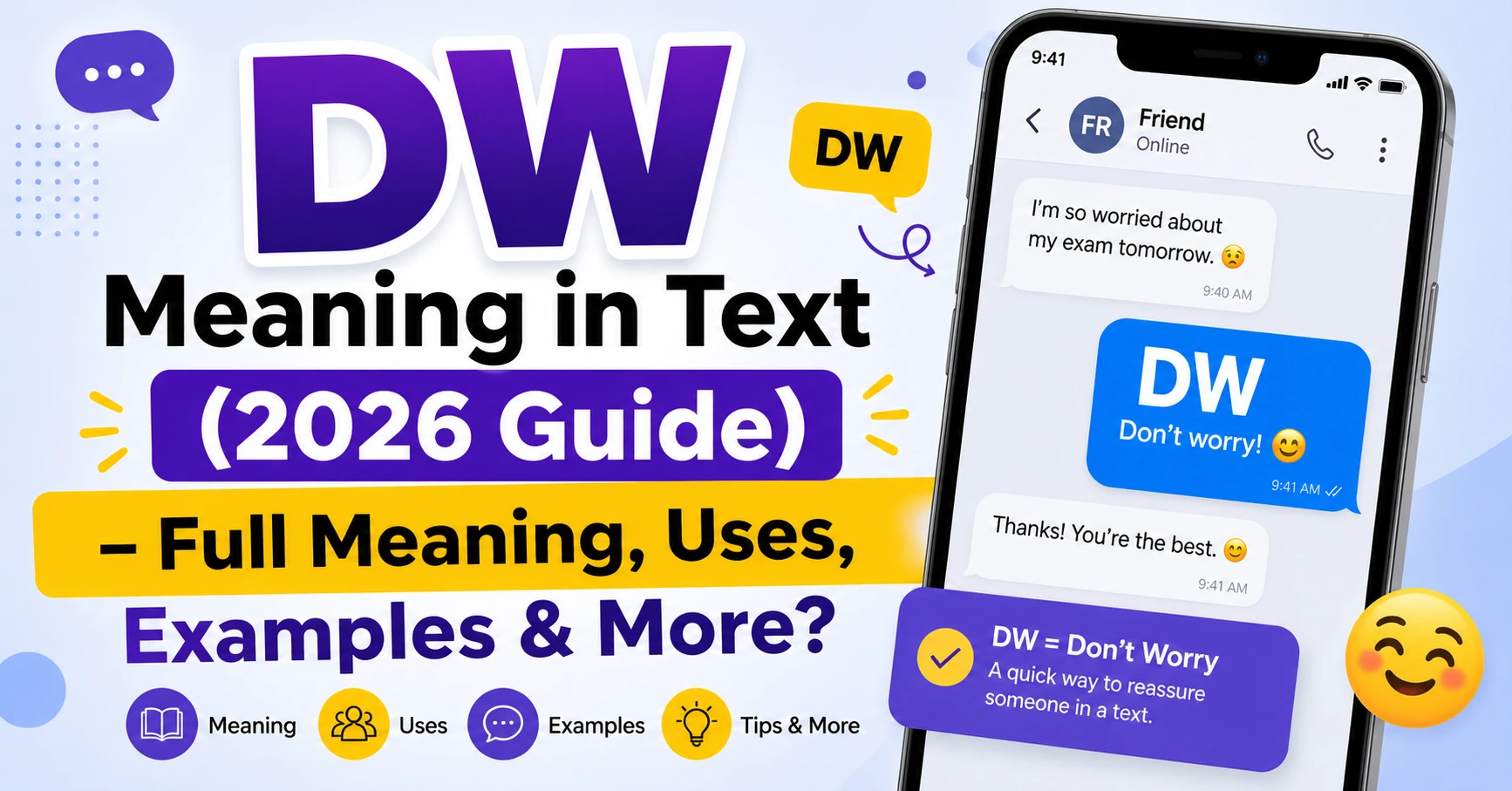
In simple terms, “DW” stands for “Don’t Worry.” It’s a quick and easy way to calm someone, reassure them, or say everything is okay. People use it in casual chats, social media, and even work messages sometimes.
What makes “DW” special is how positive and helpful it sounds. It’s short, kind, and easy to type. That’s why it’s used so often in texting.
In this complete 2026 guide, you’ll learn everything about dw meaning in text, including how to use it, when to use it, real examples, and even mistakes to avoid. By the end, you’ll feel confident using “DW” in your own conversations.
What Does DW Mean in Text?
The phrase dw meaning in text is very simple. It means “Don’t Worry.”
People use it to make someone feel better. It shows that there is no problem or stress. It’s like saying, “It’s okay,” or “No need to stress.”
Here’s a quick example:
- Friend: “Sorry I’m late!”
- You: “DW, it’s fine!”
In this case, “DW” helps reduce tension. It shows kindness and understanding.
The reason “DW” is so popular is that it saves time. Instead of typing a full sentence, you can just type two letters. Yet, it still carries a strong message.
You will often see what does dw mean in text message questions because beginners are confused. But once you learn it, you’ll notice it everywhere.
Why Do People Use DW in Texting?
Now that you understand dw meaning in text, let’s talk about why people use it so much.
First, texting is all about speed. People want to reply quickly. “DW” is faster than typing “don’t worry.” It keeps the conversation moving.
Second, it sounds friendly. It shows care without being too serious. That makes it perfect for casual chats.
Third, it helps avoid conflict. If someone apologizes, saying “DW” can calm them instantly. It creates a relaxed vibe.
For example:
- “DW, mistakes happen.”
- “DW, I’ll handle it.”
In both cases, the tone is soft and supportive.
That’s why dw in text meaning is not just about words. It’s also about emotion. It shows reassurance, kindness, and confidence.
Different Situations Where DW Is Used
The dw meaning in text can be used in many different situations. Let’s explore some common ones.
1. When Someone Apologizes
If someone says sorry, you can reply with “DW.” It means you forgive them.
2. When Someone Is Worried
If your friend is stressed, “DW” helps them relax.
3. When You Want to Reassure
It shows that everything is under control.
4. When Giving Comfort
Sometimes people just need emotional support.
Example:
- “I think I messed up.”
- “DW, you’ll fix it.”
As you can see, what does dw mean in a text depends on the situation, but it always carries a calming tone.
DW Meaning in Text vs Other Similar Slang
Many people confuse dw meaning in text with other slang terms. Let’s compare them.
| Slang | Meaning | Tone | Example |
|---|---|---|---|
| DW | Don’t Worry | Calm, kind | DW, it’s fine |
| NP | No Problem | Casual | NP, I got you |
| IDC | I Don’t Care | Cold | IDC what happens |
| NVM | Never Mind | Neutral | NVM, forget it |
As you can see, “DW” is more comforting than most.
While “NP” is helpful, it lacks emotional warmth. And “IDC” can sound rude.
So, if you want to sound kind, dw mean in text is a better choice.
Examples of DW in Real Conversations
Let’s look at real-life examples to understand what does dw mean in text more clearly.
Example 1
- Person A: “Sorry I forgot to call.”
- Person B: “DW, it’s okay.”
Example 2
- Friend: “I’m nervous about the test.”
- You: “DW, you’ll do great.”
Example 3
- Coworker: “I might miss the deadline.”
- You: “DW, I’ll help you.”
Example 4
- Sibling: “I broke your charger.”
- You: “DW, I have another one.”
These examples show that dw in text meaning always carries reassurance.
When NOT to Use DW
Even though dw meaning in text is useful, there are times when you should avoid it.
First, don’t use it in very serious situations. For example, if someone is dealing with a big problem, “DW” might feel too casual.
Second, avoid using it in formal emails. It may sound unprofessional.
Third, don’t use it if the person needs real help. Sometimes people want action, not just words.
Example of wrong use:
- “I lost my job.”
- “DW.”
This may sound careless. Instead, you should respond with empathy.
So, always think before using what dw mean in text.
DW in Social Media and Online Chats
The dw meaning in text is not limited to texting. It is also very popular on social media platforms.
You’ll see it on:
- Instagram comments
- Snapchat messages
- WhatsApp chats
- Facebook replies
People use it to keep conversations short and friendly.
Example:
- Comment: “Sorry for the late reply!”
- Reply: “DW”
The emoji adds even more warmth.
In online spaces, speed matters. That’s why what does dw mean in text message is searched so often.
Is DW Rude or Polite?
Many people wonder if dw meaning in text is rude. The answer is simple: it depends on how you use it.
In most cases, it is polite and kind. It shows that you care.
However, tone matters. If you use it without emotion, it can feel cold.
Let’s compare:
| Message | Tone |
|---|---|
| DW | Friendly |
| DW. | Neutral |
| DW | Slightly cold |
Adding emojis or extra words makes it warmer.
So, dw mean in text is polite when used correctly.
Common Mistakes People Make with DW
Even though dw meaning in text is simple, people still make mistakes.
Mistake 1: Using It Too Much
If you say “DW” in every message, it loses meaning.
Mistake 2: Using It in Serious Situations
It can sound dismissive.
Mistake 3: Forgetting Tone
Without emojis, it may feel dry.
Mistake 4: Misunderstanding Context
Sometimes people think it means something else.
Remember, what do dw mean in text always depends on context.
DW Meaning in Text for Beginners
If you’re new to texting slang, learning dw meaning in text is a great start.
It’s easy to remember:
- D = Don’t
- W = Worry
That’s it!
Here are beginner-friendly tips:
- Use it with friends
- Keep it casual
- Add emojis for warmth
- Avoid formal use
Example for beginners:
- “DW, I’ll explain it again.”
This makes you sound friendly and helpful.
How DW Improves Communication
The dw meaning in text plays an important role in communication.
It helps reduce stress. When someone feels worried, a simple “DW” can calm them.
It also builds trust. People feel supported when you reassure them.
Another benefit is clarity. It quickly shows your intention.
Here’s how it helps:
| Benefit | Explanation |
|---|---|
| Reduces stress | Makes others feel calm |
| Builds trust | Shows support |
| Saves time | Short and fast |
| Improves tone | Sounds kind |
So, what does dw mean in text is more powerful than it looks.
DW vs Full Phrase “Don’t Worry”
You might wonder why people use “DW” instead of writing the full phrase.
Here’s a comparison:
| Feature | DW | Don’t Worry |
|---|---|---|
| Speed | Very fast | Slower |
| Tone | Casual | Slightly formal |
| Usage | Texting | Any situation |
| Length | 2 letters | 12 characters |
Both mean the same thing. But dw meaning in text is better for quick chats.
FAQs About DW Meaning in Text
1. What does DW mean in text message?
It means “Don’t Worry.” It is used to calm someone or reassure them.
2. Is DW rude in texting?
No, it is usually polite. But tone and context matter.
3. Can I use DW in professional messages?
It’s better to avoid it in formal settings. Use full words instead.
4. What does DW mean in a text from a girl or guy?
It means the same thing: “Don’t worry.” Gender does not change its meaning.
5. Is DW still popular in 2026?
Yes, it is still widely used in texting and social media.
Conclusion
By now, you fully understand dw meaning in text and how to use it in real life. It’s a simple yet powerful phrase that helps people feel calm and supported.
“DW” stands for “Don’t Worry,” but it does more than that. It builds trust, shows kindness, and keeps conversations smooth.
Just remember to use it in the right context. Keep it casual, friendly, and thoughtful. Avoid using it in serious or formal situations.
The next time someone feels stressed or says sorry, you know exactly what to reply.
