


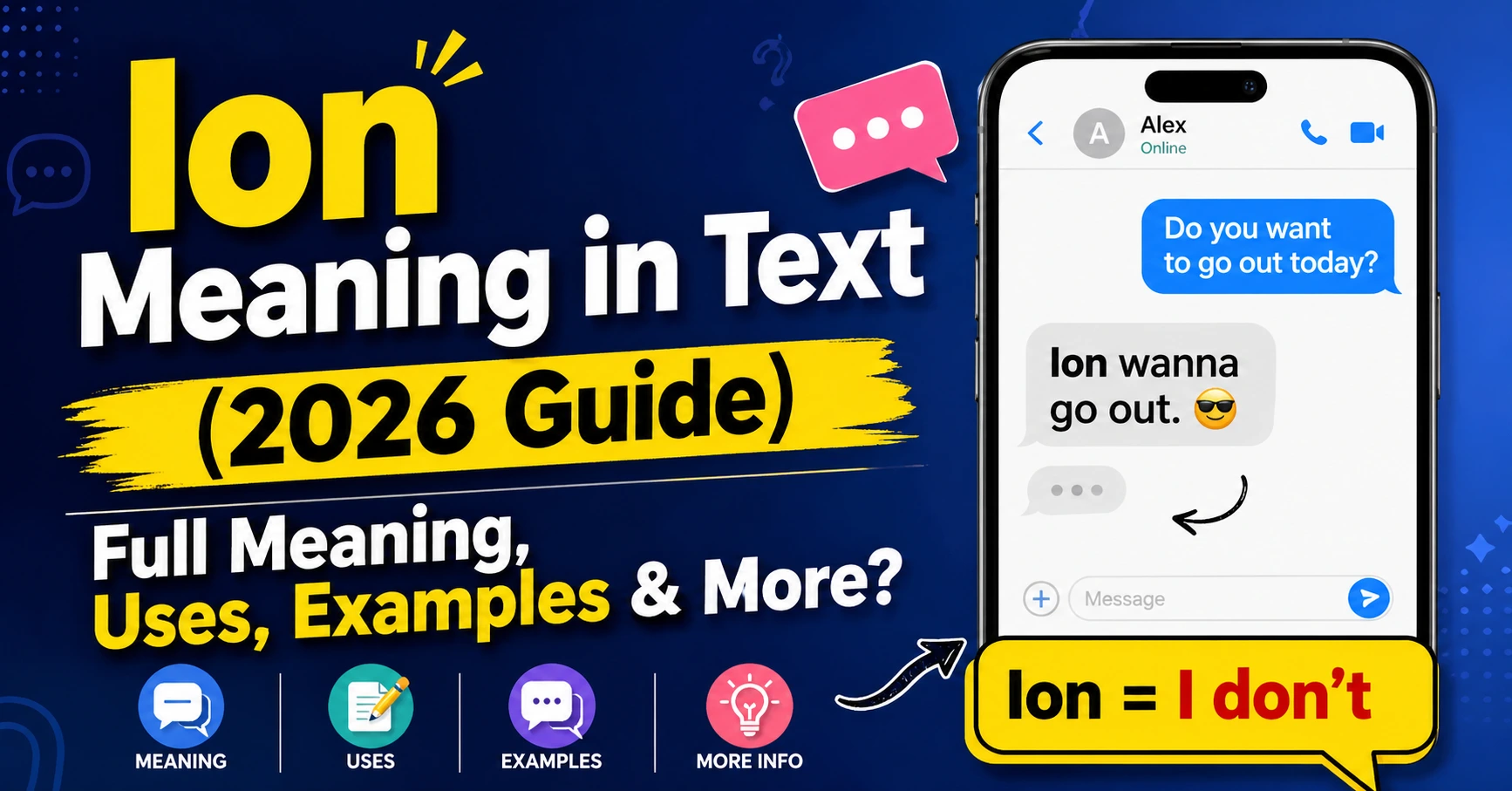
Understanding texting slang can feel confusing, especially when words look familiar but mean something totally different. One such term is “ion.” If you’ve seen it in chats or social media, you’re not alone in wondering what it means.
In this complete 2026 guide, we’ll break down the ion meaning in text, explain how people use it, and show real-life examples so you never feel lost again. By the end, you’ll be able to read and use “ion” like a pro.
What Does “Ion” Mean in Text?
The ion meaning in text is simple: it usually means “I don’t.”
People shorten “I don’t” into “ion” to type faster. It’s common in casual texting, especially among younger users or on social media.
For example:
- “Ion know what you mean.”
- “Ion like that movie.”
In both cases, “ion” replaces “I don’t.”
Why Do People Use “Ion” Instead of “I Don’t”?
Texting is all about speed and ease. That’s why people shorten words.
Here are a few reasons why “ion” is popular:
- It saves time while typing
- It feels more casual and relaxed
- It matches how people speak informally
- It’s trendy among younger audiences
The meaning of ion in texting reflects how language evolves. People write how they talk, and “ion” sounds like a fast way of saying “I don’t.”
Is “Ion” Always “I Don’t”?
Not always, but most of the time, yes.
Sometimes “ion” can also refer to a charged particle in science, but in texting, that meaning is rare.
Here’s a quick comparison:
| Context | Meaning of Ion |
|---|---|
| Texting slang | I don’t |
| Science | Charged particle |
| Casual speech | Short for “I don’t” |
So when you see “ion” in a message, it almost always means “I don’t.”
Examples of Ion in Text Messages
To fully understand the ion meaning in text message, let’s look at real examples.
| Text Message | Meaning |
|---|---|
| Ion care anymore | I don’t care anymore |
| Ion wanna go out | I don’t want to go out |
| Ion think that’s right | I don’t think that’s right |
| Ion see the problem | I don’t see the problem |
These examples show how “ion” fits naturally into everyday texting.
How “Ion” Became Popular
Slang words don’t appear randomly. They grow over time.
“Ion” became popular through:
- Social media platforms
- Messaging apps
- Music lyrics and culture
- Everyday conversations
Many people started typing how they speak. Saying “I don’t” quickly can sound like “ion,” so it naturally became a written shortcut.
Who Uses “Ion” the Most?
The ion mean in texting trend is most common among:
- Teenagers
- Young adults
- Social media users
- Online gamers
However, anyone can use it. Slang spreads fast, so even older users may start using “ion” after seeing it often.
When Should You Use “Ion”?
“Ion” works best in casual situations.
Good situations:
- Chatting with friends
- Text messages
- Social media comments
Avoid using it in:
- School assignments
- Work emails
- Formal conversations
Using “ion” in the wrong place can make you look unprofessional.
Ion vs Other Similar Slang Words
There are many slang terms similar to “ion.” Let’s compare them.
| Slang | Meaning | Example |
|---|---|---|
| Ion | I don’t | Ion know |
| Idk | I don’t know | Idk what happened |
| Imma | I am going to | Imma call you |
| Ain’t | Is not / am not | I ain’t ready |
All these terms make texting faster and more relaxed.
Common Mistakes When Using “Ion”
Even simple slang can be misused.
Here are some mistakes to avoid:
- Using it in formal writing
- Confusing it with science meaning
- Overusing it in every sentence
Example of wrong use:
“Ion submitting my assignment.” (Not appropriate for school)
Stick to casual conversations to use it correctly.
How to Understand Slang Like “Ion” Quickly
Learning slang doesn’t have to be hard.
Try these tips:
- Look at the full sentence
- Guess the meaning from context
- Ask the sender if unsure
- Search online meanings
The more you read messages, the easier it gets.
Is “Ion” a Trend or Here to Stay?
Some slang words disappear fast, while others stay.
“Ion” has been around for years now. That means it’s more than just a trend. It may not be used forever, but it’s likely to stay popular for a while.
Language keeps changing, and slang like this shows how creative people can be.
Ion Meaning in Text vs Spoken Language
Interestingly, “ion” comes from spoken language.
When people say “I don’t” quickly, it sounds like “ion.” So texting copied real speech.
This shows how texting and talking are becoming more similar over time.
Should You Start Using “Ion”?
That depends on your style.
If you like casual texting, go ahead and use it. It makes conversations feel relaxed.
But remember:
- Use it only with people who understand slang
- Avoid it in serious situations
Balance is key.
Quick Summary Table
| Topic | Key Point |
|---|---|
| Main meaning | I don’t |
| Usage | Casual texting |
| Popular among | Young users |
| Formal use | Not recommended |
| Origin | Spoken language |
FAQs About Ion Meaning in Text
1. What does ion mean in text?
“Ion” means “I don’t” in most texting situations.
2. What does ion mean in texting slang?
In slang, “ion” is a short and casual way to say “I don’t.”
3. Is ion a real word?
Yes, in science it means a charged particle, but in texting it has a different meaning.
4. Can I use ion in school work?
No, it’s informal and not suitable for academic writing.
5. Why do people say ion instead of I don’t?
It’s faster, easier, and matches casual speech.
6. What does ion mean in text message conversations?
It usually means “I don’t,” depending on the context of the message.
Final Thoughts
The ion meaning in text is simple once you understand it. It’s just a quick and casual way to say “I don’t.” But like all slang, it works best in the right setting.
As texting language keeps evolving, terms like “ion” show how people adapt communication to be faster and more fun. If you use it wisely, it can make your conversations feel more natural and modern.
Now that you know what it means, try spotting it in your chats—or even use it yourself in a message.
