


Have you ever heard someone say “Namaste Meaning” at the end of a yoga class or while greeting another person? Many people recognize the word, but fewer understand its full meaning and cultural importance.
Namaste Meaning is much more than a simple greeting. It carries respect, humility, kindness, and a recognition of the connection between people. For centuries, it has been used across South Asia as a meaningful way to greet others and show honor.
In recent years, the word has become popular worldwide through yoga, meditation, wellness practices, and cultural exchange. Yet many people still wonder: What does namaste really mean? Where did it come from? How should it be used correctly?
This guide answers those questions in detail and explains the true namaste meaning, its history, spiritual value, cultural role, and modern-day usage.
What Is the Meaning of Namaste?
The most common translation of namaste is:
“I bow to you.”
However, this short translation does not fully capture its meaning.
Namaste meaning is a respectful greeting that expresses honor and recognition of another person’s value. It reflects the idea that every individual deserves respect regardless of age, social status, religion, or background.
In many spiritual teachings, namaste is interpreted as:
“The divine within me honors the divine within you.”
This interpretation highlights the belief that all people share a common spiritual essence. When someone says namaste, they are acknowledging that deeper connection.
Because of this, the word carries emotional and spiritual depth that goes beyond ordinary greetings such as “hello” or “good morning.”
The Origin of the Word Namaste
To understand the namaste meaning fully, it helps to look at its linguistic roots.
The word comes from Sanskrit, one of the world’s oldest recorded languages.
It consists of two parts:
- Namas = bow, respect, reverence, or salutation
- Te = to you
Together, namaste means:
“I bow to you”
or
“My respectful greetings to you.”
Sanskrit has influenced many languages spoken across India and neighboring regions. As a result, namaste became a commonly used greeting that has survived for thousands of years.
Its continued use shows how deeply respect and courtesy are valued within traditional cultures.
How Namaste Meaning Is Traditionally Performed
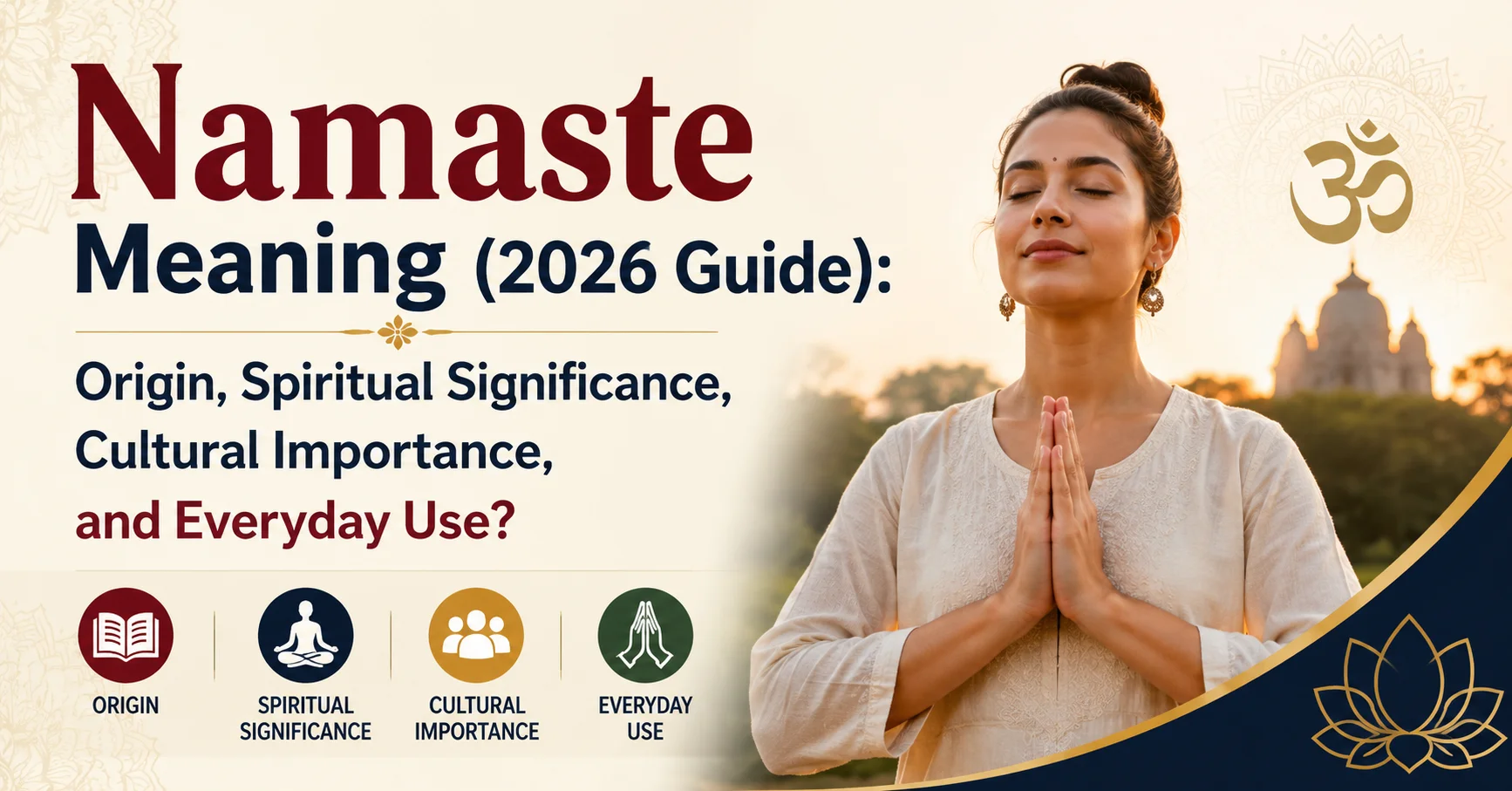
Namaste Meaning is not only spoken. It is usually accompanied by a specific gesture.
Joining the Palms Together
The traditional gesture involves placing both palms together in front of the chest.
The fingers point upward while the thumbs lightly touch the chest area near the heart.
This hand position is often called the prayer pose in many parts of the world.
Slight Bow of the Head
While saying namaste meaning, people often bow their heads slightly.
This bow symbolizes humility and respect. It is not a sign of weakness. Instead, it reflects acknowledgment and appreciation of another person.
Eye Contact and Sincerity
The greeting becomes more meaningful when offered sincerely.
A gentle smile and respectful eye contact help communicate warmth and goodwill.
The combination of words and gesture creates a greeting that feels peaceful, respectful, and welcoming.
Namaste Meaning in Hindu Philosophy
In Hindu traditions, namaste has a deeper spiritual meaning.
Many Hindu teachings suggest that every person contains a divine spark or sacred essence. This belief encourages individuals to treat others with kindness and respect.
When someone says namaste meaning, they are recognizing that sacred presence within another person.
This perspective promotes:
- Compassion
- Respect
- Unity
- Humility
- Peaceful interaction
Rather than focusing on external differences, namaste meaning reminds people of their shared humanity.
For this reason, the greeting often appears in religious ceremonies, prayers, festivals, and spiritual gatherings.
Namaste in Yoga
One reason the word has become globally recognized is its connection with yoga.
Many yoga instructors conclude classes by saying namaste to students.
Why Yoga Teachers Use Namaste
Yoga is about more than physical exercise. Traditional yoga teachings emphasize harmony between the body, mind, and spirit.
At the end of class, namaste serves as a way to:
- Thank participants
- Show mutual respect
- Recognize shared effort
- Encourage mindfulness
The greeting creates a sense of community and appreciation among everyone present.
The Spiritual Message in Yoga
Within yoga settings, namaste often symbolizes the belief that all individuals are connected.
The teacher honors the students, and the students honor the teacher in return.
This exchange reflects gratitude rather than hierarchy.
Many practitioners appreciate namaste meaning because it reinforces yoga’s focus on awareness, kindness, and inner growth.
Namaste Meaning in Buddhism
Although namaste is most commonly associated with Hindu traditions, it is also used in some Buddhist communities.
Buddhist teachings emphasize compassion, mindfulness, and respect for all living beings.
The spirit behind namaste aligns closely with these values.
When used in Buddhist contexts, the greeting can symbolize:
- Mutual respect
- Recognition of human dignity
- Peaceful intentions
- Spiritual awareness
The simple gesture helps create a respectful atmosphere between individuals.
Namaste in Daily Life
Many people use namaste as part of everyday communication.
In various regions, it serves as a common greeting for:
- Friends
- Family members
- Teachers
- Elders
- Guests
- Colleagues
The greeting may be used when meeting someone or when saying goodbye.
Because it conveys respect naturally, it is suitable for both formal and informal situations.
Its flexibility has helped keep it relevant through many generations.
Why Namaste Meaning Became Popular Worldwide
The global popularity of yoga played a major role in introducing namaste to international audiences.
As yoga studios opened around the world, people began hearing the word regularly.
However, yoga is not the only reason for its spread.
Several factors contributed:
Interest in Mindfulness
Many people seek practices that promote calmness and emotional balance.
The respectful nature of namaste aligns with these goals.
Cultural Exchange
Travel, education, movies, books, and social media have helped people learn about traditions from different cultures.
As awareness increased, namaste became more familiar outside South Asia.
Contact-Free Greetings
During global health concerns in recent years, many people searched for alternatives to handshakes.
Namaste gained attention because it allows people to greet one another respectfully without physical contact.
Its practical and respectful nature made it appealing worldwide.
Is Namaste a Religious Greeting?
This question often arises among people unfamiliar with the term.
The answer depends on the context.
Namaste has roots in spiritual and religious traditions. However, it is also widely used as a general greeting.
Millions of people say namaste daily without intending it as a religious statement.
In many situations, it functions similarly to:
- Hello
- Greetings
- Good day
At the same time, those who follow spiritual traditions may attach deeper meaning to the word.
Because of this flexibility, namaste can be both cultural and spiritual depending on how it is used.
Differences Between Namaste and Namaskar
Many people assume these words are identical.
While they are closely related, there are subtle differences.
Namaste
Namaste is commonly used in daily conversations and casual greetings.
It is familiar, friendly, and respectful.
Namaskar
Namaskar is generally viewed as slightly more formal.
It is often used in official events, ceremonies, and traditional settings.
Both greetings express respect, and their meanings overlap significantly.
The choice often depends on regional customs and personal preference.
When Should You Use Namaste?
Understanding proper usage helps avoid confusion.
Appropriate Situations
You can use namaste when:
- Greeting someone respectfully
- Meeting elders
- Participating in yoga classes
- Attending cultural events
- Visiting temples
- Saying goodbye politely
In these situations, the greeting is usually welcomed and appreciated.
Situations Requiring Awareness
If you are outside cultures where namaste is commonly used, it helps to understand its significance before using it.
Respectful usage comes from appreciation and understanding rather than imitation.
Learning the meaning behind the greeting shows consideration for the culture from which it originates.
Common Misunderstandings About Namaste
As namaste became more widely known, several misconceptions appeared.
It Is Not Just a Yoga Word
Many people first encounter namaste in yoga studios.
However, its history stretches back thousands of years and extends far beyond yoga.
It Is Not Only for Religious People
People from many backgrounds use namaste.
It functions as a social greeting in everyday life as well as a spiritual expression.
It Is Not Simply a Hand Gesture
The joined palms are important, but the meaning comes from both the gesture and the respectful attitude behind it.
Without sincerity, the gesture loses much of its significance.
The Psychological Value of Namaste
Modern psychology often highlights the benefits of respectful communication.
Namaste naturally encourages positive social interaction.
Encourages Humility
The slight bow reminds people to approach others with respect rather than arrogance.
Builds Human Connection
Recognizing another person’s worth can strengthen relationships and improve communication.
Creates Positive First Impressions
A respectful greeting helps establish trust and friendliness from the beginning of an interaction.
Promotes Mindfulness
The act of pausing and greeting someone thoughtfully encourages greater awareness of the present moment.
These benefits help explain why the greeting continues to remain relevant today.
Cultural Importance of Namaste
Namaste represents values that many societies admire.
These include:
- Respect
- Gratitude
- Politeness
- Kindness
- Unity
- Peace
In cultures where namaste is commonly practiced, children often learn the greeting from an early age.
It becomes part of everyday etiquette and social behavior.
The continued use of namaste helps preserve cultural traditions while passing important values to future generations.
Namaste Meaning in Modern Society
In today’s fast-paced world, communication often becomes rushed and impersonal.
Namaste offers a reminder that simple acts of respect still matter.
Whether used in a spiritual setting, a family gathering, a workplace interaction, or a yoga class, the greeting carries a message of dignity and mutual appreciation.
Its lasting popularity comes from its ability to communicate warmth and respect with just one word and one simple gesture.
Even in a world shaped by technology and constant change, the principles behind namaste remain relevant.
Frequently Asked Questions About Namaste Meaning
What does namaste literally mean?
The literal translation is “I bow to you” or “my respectful greetings to you.”
Is namaste only used in India?
While it originated in South Asia, people around the world now recognize and use the greeting, especially in yoga and wellness communities.
Can namaste be used to say goodbye?
Yes. It can be used both when greeting someone and when parting ways.
Is namaste religious?
It has spiritual roots but is also widely used as a general greeting in everyday life.
Why do people put their hands together when saying namaste?
The gesture symbolizes respect, humility, and unity while accompanying the spoken greeting.
Is it respectful for foreigners to say namaste?
Yes, when used with understanding and genuine respect for its cultural significance.
Final Thoughts
The true namaste meaning goes far beyond a simple hello. It reflects respect, humility, gratitude, and recognition of the value within every person. Rooted in ancient Sanskrit traditions, the greeting has remained meaningful for thousands of years because it speaks to something universal—the desire for connection and mutual respect.
Whether used in yoga classes, spiritual settings, cultural events, or everyday interactions, namaste reminds us to treat others with kindness and dignity. Its message is simple yet powerful: every person deserves acknowledgment, respect, and goodwill.
