


Introduction
If you spend time texting, chatting, or scrolling social media, you’ve likely seen the term “OFC.” It pops up in casual conversations, replies, and even comments. But what does OFC mean in text, and how should you use it correctly?
In simple terms, “OFC” stands for “of course.” It’s a quick and friendly way to agree with someone or say yes. People use it when they want to sound relaxed, helpful, or confident in their reply.
This guide will explain everything clearly. You’ll learn what does OFC mean in texting, how people use it in real life, and how to reply without confusion. I’ll also share examples and tips based on real conversations, so it feels natural and easy to understand.
Let’s break it down step by step.
What Does OFC Mean in Text?
The phrase “OFC” is a short form of “of course.” When someone uses it, they are saying yes in a simple and friendly way.
If you’re wondering what does OFC mean in text, think of it like this:
- It shows agreement
- It expresses certainty
- It confirms something quickly
For example:
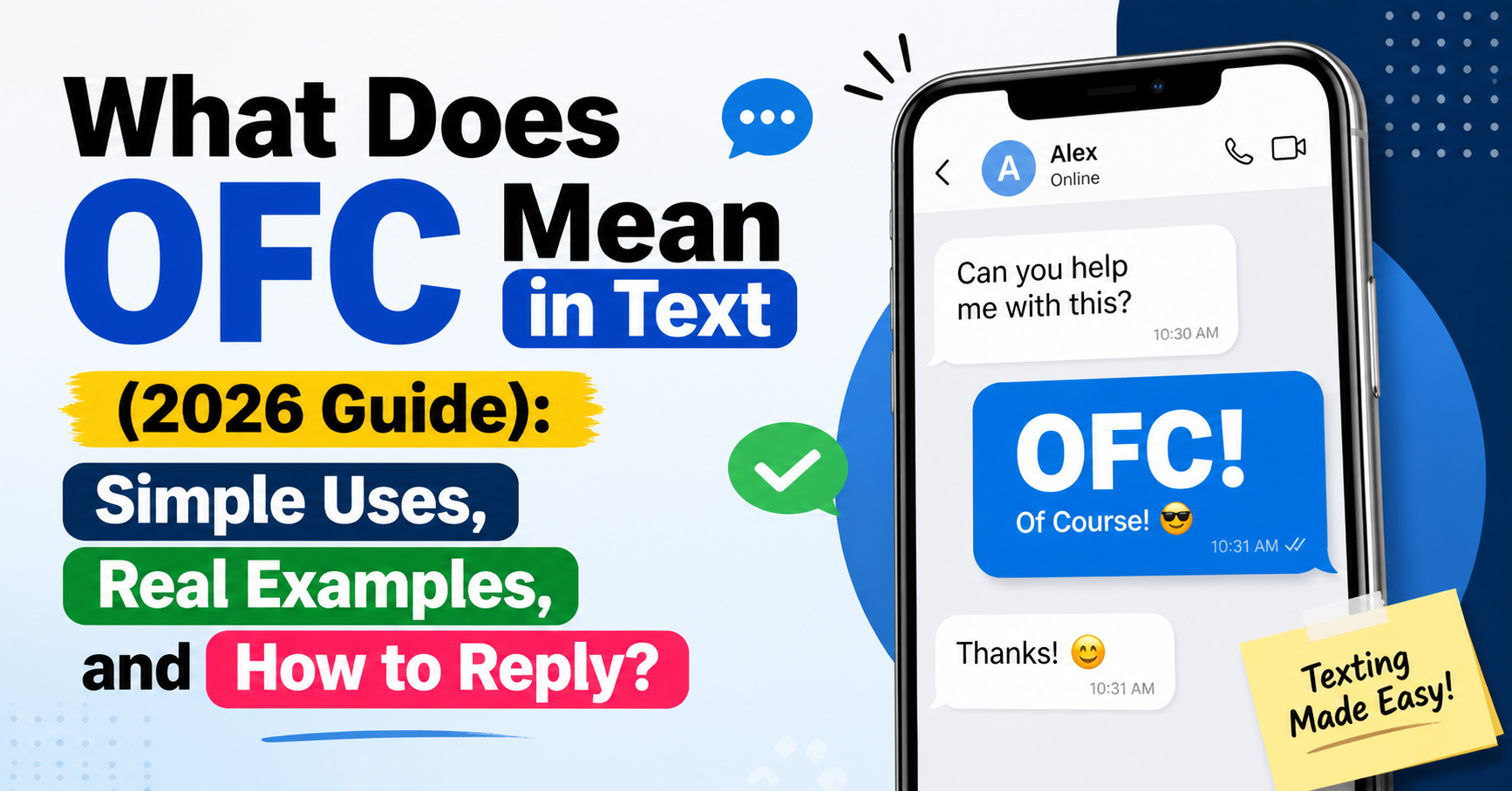
“Can you help me later?”
“OFC!”
This reply means “Yes, I will help you.” It sounds relaxed and kind. People use OFC instead of typing full words to save time.
In text messaging, short forms like OFC make conversations faster. They also help keep the tone casual. That’s why OFC is popular in chats, social apps, and even gaming conversations.
What Does OFC Mean in Texting Conversations?
When people ask what does OFC mean in texting, they usually want to know how it fits into real chats. The meaning stays the same, but the tone can change depending on context.
Here’s how OFC works in texting:
- Friendly confirmation
- Quick agreement
- Reassurance
For example:
“Are you coming to the party?”
“OFC, I wouldn’t miss it!”
In this case, OFC shows excitement and certainty. It feels warmer than just saying “yes.”
In texting, tone matters a lot. Adding OFC makes your reply feel more natural and human. It avoids sounding cold or robotic.
What Does OFC Mean in a Text Message?
If you’re still asking what does OFC mean in a text message, here’s a simple explanation:
It means “yes, definitely” or “obviously yes.”
People use it when the answer is clear or expected.
For example:
“Do you like pizza?”
“OFC!”
This shows strong agreement. It also adds a bit of personality to the reply.
However, tone can change based on how it’s used. Sometimes, OFC can sound slightly sarcastic if the question is obvious. So, always look at the full conversation.
Common Ways People Use OFC
People use OFC in many situations. It’s flexible and easy to understand.
Here’s a quick table to show common uses:
| Situation | Example Message | Meaning |
|---|---|---|
| Agreeing | “OFC, I agree with you.” | Yes, I agree |
| Offering help | “OFC, I can help you.” | Yes, I will help |
| Confirming plans | “OFC, see you at 7.” | Yes, it’s confirmed |
| Showing excitement | “OFC! That sounds fun!” | Yes, I’m excited |
As you can see, OFC fits into many types of conversations. It’s simple but powerful.
Real-Life Examples of OFC in Texts
Understanding examples makes things clearer. Here are some real-life style chats:
Example 1:
Friend: “Can you send me the notes?”
You: “OFC, I’ll send them now.”
Example 2:
Friend: “Are you free tonight?”
You: “OFC!”
Example 3:
Friend: “Do you trust me?”
You: “OFC”
In each example, OFC replaces a longer sentence. It keeps things short but meaningful.
From personal experience, I’ve seen OFC used daily in chats. It feels natural and saves time. Once you start using it, it becomes part of your texting habit.
Is OFC Formal or Informal?
OFC is mostly informal. It’s best for casual conversations.
Here’s a quick breakdown:
| Context | Should You Use OFC? |
|---|---|
| Friends | Yes |
| Family | Yes |
| Social media | Yes |
| Work emails | No |
| Professional chats | Avoid |
In formal settings, it’s better to write “of course” fully. Using OFC in work emails may look unprofessional.
So, always think about who you’re texting before using it.
How to Reply When Someone Says OFC
If someone uses OFC, your reply depends on the situation.
Here are some simple reply ideas:
| Situation | Good Reply |
|---|---|
| They agree with you | “Thanks!” |
| They offer help | “I appreciate it!” |
| They confirm plans | “Great, see you then!” |
| Casual chat | “Awesome” |
Keep your reply simple and friendly. Match their tone.
For example:
“OFC!” → “Nice, thanks!”
This keeps the conversation smooth and natural.
OFC vs Other Texting Slang
Many people confuse OFC with other slang terms. Let’s compare:
| Slang | Meaning | Tone |
|---|---|---|
| OFC | Of course | Friendly |
| OK | Okay | Neutral |
| YEAH | Yes | Casual |
| SURE | Yes/Maybe | Flexible |
“OFC” sounds more confident than “OK.” It shows stronger agreement.
For example:
“OK” = simple response
“OFC” = positive and certain
This small difference can change how your message feels.
When NOT to Use OFC
Even though OFC is useful, there are times to avoid it.
Do not use OFC when:
- Talking to your boss
- Writing formal emails
- Speaking in serious situations
- Responding to sensitive topics
For example:
“Can you attend the meeting?”
Replying “OFC” might sound too casual.
Instead, say:
“Yes, I will attend.”
Choosing the right tone helps you communicate better.
Why OFC Is So Popular in 2026
Short forms like OFC are more popular than ever. People prefer quick and easy communication.
Here’s why OFC is trending:
- Saves time
- Easy to type
- Sounds friendly
- Works in many situations
In 2026, texting culture is faster. People don’t want to type long sentences. OFC fits perfectly into this style.
From personal use, I’ve noticed that OFC makes conversations feel lighter. It keeps things simple without losing meaning.
Tips to Use OFC Naturally
If you want to sound natural, follow these tips:
- Use OFC in casual chats
- Don’t overuse it
- Match the other person’s tone
- Add emojis if needed
For example:
“OFC” feels warmer than just “OFC”
Also, mix it with full words sometimes. This keeps your texting style balanced.
Variations of OFC You Might See
Sometimes, people write OFC in different ways:
| Variation | Meaning |
|---|---|
| ofc | Same meaning |
| Ofc | Same meaning |
| OF COURSE | Full form |
All versions mean the same. The difference is just style.
Lowercase “ofc” is more common in casual chats.
FAQs
1. What does OFC mean in text?
OFC means “of course.” It is used to show agreement or say yes in a friendly way.
2. What does OFC mean in texting?
In texting, OFC is a quick way to confirm something or agree with someone.
3. Is OFC rude or polite?
OFC is polite in casual conversations. However, it may sound too informal in serious situations.
4. Can I use OFC in professional messages?
It’s better not to. Use “of course” instead in formal or work-related messages.
5. How do I reply to OFC?
You can reply with “Thanks,” “Great,” or “Awesome,” depending on the context.
Final Thoughts
Now you clearly understand what does OFC mean in text and how to use it in everyday conversations. It simply means “of course,” but it adds warmth and friendliness to your messages.
OFC is perfect for quick replies, casual chats, and friendly confirmations. It helps you sound natural without typing too much. Just remember to avoid it in formal situations.
If you start using OFC today, you’ll notice your conversations feel smoother and more relaxed. It’s a small word, but it makes a big difference.
