


Introduction
If you spend time chatting online, you’ve likely seen the term IMO pop up often. But what exactly does it mean, and how should you use it? Understanding imo meaning in text is important because texting language keeps changing fast, especially in 2026.
In simple words, IMO helps you share your opinion without sounding too strong or rude. It adds a soft tone to your message, making conversations more friendly. Whether you’re texting friends, commenting on social media, or chatting in a group, knowing how IMO works can make your communication smoother.
This guide will explain everything clearly. You’ll learn what IMO means, when to use it, how it differs from similar terms, and real-life examples. By the end, you’ll feel confident using IMO naturally in your daily conversations.
What Does IMO Mean in Text?
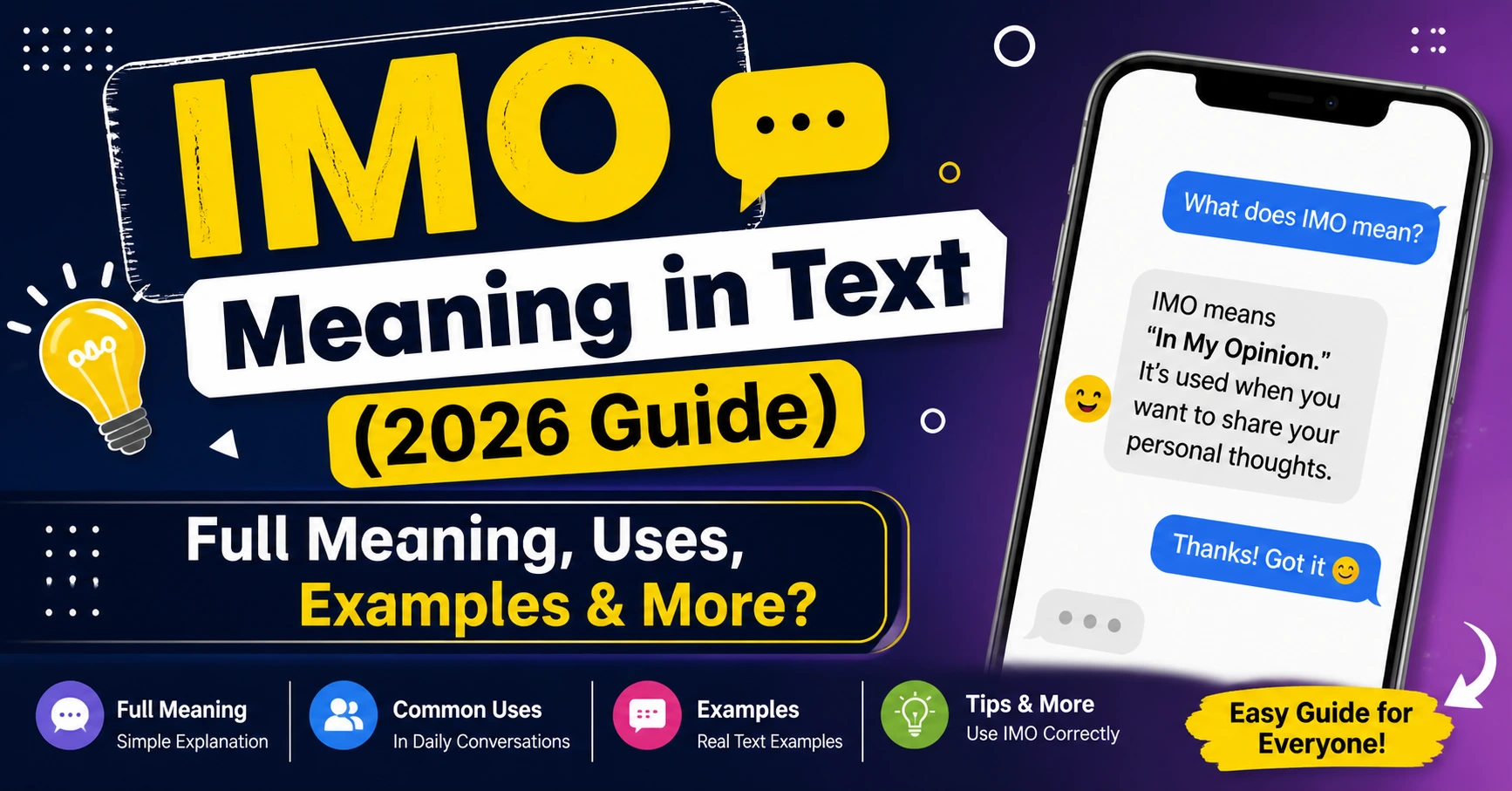
The basic imo meaning in text is:
IMO = In My Opinion
It’s used when someone wants to share their personal thoughts or views about something. It tells others that what you’re saying is not a fact, but your own opinion.
For example:
- “IMO, that movie was amazing.”
- “This phone is the best, IMO.”
Using IMO makes your message sound less forceful. It shows respect for other people’s opinions, which is very important in conversations.
Why Do People Use IMO in Texting?
People use IMO for many reasons. One big reason is to sound polite. When you add IMO, you show that you understand others may think differently.
Here are some key reasons:
- It softens your opinion
- It avoids arguments
- It makes you sound friendly
- It keeps conversations respectful
For example, saying “That game is boring” sounds harsh. But saying “IMO, that game is boring” sounds more balanced.
So, the meaning of imo in texting is not just about words—it’s also about tone and respect.
IMO Meaning in Texting vs Real Life
The imo meaning in texting is the same as in real life conversations. The only difference is how often it’s used.
In texting, people use shortcuts to save time. That’s why IMO is so popular. In real life, you would say “in my opinion,” but in text, you just write IMO.
Here’s a quick comparison:
| Situation | Example Sentence |
|---|---|
| Texting | “IMO, this song is great.” |
| Speaking | “In my opinion, this song is great.” |
So, IMO is simply a faster way to communicate the same idea.
When Should You Use IMO?
Knowing when to use IMO is just as important as knowing its meaning.
You should use IMO when:
- Sharing personal opinions
- Giving advice
- Reviewing something
- Discussing preferences
For example:
- “IMO, studying in the morning works better.”
- “This restaurant is the best, IMO.”
Avoid using IMO when stating facts. For example, “The Earth is round, IMO” sounds strange because that’s a proven fact.
Understanding what does imo mean in text also means knowing when it fits naturally.
Examples of IMO in Everyday Texting
Here are some simple examples to help you understand better:
| Situation | Example Message |
|---|---|
| Movies | “IMO, that film was too long.” |
| Food | “Pizza is the best snack, IMO.” |
| School | “IMO, math is harder than English.” |
| Friends | “You handled that well, IMO.” |
These examples show how IMO fits into daily conversations easily.
Using it makes your message sound softer and more thoughtful.
IMO vs IMHO – What’s the Difference?
You may also see IMHO in chats. It stands for:
IMHO = In My Humble Opinion
Both IMO and IMHO are similar, but there’s a small difference.
| Term | Meaning | Tone |
|---|---|---|
| IMO | In My Opinion | Neutral |
| IMHO | In My Humble Opinion | More polite |
IMHO sounds more respectful or humble. Some people use it to avoid sounding rude.
Still, in most cases, IMO is more common and easier to use.
Is IMO Formal or Informal?
The imo meaning in text message is mostly informal. It is commonly used in:
- Text messages
- Social media
- Online chats
It is not usually used in formal writing like:
- School essays
- Business emails
- Official documents
Instead, in formal writing, you should write “in my opinion” fully.
Common Mistakes When Using IMO
Even though IMO is simple, people sometimes use it incorrectly.
Here are common mistakes:
- Using it with facts
Wrong: “Water boils at 100°C, IMO.” - Overusing it
Using IMO in every sentence can sound repetitive. - Using it in formal writing
Avoid it in professional settings.
Understanding these mistakes will help you use IMO correctly and naturally.
Similar Slang Terms Like IMO
Texting language includes many similar abbreviations. Here are a few:
| Term | Meaning |
|---|---|
| TBH | To Be Honest |
| IMO | In My Opinion |
| IMHO | In My Humble Opinion |
| FYI | For Your Information |
| IDK | I Don’t Know |
Each term has a different purpose, but all make texting faster and easier.
How IMO Helps Avoid Arguments
One of the biggest benefits of IMO is that it reduces conflict.
When you share opinions online, people may disagree. Using IMO shows that you respect other views.
Example:
- Without IMO: “That show is terrible.”
- With IMO: “IMO, that show is terrible.”
The second sentence feels less aggressive. It invites discussion instead of arguments.
That’s why many people prefer using IMO in debates and group chats.
IMO in Social Media and Online Culture
In 2026, IMO is widely used on platforms like:
- Instagram comments
- Twitter/X posts
- YouTube discussions
- WhatsApp chats
People use it to share quick opinions without sounding rude. It’s especially helpful in public conversations where tone matters.
The what does imo mean in texting trend continues to grow because communication is becoming faster and shorter.
Should You Use IMO in Professional Chats?
In professional settings, it depends.
- Casual team chats: OK to use IMO
- Formal emails: Avoid IMO
For example:
- Casual: “IMO, we should try a new strategy.”
- Formal: “In my opinion, we should consider a new strategy.”
So, always think about your audience before using IMO.
Personal Insight: When I Use IMO
From my experience, IMO is very helpful in group chats. It keeps conversations calm and respectful.
For example, when discussing movies with friends, I often say:
“IMO, that ending could be better.”
This way, I share my opinion without upsetting anyone. It helps maintain a friendly tone.
Using IMO regularly can improve how people respond to you.
FAQs About IMO Meaning in Text
1. What does IMO mean in texting?
IMO means “In My Opinion.” It shows you are sharing a personal view.
2. What does IMO mean in a text message?
It means the same thing—you’re giving your opinion in a polite way.
3. Is IMO rude?
No, it actually makes your message less rude and more respectful.
4. Can I use IMO in formal writing?
No, it’s better to write “in my opinion” in formal situations.
5. What is the difference between IMO and IMHO?
IMHO is more polite and humble, while IMO is neutral.
Conclusion
Understanding the imo meaning in text is simple but very useful. It helps you share your thoughts clearly while staying polite and respectful.
In today’s fast-paced digital world, small words like IMO can make a big difference. They help avoid misunderstandings and keep conversations friendly.
Now that you know what does imo mean in text, you can use it confidently in chats, comments, and messages. Try adding it to your next conversation and notice how it improves your communication.
If you found this guide helpful, share it with friends or save it for later. Clear communication starts with small steps—and IMO is one of them!
