


Many English learners get confused about “listen to music vs listen to the music.” At first, both phrases seem the same. But in real English, they are used in different ways. One sounds general, while the other points to something specific.
This small grammar difference can change the meaning of a sentence. That is why understanding listen to music vs listen to the music is important for speaking and writing naturally.
Native speakers use these phrases every day. You hear them in songs, movies, schools, and casual conversations. If you use the wrong one, people may still understand you, but your sentence may sound awkward or unclear.
I remember teaching a beginner student who said, “I like listening to the music.” Grammatically, the sentence was not fully wrong. But without mentioning which music, it sounded incomplete. After learning the difference, the student began speaking more naturally.
In this guide, you will learn the exact difference between listen to music vs listen to the music, when to use each phrase, common mistakes, grammar rules, and many easy examples.
Why People Confuse “Listen to Music” and “Listen to the Music”
English articles can be tricky. Words like a, an, and the look small, but they change meaning. That is the main reason people struggle with listen to music vs listen to the music.
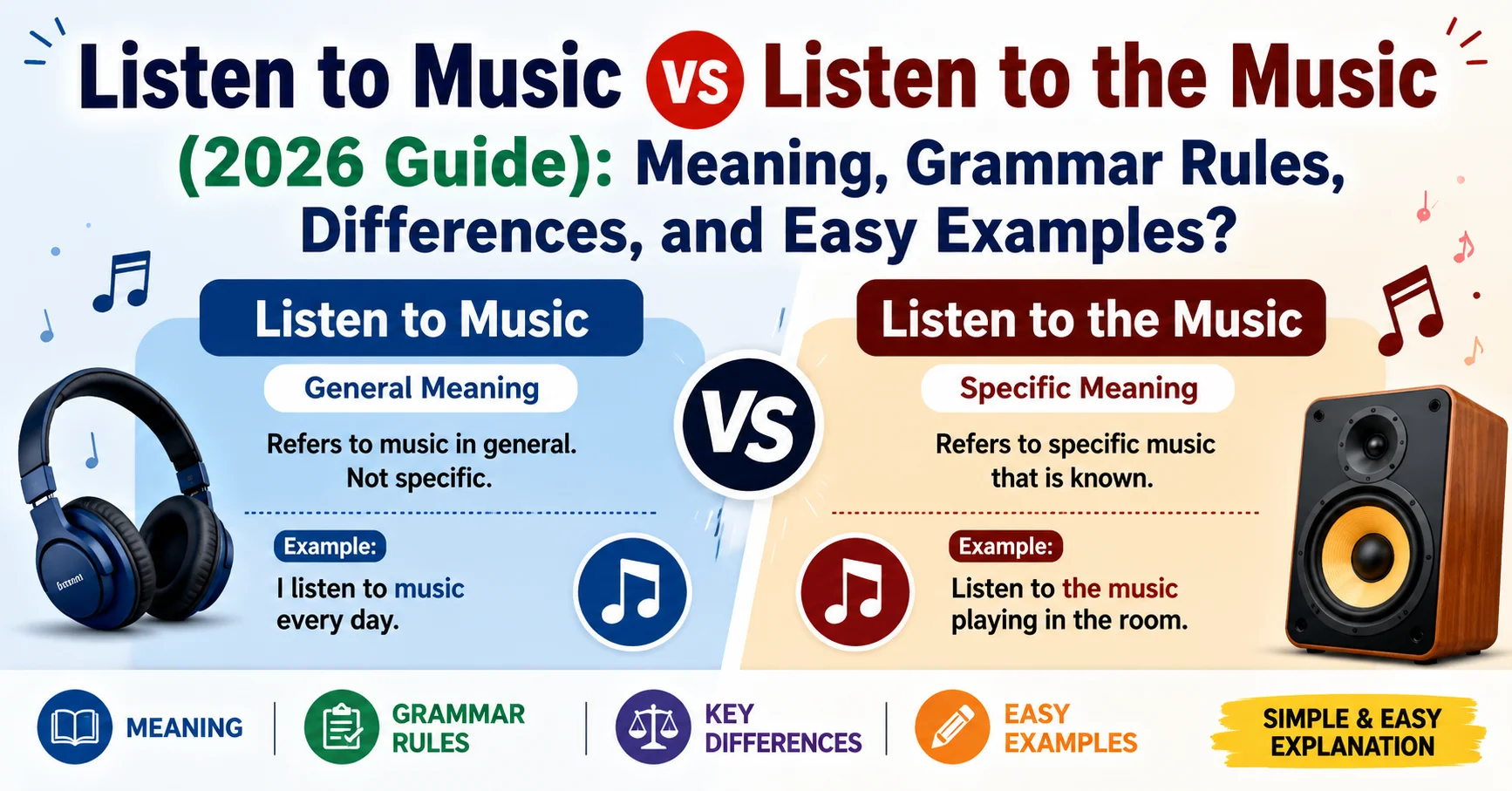
The phrase “listen to music” talks about music in general. It does not point to one song or one type. Meanwhile, “listen to the music” refers to specific music that both people already know about.
Many learners translate directly from their own language. In some languages, articles are not used often. So learners may add “the” everywhere. This creates unnatural English.
Another reason is that both phrases are common online. When learners hear both, they think they are interchangeable. But context matters.
Here is the easiest way to remember it:
| Phrase | Meaning | Example |
|---|---|---|
| Listen to music | Music in general | I listen to music every night. |
| Listen to the music | Specific music | Listen to the music playing outside. |
This simple grammar point improves fluency quickly.
What Does “Listen to Music” Mean?
The phrase “listen to music” means enjoying music in a general way. It talks about the activity itself, not a specific song.
People use this phrase when speaking about hobbies, habits, or daily routines.
For example:
- I listen to music while studying.
- She listens to music before bed.
- They love listening to music in the car.
In these examples, no exact song is mentioned. The speaker simply talks about music overall.
This is the most common phrase in everyday English. Native speakers often use it naturally because they are discussing music broadly.
Common Situations
| Situation | Example Sentence |
|---|---|
| Hobby | I listen to music every day. |
| Relaxing | He listens to music to relax. |
| Studying | We listen to music during homework. |
| Traveling | They listened to music on the bus. |
Notice how no specific music is identified.
When talking casually, this version sounds smoother and more natural.
What Does “Listen to the Music” Mean?
“Listen to the music” points to particular music. The speaker and listener usually know which music is being discussed.
This phrase often appears when someone wants attention focused on a sound or song.
Examples:
- Listen to the music in this movie.
- Can you hear the music upstairs?
- Listen to the music playing on the radio.
Here, the music is specific and identifiable.
The word “the” acts like a spotlight. It tells listeners that the music is already known or visible in the situation.
I often hear teachers use this phrase in classrooms:
“Listen to the music carefully and answer the questions.”
The students know exactly which music the teacher means.
Key Idea
Use listen to the music when the music is:
- already mentioned
- happening now
- clearly identified
- connected to a specific situation
The Main Difference Between the Two Phrases
The core difference in listen to music vs listen to the music is specificity.
One is general. The other is specific.
Here is the easiest comparison:
| Phrase | General or Specific? | Usage |
|---|---|---|
| Listen to music | General | Any music |
| Listen to the music | Specific | Particular music |
Think about these examples:
General
“I listen to music when I cook.”
This means music overall.
Specific
“Listen to the music coming from the kitchen.”
This refers to a certain sound.
A good grammar trick is this:
If you can answer “Which music?” clearly, use “the.”
For example:
- Listen to the music from the concert.
- Listen to the music in the background.
But if no exact music is identified, skip “the.”
Grammar Rule Behind “The”
To fully understand listen to music vs listen to the music, you need to know how the article “the” works.
“The” is called a definite article. It refers to something specific or already known.
In English:
- “music” alone = general idea
- “the music” = exact music
This rule works with many nouns.
Examples:
| General | Specific |
|---|---|
| I like movies. | I like the movie we watched yesterday. |
| She drinks coffee. | She drank the coffee I made. |
| They play music. | They played the music from the party. |
The same grammar pattern appears with music.
When learners master articles, their English sounds much more natural.
Everyday Examples of “Listen to Music”
Native speakers use this phrase constantly in daily conversation.
Here are some natural examples:
- I listen to music while jogging.
- My brother listens to music at work.
- We listened to music all weekend.
- She likes listening to music before sleeping.
- Kids often listen to music online.
These sentences talk about music generally.
This phrase is common because people often discuss habits and activities.
Daily Activities Table
| Activity | Example |
|---|---|
| Exercise | I listen to music at the gym. |
| Cleaning | She listens to music while cleaning. |
| Driving | They listen to music in the car. |
| Reading | He listens to music while reading. |
Notice how the sentences stay broad and natural.
Everyday Examples of “Listen to the Music”
Now let’s look at the more specific version.
Examples:
- Listen to the music in this video.
- We listened to the music from the wedding.
- Listen to the music behind the singer.
- She listened to the music carefully.
- Can you hear the music downstairs?
Each sentence points to particular music.
Sometimes this phrase is also used for instruction or emphasis.
Parents, teachers, and directors often say:
“Listen to the music carefully.”
In this case, everyone knows which music is being discussed.
Common Mistakes English Learners Make
Many learners overuse “the.” This is one of the biggest grammar problems in English.
Here are common mistakes related to listen to music vs listen to the music.
| Incorrect | Correct |
|---|---|
| I love listening to the music. | I love listening to music. |
| She listens to the music every day. | She listens to music every day. |
| We enjoy the music at night. | We enjoy music at night. |
These sentences become unnatural because the music is not specific.
Another mistake is removing “the” when specificity exists.
Example:
- Incorrect: Listen to music playing outside.
- Correct: Listen to the music playing outside.
The second sentence sounds clearer because it identifies exact music.
How Native Speakers Use These Phrases
Native English speakers choose these phrases automatically based on context.
When speaking generally, they say:
- I listen to music.
- She loves music.
- We played music all day.
When referring to something specific:
- Listen to the music from the concert.
- The music in this film is amazing.
- Can you hear the music next door?
I noticed this clearly while watching interviews online. Celebrities often say:
“I listen to music before performances.”
But music producers say:
“Listen to the music at the beginning of the track.”
The difference depends completely on specificity.
Listen to Music vs Hear Music
Many learners also confuse “listen” and “hear.”
They are different verbs.
| Verb | Meaning |
|---|---|
| Listen | Pay attention actively |
| Hear | Notice sound naturally |
Examples:
- I listen to music every day.
- I hear music from the сосед’s house.
Listening is intentional. Hearing happens automatically.
Quick Comparison
| Sentence | Meaning |
|---|---|
| I listened to music. | I chose to hear music. |
| I heard music. | Music reached my ears naturally. |
This difference is important in conversations.
Formal vs Informal Usage
Both phrases work in formal and informal English. But context changes the style slightly.
Informal
- I listen to music all the time.
- We listened to music yesterday.
More Specific or Formal
- Please listen to the music carefully.
- Students should listen to the music examples.
Teachers and professionals often use the specific version in instructions.
Meanwhile, casual conversation usually uses the general form.
Which Phrase Sounds More Natural?
In most conversations, “listen to music” sounds more natural because people usually speak generally.
For example:
- I like listening to music.
- Do you listen to music while working?
These sentences feel smooth and modern.
Using “the” too often can make speech sound unnatural.
Compare:
- Natural: I love listening to music.
- Less natural: I love listening to the music.
The second sentence feels incomplete unless specific music is known.
That is why native speakers prefer the shorter version most of the time.
Tips to Remember the Difference Easily
Learning grammar becomes easier with simple memory tricks.
Here are helpful tips for understanding listen to music vs listen to the music.
Tip 1: Ask “Which Music?”
If you can answer clearly, use “the.”
Example:
- Listen to the music from the movie.
Tip 2: General Activities Need No “The”
- I listen to music while studying.
Tip 3: Specific Sounds Need “The”
- Listen to the music outside.
Tip 4: Habits Usually Stay General
- She listens to music every morning.
These tricks help learners sound more fluent instantly.
Practice Sentences for Beginners
Try reading these examples aloud.
General Usage
- I listen to music every evening.
- They listen to music at school.
- My dad listens to music while cooking.
Specific Usage
- Listen to the music in the background.
- She listened to the music from the festival.
- We heard the music from downstairs.
Practice helps grammar become natural.
Mini Quiz: Choose the Correct Phrase
Test yourself with these sentences.
| Sentence | Correct Answer |
|---|---|
| I love ______ while driving. | listening to music |
| Listen to ______ from the concert. | the music |
| She always listens to ______ before sleeping. | music |
| Can you hear ______ outside? | the music |
If you answered correctly, you already understand the main grammar rule.
Why This Small Grammar Difference Matters
Some learners think articles are unimportant. But small grammar details make English sound natural.
Using the correct phrase helps with:
- speaking fluently
- writing clearly
- understanding native speakers
- improving grammar accuracy
Imagine saying:
“I enjoy listening to the music.”
A native speaker may wonder:
“Which music?”
But if you say:
“I enjoy listening to music.”
The meaning becomes instantly clear.
Tiny grammar improvements create big communication changes.
FAQs About Listen to Music vs Listen to the Music
Is “listen to music” grammatically correct?
Yes. It is completely correct and very common in everyday English.
When should I use “listen to the music”?
Use it when talking about specific music that people already know about.
Which phrase sounds more natural?
“Listen to music” sounds more natural in most casual conversations.
Can both phrases be correct?
Yes. Both are correct, but they have different meanings depending on context.
Why do English learners confuse these phrases?
Many learners struggle with articles like “the” because their native language may use grammar differently.
Conclusion
Understanding listen to music vs listen to the music is easier once you know the difference between general and specific meaning.
Use listen to music when talking broadly about music as an activity or habit.
Use listen to the music when referring to exact music that is already known or identified.
This small grammar rule helps your English sound smoother, clearer, and more natural. Native speakers use these differences automatically, but learners can master them with practice.
Next time you speak English, pause for a second and ask:
“Am I talking about music generally or specific music?”
