

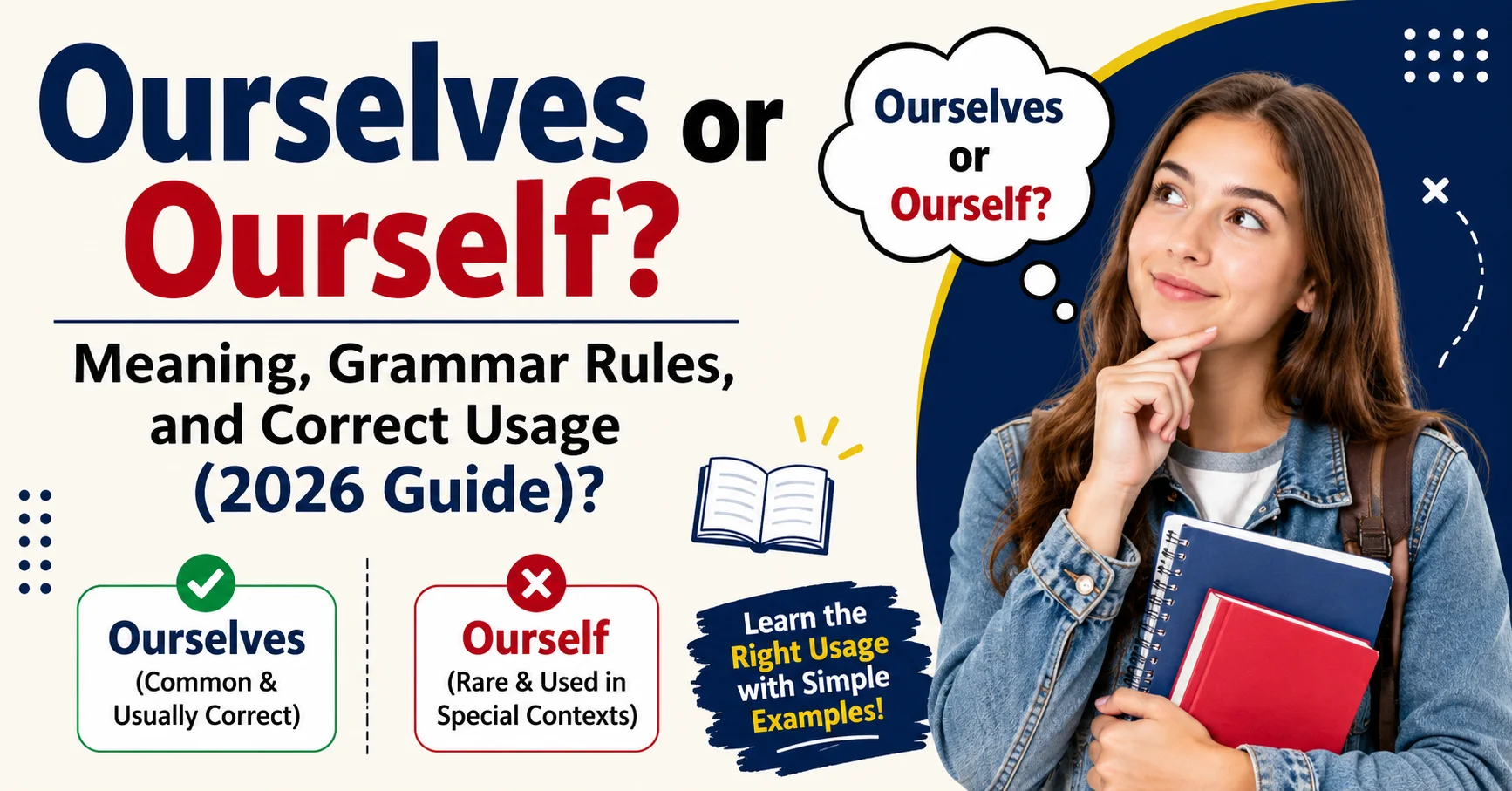
Have you ever stopped while writing and wondered whether to use “ourselves” or “ourself”? You are not alone. Many English learners, students, bloggers, and even native speakers get confused about these two words.
The good news is that the difference is actually simple once you understand the grammar rule behind it.
In most situations, “ourselves” is the correct choice because it matches the plural pronoun “we.” However, there are rare cases where “ourself” can also be correct. That is why many people search for answers about ourselves or ourself online.
In this complete 2026 guide, you will learn:
- The difference between ourselves and ourself
- Which one is grammatically correct
- Real-life examples
- Common mistakes to avoid
- Easy grammar rules
- Simple memory tricks
By the end of this article, you will confidently know when to use each word correctly.
What Does “Ourselves” Mean?
The word “ourselves” is a reflexive pronoun. It refers back to the subject “we.”
A reflexive pronoun is used when the subject and object are the same people.
Examples:
- We taught ourselves English.
- We enjoyed ourselves at the party.
- We prepared ourselves for the exam.
In all these examples, the action goes back to the same group of people.
Simple Rule
If you use “we”, you usually use “ourselves.”
What Does “Ourself” Mean?
The word “ourself” is much less common. In modern English, it is rarely used in everyday writing.
It can appear in:
- Formal historical writing
- Royal speech
- Certain political or institutional contexts
- Rare singular “they/we” situations
Example:
- We, the committee, consider ourself responsible.
This sentence treats the committee as one single unit. That is why “ourself” appears.
Still, for normal English conversations and writing, “ourselves” is almost always preferred.
Ourselves or Ourself: Which One Is Correct?
Here is the simple answer:
| Word | Common or Rare? | Usually Correct? |
|---|---|---|
| Ourselves | Very common | Yes |
| Ourself | Rare | Sometimes |
In modern English grammar, “ourselves” is the standard form.
Most grammar experts recommend using “ourselves” unless you have a very special reason to choose “ourself.”
Correct Examples
| Correct Sentence | Why It Works |
|---|---|
| We blamed ourselves. | “We” is plural |
| We introduced ourselves. | Reflexive plural form |
| We asked ourselves questions. | Standard grammar |
Rare Example with “Ourself”
| Sentence | Explanation |
|---|---|
| We see ourself as one team. | Collective identity |
Even here, many writers still prefer “ourselves.”
Why People Get Confused Between Ourselves and Ourself
English grammar can be tricky because many pronouns change depending on singular or plural use.
For example:
| Subject Pronoun | Reflexive Pronoun |
|---|---|
| I | Myself |
| You | Yourself |
| He | Himself |
| She | Herself |
| We | Ourselves |
| They | Themselves |
People sometimes think “ourself” should exist because “myself” and “yourself” exist.
That seems logical. But English grammar developed differently over time. The standard reflexive form connected to “we” became “ourselves.”
That is why “ourself” sounds unusual today.
When Should You Use “Ourselves”?
You should use “ourselves” whenever:
- The subject is “we”
- A group performs an action on itself
- You need a reflexive pronoun
- You need emphasis
Examples in Daily English
- We made the cake ourselves.
- We introduced ourselves politely.
- We should trust ourselves more.
- We enjoyed ourselves during the trip.
- We reminded ourselves to stay calm.
These examples sound natural because “ourselves” fits modern English grammar.
When Can You Use “Ourself”?
The word “ourself” is only used in rare situations.
1. Collective Identity
Sometimes a group acts as one single unit.
Example:
- We consider ourself a united organization.
This style is uncommon and often sounds formal.
2. Royal or Formal Language
Kings, queens, or leaders historically used “we” for themselves.
Example:
- We will defend ourself against all enemies.
This is called the royal we.
3. Historical Writing
Older English books sometimes used “ourself.”
Modern writers usually avoid it.
Ourselves vs Ourself in American and British English
Both American and British English strongly prefer “ourselves.”
However, British English sometimes accepts unusual formal uses of “ourself” more than American English does.
Quick Comparison
| English Type | Preferred Word |
|---|---|
| American English | Ourselves |
| British English | Ourselves |
| Historical British Writing | Sometimes Ourself |
If you write blog posts, school assignments, emails, or social media content, choose “ourselves.”
Grammar Rule Behind Ourselves or Ourself
The grammar rule is based on number agreement.
The pronoun “we” is plural. Because it is plural, the reflexive form also becomes plural.
Here is the grammar structure:
| Subject | Reflexive Form |
|---|---|
| We | Ourselves |
That is why these sentences are correct:
- We helped ourselves.
- We challenged ourselves.
- We congratulated ourselves.
Using “ourself” here would sound incorrect to most readers.
Common Mistakes People Make
Many learners accidentally use “ourself” because they think it follows the same pattern as “myself.”
Here are some mistakes to avoid.
Incorrect:
- We taught ourself coding.
- We enjoyed ourself yesterday.
- We prepared ourself for the meeting.
Correct:
- We taught ourselves coding.
- We enjoyed ourselves yesterday.
- We prepared ourselves for the meeting.
A simple memory trick is this:
“We” always matches with “ourselves.”
Easy Trick to Remember the Difference
Here is a very simple trick.
Think About the Letter “S”
The word “we” refers to more than one person.
The word “ourselves” also ends with “s”, showing plurality.
| Pronoun | Reflexive Pronoun |
|---|---|
| We | Ourselves |
This small trick helps many students remember the correct form instantly.
Real-Life Examples of Ourselves in Sentences
Understanding real examples makes grammar easier.
At School
- We tested ourselves before the exam.
- We encouraged ourselves to study harder.
At Work
- We introduced ourselves to the new manager.
- We challenged ourselves to improve sales.
With Friends
- We enjoyed ourselves at the concert.
- We took pictures of ourselves.
In Blogging
- We should express ourselves clearly.
- We can teach ourselves SEO for free.
These examples sound natural because “ourselves” fits standard English usage.
Is “Ourself” Wrong?
Not completely.
The word “ourself” is not technically wrong. It is simply very uncommon in modern English.
Most grammar teachers and style guides recommend avoiding it unless:
- You are quoting historical text
- You are writing formal institutional language
- You intentionally use the royal “we”
For normal writing, using “ourselves” is safer and clearer.
Ourselves or Ourself in Academic Writing
In essays, assignments, and professional writing, always prefer “ourselves.”
Teachers, editors, and grammar tools usually expect the plural form.
Academic Examples
- We asked ourselves important research questions.
- We prepared ourselves for the presentation.
- We evaluated ourselves honestly.
Using “ourself” may confuse readers or appear outdated.
Ourselves or Ourself in Business Writing
Business communication should stay clear and professional.
That is why companies normally use “ourselves.”
Examples
- We present ourselves as industry leaders.
- We pride ourselves on customer service.
- We consider ourselves experienced professionals.
These sentences sound modern and polished.
Why “Ourselves” Sounds More Natural
Language changes over time. Some words become more common while others fade away.
Today, native English speakers hear “ourselves” far more often than “ourself.”
Because of this, “ourself” can sound awkward or strange in daily conversation.
Modern grammar follows what most people naturally use. That is another reason “ourselves” dominates modern English.
Historical Background of “Ourself”
Centuries ago, English grammar was less standardized. Writers used different spellings and pronoun forms more freely.
The word “ourself” appeared more often in:
- Old British texts
- Religious writings
- Royal statements
- Legal documents
Over time, English speakers shifted toward “ourselves.”
Today, “ourself” survives mostly in historical or specialized writing.
Quick Comparison Table
| Feature | Ourselves | Ourself |
|---|---|---|
| Common today | Yes | Rare |
| Modern grammar | Standard | Limited |
| Used with “we” | Yes | Rarely |
| Sounds natural | Yes | Often awkward |
| Best for students | Yes | No |
| Best for blogs | Yes | No |
| Formal historical use | Sometimes | Yes |
Examples Side by Side
| Incorrect Usage | Correct Usage |
|---|---|
| We enjoyed ourself. | We enjoyed ourselves. |
| We taught ourself SEO. | We taught ourselves SEO. |
| We prepared ourself carefully. | We prepared ourselves carefully. |
| We blamed ourself. | We blamed ourselves. |
This comparison makes the correct structure easier to remember.
Frequently Asked Questions
Is it ourselves or ourself?
In modern English, “ourselves” is usually correct. “Ourself” is rare and only used in special situations.
Why is ourselves more common than ourself?
Because “we” is plural, English grammar prefers the plural reflexive pronoun “ourselves.”
Can I use ourself in formal writing?
You usually should not. Most formal and academic writing prefers “ourselves.”
Is ourself grammatically correct?
Yes, but only in rare contexts like historical writing, collective identity, or royal speech.
Which word should students use?
Students should almost always use “ourselves.”
Final Thoughts on Ourselves or Ourself
Understanding the difference between ourselves or ourself becomes easy once you know the grammar rule.
In modern English, “ourselves” is the correct and natural choice in almost every situation. It matches the plural pronoun “we” and sounds clear to readers.
Meanwhile, “ourself” still exists, but it appears mainly in historical, formal, or specialized contexts. Most people rarely use it in daily speech or writing.
If you ever feel confused again, remember this simple rule:
“We” goes with “ourselves.”
That one sentence can save you from many grammar mistakes.
Now that you know the difference, try writing a few practice sentences yourself. The more you use the correct form, the more natural it will feel.
