

Language can be confusing sometimes. Two words may look almost the same but still raise questions. One great example is Swap vs Swop. Many people see both words online and wonder if they mean different things or if one is wrong.
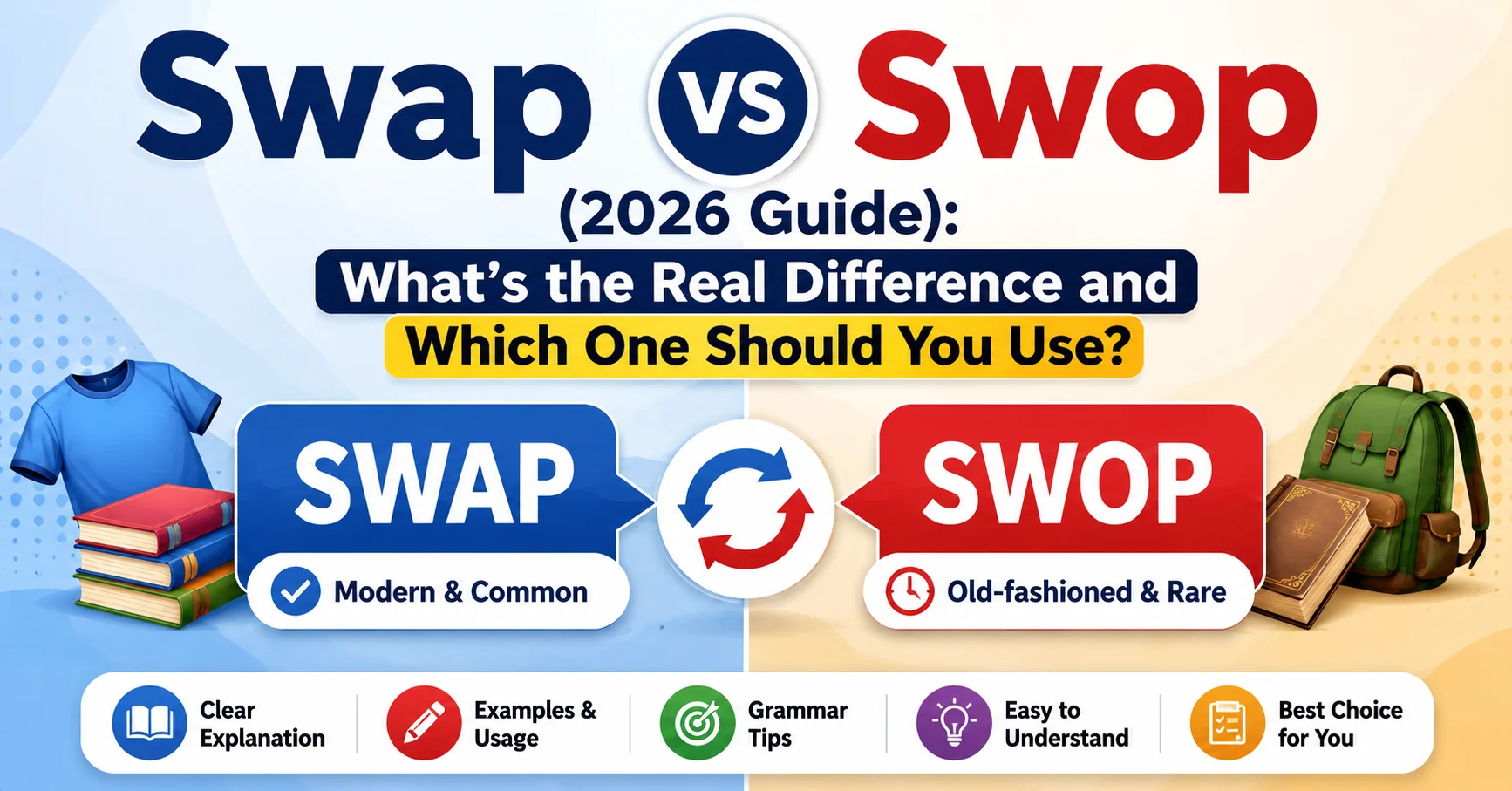
The simple answer is this: both words mean the same thing, but one is much more common today. Still, there is more to the story.
In this guide, you will learn the difference between “swap” and “swop,” where each word came from, how native speakers use them, and which version sounds more natural in modern English. You will also see real examples, grammar tips, common mistakes, and simple memory tricks.
Whether you are a student, writer, blogger, or English learner, this guide will help you use the correct word with confidence.
What Does “Swap” Mean?
The word “swap” means to exchange one thing for another. It can be used as both a noun and a verb.
People use “swap” when they trade objects, ideas, jobs, clothes, places, or even stories. It is a very common word in modern English and appears in daily conversations, movies, schools, and business settings.
Here are a few examples:
- “Can we swap seats?”
- “I swapped my blue shirt for a black one.”
- “They did a toy swap at school.”
The word sounds casual, friendly, and natural. That is why most English speakers prefer it today. In both American and British English, “swap” is considered the standard spelling.
What Does “Swop” Mean?
“Swop” also means to exchange one thing for another. The meaning is almost identical to “swap.”
However, “swop” is much less common today. It was used more often in older British English, especially many decades ago. Modern speakers rarely use it now.
You may still see “swop” in:
- Old books
- Historical writing
- Some British newspapers
- Informal regional speech
Examples:
- “They swopped jackets after the game.”
- “She offered to swop lunches.”
Even though these sentences are understandable, most modern readers expect to see “swap” instead.
The Main Difference Between Swap vs Swop
The biggest difference is not meaning. It is usage and popularity.
Here is a quick comparison:
| Feature | Swap | Swop |
|---|---|---|
| Meaning | Exchange something | Exchange something |
| Common Today? | Yes | Rare |
| Used in American English | Very common | Almost never |
| Used in British English | Common | Rare and old-fashioned |
| Sounds Modern? | Yes | Usually no |
| Preferred in Writing? | Yes | No |
So, when comparing Swap vs Swop, “swap” clearly wins in modern English usage.
Why Did “Swop” Exist in the First Place?
Many English words changed spelling over time. “Swop” was one of them.
In older British English, people sometimes used “swop” because it matched how the word sounded in speech. Over time, dictionaries and writers slowly moved toward “swap” as the standard spelling.
Language naturally changes as people use words differently. Some spellings disappear while others become dominant. That is exactly what happened here.
Today, “swop” feels outdated to many readers. Some younger English speakers have never even seen the word before.
Is “Swop” Wrong?
No, “swop” is not technically wrong. Most dictionaries still recognize it as a valid word.
But there is an important detail.
Even though it is correct, it is not the preferred modern spelling. If you use “swop” in emails, blogs, school writing, or professional content, some readers may think it is a typo.
That is why teachers, editors, and writers usually recommend using “swap.”
Here is a simple rule:
| Situation | Best Choice |
|---|---|
| Modern writing | Swap |
| School essays | Swap |
| Blogs and SEO articles | Swap |
| Business English | Swap |
| Historical or old-style writing | Swop can appear |
This makes the Swap vs Swop choice much easier for modern writers.
How Native Speakers Use “Swap”
Native English speakers use “swap” in many everyday situations. It is a flexible word that works in casual and professional conversations.
People often use it when discussing:
- Clothes
- Seats
- Jobs
- Recipes
- Toys
- Ideas
- Phone numbers
- Trading cards
Examples:
- “Let’s swap numbers.”
- “Can we swap shifts tomorrow?”
- “The kids swapped stickers.”
The word sounds friendly and natural. That is one reason why it stayed popular while “swop” slowly faded away.
Why “Swap” Is Better for SEO and Online Writing
If you run a website or blog, word choice matters. Search engines prefer clear and commonly used language.
“Swap” is searched far more often online than “swop.” Most users type “swap” into search engines because that is the spelling they know.
Using uncommon spellings may:
- Confuse readers
- Lower readability
- Reduce trust
- Hurt SEO performance
For online content, “swap” is almost always the smarter choice.
Here is a quick SEO comparison:
| SEO Factor | Swap | Swop |
|---|---|---|
| Search popularity | Very high | Very low |
| Reader familiarity | Strong | Weak |
| SEO friendliness | Excellent | Poor |
| Modern relevance | High | Low |
If your goal is clear communication, “swap” is the better option.
Examples of Swap vs Swop in Sentences
Seeing real examples makes grammar easier to understand.
Sentences Using “Swap”
| Sentence | Correct? |
|---|---|
| “Can we swap seats?” | Yes |
| “I swapped my sandwich for chips.” | Yes |
| “They did a gift swap at work.” | Yes |
Sentences Using “Swop”
| Sentence | Correct? |
|---|---|
| “Can we swop seats?” | Technically yes |
| “She swopped shoes with her sister.” | Technically yes |
| “They organized a swop event.” | Rare usage |
Even though both forms work, “swap” sounds more modern and natural.
Common Mistakes People Make
Many English learners become confused when they see both spellings online. Here are the most common mistakes.
1. Thinking “Swop” and “Swap” Have Different Meanings
They do not. Both words mean exchange.
2. Using “Swop” in Professional Writing
This can make your writing feel old-fashioned or incorrect.
3. Assuming “Swop” Is British Standard English
Modern British English mainly uses “swap,” just like American English.
4. Mixing Spellings in One Article
Choose one spelling style and stay consistent. For modern writing, use “swap.”
Avoiding these mistakes helps your English look cleaner and more professional.
Swap as a Noun and Verb
One interesting thing about “swap” is that it works as both a noun and a verb.
Swap as a Verb
This means exchanging something.
Examples:
- “We swapped jackets.”
- “She wants to swap phones.”
Swap as a Noun
This refers to the exchange itself.
Examples:
- “The class held a book swap.”
- “We arranged a cookie swap.”
This flexibility makes the word very useful in everyday English.
Real-Life Situations Where People Use “Swap”
The word appears in many parts of life. Here are common situations where people use it naturally.
| Situation | Example |
|---|---|
| School | “Let’s swap desks.” |
| Work | “Can you swap shifts with me?” |
| Fashion | “They hosted a clothing swap.” |
| Technology | “I want to swap my old phone.” |
| Gaming | “Players swap items online.” |
| Cooking | “You can swap butter for oil.” |
These examples show why “swap” remains so popular.
British English vs American English
Some people think this is mainly a British vs American issue. That is only partly true.
Years ago, British English used “swop” more often than Americans did. But modern British English now strongly prefers “swap.”
Today:
- Americans almost always write “swap.”
- British writers mostly use “swap.”
- “Swop” survives mainly in older texts.
So the gap between British and American English is now very small in this case.
Which Word Should Students Use?
Students should almost always use “swap.”
Teachers, schools, grammar tools, and style guides all prefer it. Using “swap” helps your writing look modern and correct.
If you use “swop” in homework or essays, your teacher may mark it as unusual or outdated.
Here is the safest choice:
| Writing Type | Recommended Word |
|---|---|
| Essays | Swap |
| Emails | Swap |
| Exams | Swap |
| Blogs | Swap |
| Creative old-style writing | Swop possible |
For learners, simple and modern English is always best.
Easy Memory Trick for Swap vs Swop
Need a simple trick to remember the correct choice?
Think about this:
- Swap = Standard
- Both words contain the letter “A”
That can help you remember that “swap” is the normal modern spelling.
Another easy trick:
You probably hear people say “swap” in movies, videos, and conversations. That is because it is the commonly accepted version today.
Is “Swop” Still Found in Dictionaries?
Yes. Many dictionaries still include “swop.”
But they often label it as:
- Informal
- Old-fashioned
- Mainly British
- Less common
That tells readers the word still exists, but modern English moved away from it.
Language history is full of words like this. Some spellings stay popular while others slowly disappear from daily use.
Why Word Choice Matters in English
Small spelling choices can change how readers feel about your writing.
Modern readers expect familiar language. When they see unusual spellings, they may:
- Pause while reading
- Think it is a mistake
- Lose trust in the content
Using common words improves:
- Readability
- SEO
- User experience
- Professional appearance
That is why understanding Swap vs Swop matters more than many people think.
Quick Summary Table
Here is a final side-by-side comparison.
| Topic | Swap | Swop |
|---|---|---|
| Meaning | Exchange | Exchange |
| Modern spelling | Yes | Rare |
| Common in the US | Yes | No |
| Common in the UK | Yes | Rare |
| SEO friendly | Very | Not really |
| Best for students | Yes | No |
| Best for blogs | Yes | No |
| Old-fashioned feel | No | Yes |
FAQs About Swap vs Swop
1. Is “swop” a real word?
Yes, “swop” is a real word. It means the same thing as “swap.” However, it is much less common today.
2. Which is correct: swap or swop?
Both are technically correct, but “swap” is the standard modern spelling in English.
3. Do British people say “swop”?
Some older British texts use “swop,” but modern British English mainly uses “swap.”
4. Is “swop” outdated?
In many situations, yes. Most modern writers and speakers prefer “swap.”
5. Should I use “swap” in professional writing?
Yes. “Swap” is the safest and most professional choice for essays, blogs, business writing, and SEO content.
Conclusion
The debate around Swap vs Swop is actually very simple once you understand the history behind the words.
Both words mean the same thing: to exchange something. But language changes over time, and modern English clearly prefers “swap.” It sounds natural, professional, and easy to understand.
“Swop” still exists, especially in older British writing, but it feels outdated in most modern situations. That is why students, bloggers, businesses, and native speakers usually choose “swap.”
If you want your writing to feel clear, modern, and reader-friendly, stick with “swap.”
Have you ever seen “swop” used in real life? Many readers are surprised the word even exists.
