


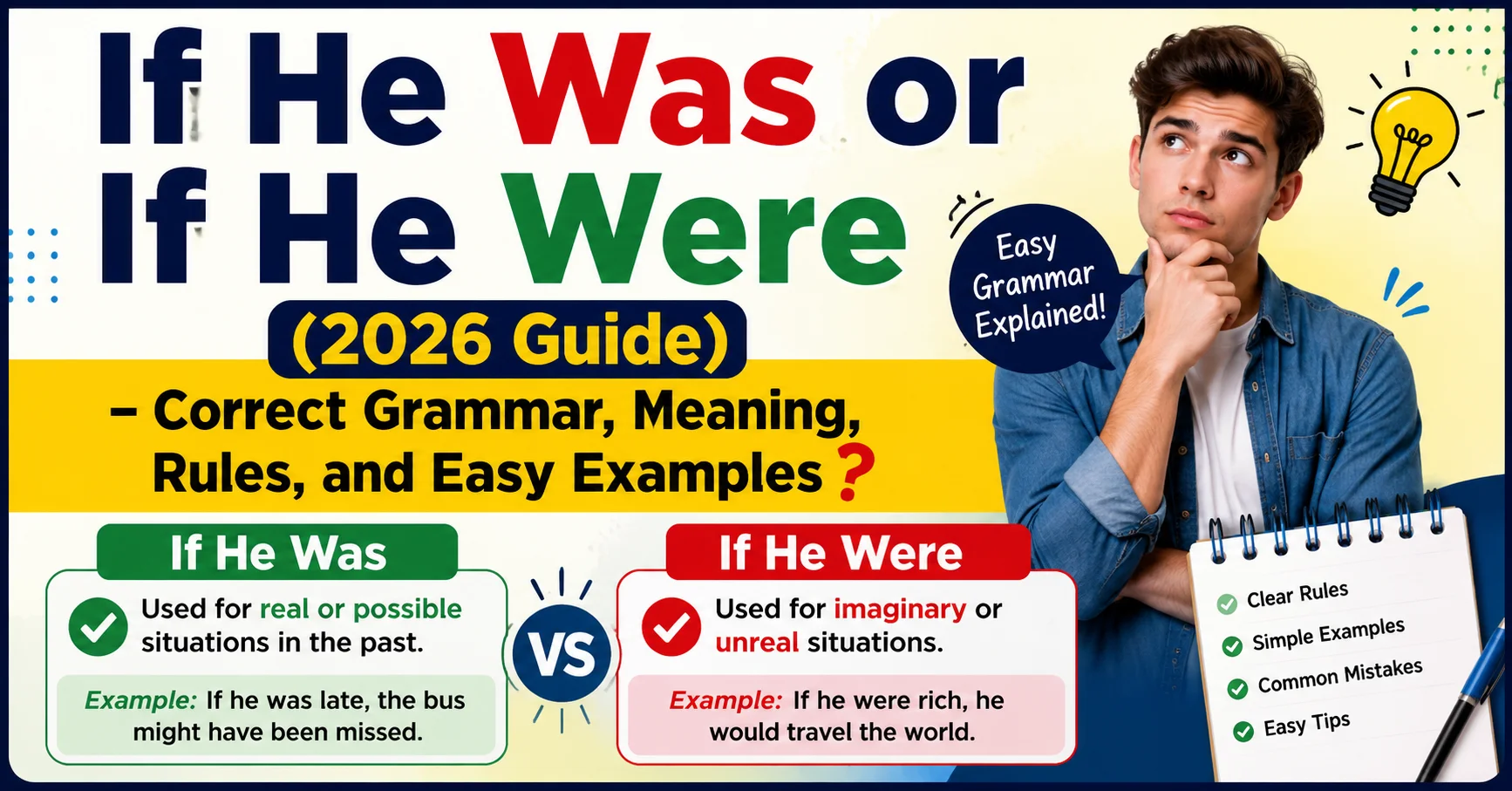
English grammar can feel confusing at times. One small phrase can make people stop and think. A perfect example is “If He Was or If He Were.” Many English learners and even native speakers struggle with this grammar rule. Both phrases sound normal in conversation, but only one may fit correctly depending on the situation.
The good news is that this topic is much easier than it looks. Once you understand the basic rule, you will quickly know when to use each phrase. In this guide, you will learn the difference between If He Was or If He Were, simple grammar rules, real-life examples, common mistakes, and easy tips to remember forever.
This article uses plain English, short explanations, and practical examples. Whether you are a student, blogger, writer, or everyday English learner, this guide will help you feel more confident.
Why People Get Confused About “If He Was or If He Were”
Many people hear both versions in movies, songs, and daily conversations. That is why the topic becomes confusing. Some people say:
- “If he was here, he would help.”
- “If he were here, he would help.”
Both may sound natural. However, grammar rules treat them differently.
The confusion happens because English has two styles of speaking:
- Everyday casual English
- Formal grammar English
In casual speech, people often use “was.” In formal grammar, “were” is usually preferred for imaginary or unreal situations.
This difference makes learners wonder which one is correct. The answer depends on the meaning of the sentence, not only the grammar structure. Once you understand this point, choosing between If He Was or If He Were becomes much simpler.
The Basic Difference Between “Was” and “Were”
The easiest way to understand the rule is to focus on reality.
| Phrase | Meaning | Example |
|---|---|---|
| If he was | Talks about something that may have happened | If he was sick, he stayed home |
| If he were | Talks about imaginary or unreal situations | If he were rich, he would travel |
The word “was” is usually used for real or possible situations from the past.
The word “were” is used for imagined, hypothetical, or unreal situations.
This grammar form is called the subjunctive mood. It sounds advanced, but the idea is simple. It helps us talk about things that are not true right now.
For example:
- “If he were taller, he could play basketball better.”
This sentence does not mean he is taller. It means he is not tall, but we are imagining it.
That is why “were” is correct here.
When to Use “If He Was”
Use “If he was” when talking about something that could really have happened in the past.
These situations are possible, uncertain, or factual.
Examples
- If he was late, the traffic was probably bad.
- If he was upset yesterday, I understand why.
- If he was at the party, I did not see him.
- If he was your teacher before, he may remember you.
In these examples, the speaker is discussing real events or possibilities. Nothing is imaginary.
Easy Tip
Use “was” when you can replace it with:
- maybe
- possibly
- perhaps
Example:
- If he was angry, I understand.
This means maybe he was angry.
That makes “was” correct.
When to Use “If He Were”
Use “If he were” for imaginary, impossible, or hypothetical situations.
This form is common in formal English and writing.
Examples
- If he were taller, he could reach the shelf.
- If he were here today, he would support us.
- If he were the manager, things would change.
- If he were my brother, I would help him.
These examples describe situations that are not true right now.
He is not taller.
He is not here.
He is not the manager.
We are simply imagining these situations.
Simple Memory Trick
If the sentence feels like a dream, wish, or fantasy, use “were.”
Simple Table to Remember the Rule
| Use | Correct Form | Example |
|---|---|---|
| Real possibility | If he was | If he was busy, he missed the call |
| Imaginary situation | If he were | If he were rich, he would buy a yacht |
| Past uncertainty | If he was | If he was there, I forgot |
| Unreal condition | If he were | If he were older, he could vote |
This table makes the difference between If He Was or If He Were very easy to understand.
Why “If He Were” Sounds More Formal
In modern English, many people use “was” in casual speaking. Native speakers do this often.
For example, someone might say:
- “If he was here, he would laugh.”
Even though formal grammar prefers “were,” casual English accepts “was” more often now.
However, in professional writing, school essays, grammar tests, and formal speaking, “were” is usually the better choice for hypothetical situations.
Formal Example
- If he were president, taxes would change.
Casual Spoken Example
- If he was president, taxes would change.
Both may appear in conversation, but grammar experts still prefer “were” in formal settings.
Understanding the Subjunctive Mood Easily
The term “subjunctive mood” sounds difficult, but the idea is actually simple.
The subjunctive is used for:
- wishes
- dreams
- imaginary ideas
- impossible situations
- suggestions
Common Examples
| Sentence | Meaning |
|---|---|
| If he were smarter | Imaginary idea |
| I wish he were here | Wish |
| If I were you | Advice |
| If she were older | Unreal condition |
The phrase “If I were you” is one of the most famous examples of the subjunctive mood.
Even native speakers who normally use casual English still say:
- “If I were you…”
This shows how common the rule remains.
Common Mistakes People Make
Many learners mix up these forms because both sound correct.
Here are some common grammar mistakes.
| Incorrect | Correct |
|---|---|
| If he were sick yesterday | If he was sick yesterday |
| If he was a millionaire, he would travel | If he were a millionaire, he would travel |
| If he were at school yesterday | If he was at school yesterday |
| If he was king, he would change laws | If he were king, he would change laws |
The key is understanding whether the situation is real or imaginary.
Ask yourself:
- Did this really happen?
- Or am I imagining it?
That answer tells you which word to use.
Real-Life Examples of “If He Was”
Here are more practical examples from everyday English.
Family Conversations
- If he was tired, let him rest.
- If he was hungry, he should have eaten earlier.
School Situations
- If he was absent, he missed the test.
- If he was confused, the teacher can explain again.
Workplace Examples
- If he was responsible for the mistake, he should fix it.
- If he was in the meeting, he knows the details.
These sentences discuss possible past facts, not imaginary situations.
Real-Life Examples of “If He Were”
Now let’s look at hypothetical examples.
Dreams and Wishes
- If he were famous, people would recognize him.
- If he were richer, he would travel the world.
Advice Situations
- If he were more careful, he would avoid problems.
- If he were you, he would apologize.
Imaginary Ideas
- If he were a superhero, he would save everyone.
- If he were invisible, nobody could find him.
These situations are not real. They exist only in imagination.
How Native Speakers Use These Phrases Today
Modern English is changing. Many native speakers now use “was” in places where formal grammar once required “were.”
You may hear:
- If he was here, he would help.
This sentence is common in casual American English.
However, grammar teachers and style guides still recommend “were” for hypothetical situations.
That means:
- Casual speech → “was” often accepted
- Formal writing → “were” preferred
This balance is important for students, bloggers, and professional writers.
If you want safer grammar, choose “were” for imaginary situations.
Quick Comparison Table
| Situation | Better Choice |
|---|---|
| Real past event | Was |
| Possible fact | Was |
| Imaginary condition | Were |
| Dream or fantasy | Were |
| Formal writing | Were |
| Casual conversation | Was or Were |
This quick table can help you remember the difference instantly.
Easy Grammar Formula
Here is a very simple grammar formula.
Use “Was”
If + possible past situation
Example:
- If he was sick, he stayed home.
Use “Were”
If + imaginary situation
Example:
- If he were rich, he would buy a mansion.
This simple structure works most of the time.
Popular Expressions Using “Were”
Some English phrases almost always use “were.”
Common Examples
| Expression | Meaning |
|---|---|
| If I were you | Giving advice |
| I wish he were here | Wish |
| If she were honest | Imaginary condition |
| As if he were king | Comparison |
These phrases sound natural because they follow traditional grammar rules.
Even fluent speakers use them regularly.
How This Rule Appears in Songs and Movies
Songs and movies often ignore strict grammar rules. Writers sometimes choose words based on rhythm or emotion.
You may hear:
- “If I was your boyfriend…”
Even though grammar books might prefer “were,” artists often choose what sounds smoother.
This is important because learners sometimes copy grammar directly from music or films.
Casual entertainment English is not always the same as formal written English.
That is why grammar guides still teach:
- “If I were…”
- “If he were…”
for hypothetical situations.
Helpful Tips to Remember Forever
Here are some easy memory tricks.
Tip 1: Think About Reality
Ask:
“Is this real or imaginary?”
- Real → was
- Imaginary → were
Tip 2: Look for Dream Words
Words like:
- would
- could
- wish
often signal hypothetical sentences.
Example:
- If he were taller, he could dunk.
Tip 3: Use “Were” in Formal Writing
If you are unsure during an exam or article, “were” is usually safer for imaginary situations.
Tip 4: Practice Daily
Read example sentences aloud. Hearing the difference helps memory.
Practice Sentences
Choose the correct option.
| Sentence | Correct Answer |
|---|---|
| If he ___ angry yesterday, I understand | was |
| If he ___ richer, he would travel | were |
| If he ___ at school, he saw the announcement | was |
| If he ___ stronger, he could lift it | were |
These small exercises help you master the rule faster.
Why This Grammar Rule Still Matters in 2026
Some people think grammar rules no longer matter because language changes over time. However, proper grammar still helps in many important areas.
Good grammar improves:
- school writing
- job applications
- blog articles
- business communication
- professional credibility
Using If He Was or If He Were correctly can make your writing sound clearer and more polished.
It also helps readers trust your knowledge and communication skills.
In online writing, strong grammar supports better readability and SEO quality too.
FAQs About “If He Was or If He Were”
Is “If he was” grammatically correct?
Yes. “If he was” is correct when discussing a real or possible past situation.
Example:
- If he was tired, he needed rest.
Is “If he were” more formal?
Yes. “If he were” is usually more formal and preferred for hypothetical situations.
Example:
- If he were president, things would change.
Can native speakers use “was” instead of “were”?
Yes. Many native speakers use “was” in casual speech, especially in American English.
However, formal grammar still prefers “were” for imaginary conditions.
Which is correct: “If I was” or “If I were”?
Traditionally, “If I were” is correct for hypothetical situations.
Example:
- If I were rich, I would travel.
How can I remember the difference quickly?
Use this simple rule:
- Real situation = was
- Imaginary situation = were
This trick works in most cases.
Conclusion
Understanding If He Was or If He Were is easier once you focus on meaning instead of memorizing complicated grammar terms.
Use “was” for real or possible situations from the past.
Use “were” for imaginary, hypothetical, or unreal ideas.
Even though casual English sometimes mixes the two, formal writing still follows this important rule. Learning the difference helps your grammar sound more natural, professional, and confident.
The best way to improve is through practice. Read example sentences, write your own, and pay attention to how native speakers use these phrases in context.
The more you practice, the easier this grammar rule becomes.
