


Introduction
Have you ever paused while writing and wondered, “Is it dysfunction or disfunction?” You are not alone. Many people get confused by these two words because they look very similar. One small letter can make a big difference. In this guide, we will break down dysfunction vs disfunction in a simple and clear way.
This article is written to help everyone, even young learners, understand the difference. We will use easy words, short sentences, and real-life examples. By the end, you will feel confident using the correct spelling every time. You will also learn why this confusion happens and how to avoid it in the future.
Let’s make this simple: one word is correct, and the other is not. But the reason behind it is interesting and useful. Keep reading, and you will master dysfunction vs disfunction in a fun and easy way.
What Does Dysfunction Mean?
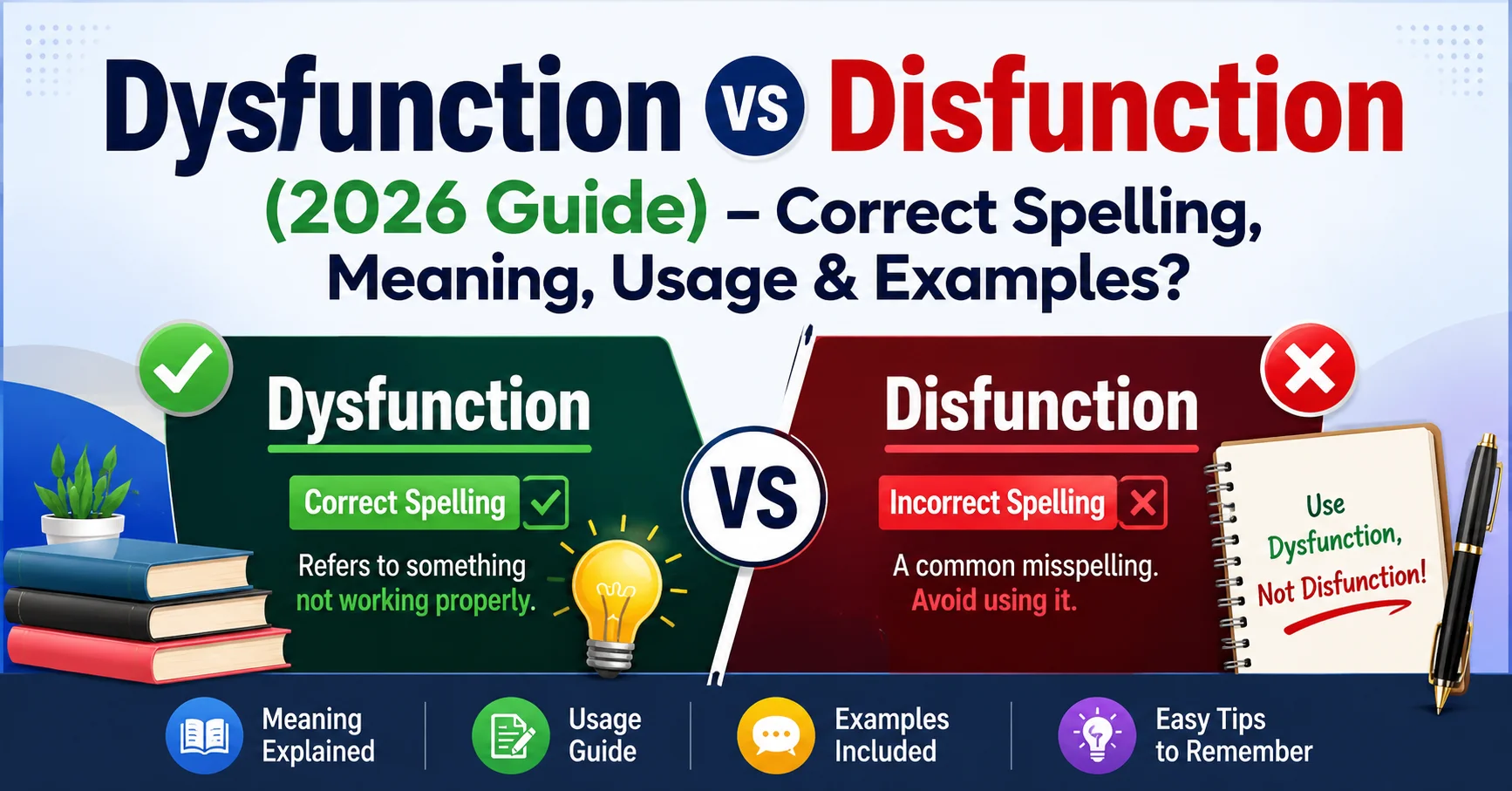
The word dysfunction means something is not working the right way. It can be used for the body, machines, systems, or even relationships. When something has a problem and cannot do its job properly, we call it a dysfunction.
For example, if a car engine stops working, it has a dysfunction. If a person’s body part does not work well, doctors may call it a dysfunction. Even in families or workplaces, when things do not run smoothly, people use this word.
The word comes from two parts. “Dys” means bad or difficult. “Function” means to work or perform. So together, dysfunction means “not working properly.” This simple meaning makes it easy to remember.
Understanding this meaning helps you avoid mistakes. When you know what the word stands for, you are less likely to spell it wrong. This is key when learning dysfunction vs disfunction.
Is Disfunction a Real Word?
Now let’s talk about the confusing part. Is disfunction a real word? The short answer is no. It is not accepted as a correct spelling in standard English.
Many people write disfunction by mistake. This happens because “dis” is a common prefix in English. Words like “dislike” or “disagree” are very common. So people assume “disfunction” should also be correct.
However, in this case, the correct prefix is “dys,” not “dis.” This is why dictionaries only recognize dysfunction. If you use disfunction in formal writing, it will likely be marked as an error.
So when comparing dysfunction vs disfunction, remember this simple rule: only dysfunction is correct. The other is just a spelling mistake.
Why Do People Confuse Dysfunction vs Disfunction?
This confusion happens because English has many prefixes. Both “dis” and “dys” sound similar, but they have different meanings. This makes it easy to mix them up.
“Dis” usually means not, opposite, or away. For example, “disconnect” means to separate. On the other hand, “dys” means something is bad or not working properly. That is why “dysfunction” fits the meaning better.
Another reason is pronunciation. When people speak fast, “dysfunction” may sound like “disfunction.” This leads to spelling errors, especially in casual writing or texting.
Also, many people learn words by hearing them first. If they never see the correct spelling, they may guess it wrong. This is very common with tricky words like this.
Understanding these reasons helps you remember the correct form in dysfunction vs disfunction.
Simple Table: Dysfunction vs Disfunction
| Word | Correct? | Meaning | Usage Example |
|---|---|---|---|
| Dysfunction | ✅ Yes | Not working properly | The system has a dysfunction. |
| Disfunction | ❌ No | Incorrect spelling | Avoid using this in writing. |
This table makes it clear and easy. Always choose dysfunction when writing.
Common Uses of the Word Dysfunction
The word dysfunction is used in many areas of life. It is a flexible and useful word. Let’s look at some common uses.
In health, doctors use it to describe body problems. For example, “kidney dysfunction” means the kidneys are not working well. In psychology, it can describe emotional or mental struggles.
In daily life, people use it to talk about relationships. A “dysfunctional family” means a family with many problems. In workplaces, a “dysfunctional team” means the team does not work well together.
Even in technology, the word is common. If software stops working, it may have a dysfunction. This wide use makes the word important to learn.
Knowing these examples helps you understand dysfunction vs disfunction better in real situations.
Table: Areas Where Dysfunction Is Used
| Area | Example Sentence |
|---|---|
| Health | The patient has heart dysfunction. |
| Family | They grew up in a dysfunctional home. |
| Workplace | The office suffers from poor communication dysfunction. |
| Technology | The app has a serious system dysfunction. |
This shows how widely the word is used in everyday language.
Easy Trick to Remember the Correct Spelling
Here is a simple trick to remember the right spelling. Focus on the prefix “dys.” It is used in many medical and scientific words.
Think of words like “dyslexia” or “dyspepsia.” They all use “dys” to show something is not working properly. This pattern can help you remember dysfunction.
Another trick is to break the word into parts: dys + function. Say it slowly in your mind. This makes it easier to spell correctly.
You can also practice writing it a few times. Repetition helps your brain remember the correct form. Over time, it will feel natural.
These small tricks can help you avoid mistakes when dealing with dysfunction vs disfunction.
Real-Life Examples You Can Relate To
Let’s look at some real-life examples. These will help you understand the word in a simple way.
Imagine your phone stops working properly. Apps crash, and the screen freezes. You can say your phone has a dysfunction. It is not doing its job correctly.
Now think about a group project at school. If no one works together, the project may fail. This is called team dysfunction.
In families, arguments and lack of communication can create dysfunction. This affects everyone involved.
These examples show how the word fits into daily life. They also make it easier to remember the correct spelling in dysfunction vs disfunction.
Table: Correct vs Incorrect Usage
| Sentence Type | Example Sentence | Correct? |
|---|---|---|
| Correct Usage | The machine has a dysfunction. | ✅ Yes |
| Incorrect Usage | The machine has a disfunction. | ❌ No |
| Correct Usage | Family dysfunction can be stressful. | ✅ Yes |
| Incorrect Usage | Family disfunction can be stressful. | ❌ No |
This comparison helps you spot mistakes quickly.
Why Correct Spelling Matters
You may wonder, “Does one letter really matter?” The answer is yes. Correct spelling shows clarity and professionalism.
When you use the right word, people understand you better. It also builds trust. Readers feel confident in your writing when it is accurate.
In school or work, spelling mistakes can lower your credibility. Even small errors like disfunction can make a big difference.
Search engines also prefer correct spelling. If you write online, using the right words helps your content rank better.
So learning dysfunction vs disfunction is not just about grammar. It is about clear communication and trust.
Common Mistakes to Avoid
Many people make simple mistakes with this word. The most common one is using “dis” instead of “dys.” This happens because “dis” is more familiar.
Another mistake is typing too fast. People may skip checking their spelling. This leads to errors like disfunction.
Some people rely on autocorrect. But not all tools catch this mistake. So it is important to double-check your work.
Also, avoid guessing the spelling. If you are unsure, take a moment to think or look it up.
Avoiding these mistakes will help you master dysfunction vs disfunction with ease.
Helpful Tips for Better Writing
Improving your spelling takes practice. Start by reading more. Seeing words in context helps your brain learn them.
Write regularly. The more you write, the more confident you become. Practice using words like dysfunction in sentences.
Use simple tools like dictionaries or spell checkers. They can guide you when you are unsure.
Ask for feedback. Friends or teachers can help you spot mistakes. This makes learning faster and more effective.
These tips will not only help with this word but also improve your overall writing skills.
FAQs
1. What is the correct spelling: dysfunction or disfunction?
The correct spelling is dysfunction. The word disfunction is incorrect and should be avoided in writing.
2. Why do people write disfunction instead of dysfunction?
People confuse the prefixes “dis” and “dys.” They sound similar, but only “dys” is correct in this case.
3. What does dysfunction mean in simple words?
It means something is not working properly. It can be used for people, machines, or systems.
4. Is disfunction ever correct in any context?
No, disfunction is not accepted as a correct word in standard English.
5. How can I remember the correct spelling?
Think of other “dys” words like dyslexia. This helps you remember that dysfunction is correct.
Conclusion
Now you clearly understand the difference between dysfunction vs disfunction. One is correct, and the other is a common mistake. The correct word is dysfunction, and it means something is not working properly.
This guide showed you simple explanations, real examples, and helpful tips. You learned why people get confused and how to avoid that confusion. You also saw how important correct spelling is in daily life.
Keep practicing and using the word in your writing. Over time, it will become natural. Small improvements like this can make a big difference in your communication.
If you found this helpful, try using dysfunction in your next sentence. Practice makes perfect, and now you are one step ahead!
