

Language is a big part of who we are. It connects us to family, culture, memories, and even emotions. But many people still get confused about the terms Mother Tongue vs Native Language. Are they the same? Are they different? Which term should you use?
The truth is simple: these two phrases are closely related, but they are not always identical. In some situations, they mean the same thing. In others, they describe different parts of a person’s language journey.
This guide explains everything in easy words. You will learn the meanings, differences, examples, and real-life use cases of both terms. Whether you are a student, writer, teacher, traveler, or language learner, this article will help you understand the topic clearly.
What Is a Mother Tongue?
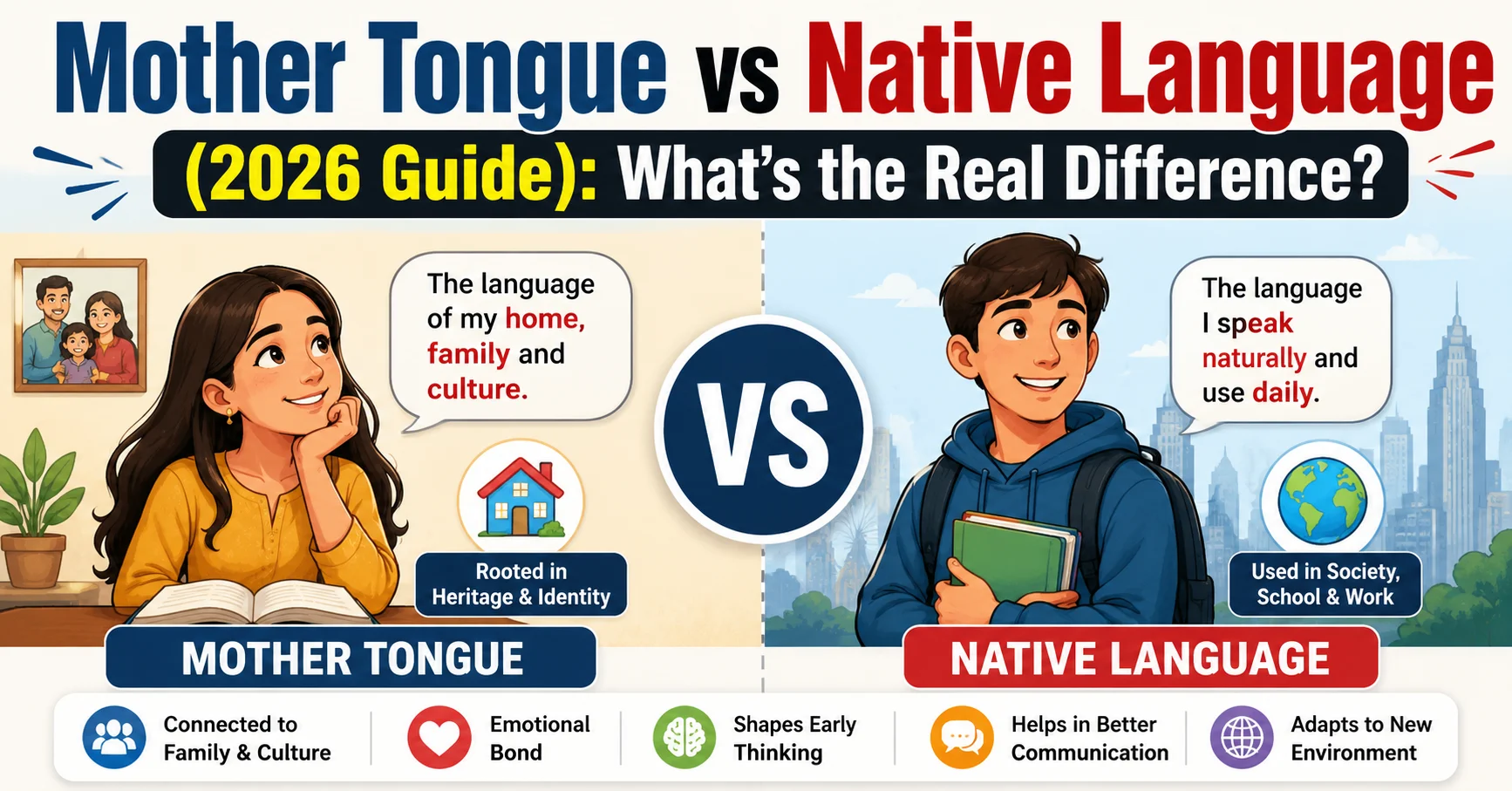
A mother tongue is the first language a child hears at home while growing up. It is usually spoken by parents or family members. This language becomes part of the child’s early life and emotional world.
For many people, the mother tongue is tied strongly to culture and family traditions. It is the language used during childhood stories, family talks, songs, and celebrations. Because of this emotional connection, many people feel closest to their mother tongue even if they later become fluent in other languages.
For example, a child born in Pakistan may hear Punjabi at home from parents and grandparents. Punjabi becomes the child’s mother tongue. Even if the child later studies in English-medium schools, Punjabi still remains the mother tongue.
Some people also call it a “heritage language” because it carries family history and identity.
What Is a Native Language?
A native language is the language a person learns naturally from birth and speaks fluently without formal study. It is usually the language a person understands best during childhood.
In many cases, the native language and mother tongue are the same. But not always.
For example, imagine a child whose family speaks Turkish at home in Germany. The child grows up hearing Turkish from parents but spends most of the day using German at school and with friends. Over time, German may become the child’s strongest and most natural language. In that case:
| Term | Language |
|---|---|
| Mother Tongue | Turkish |
| Native Language | German |
This shows why understanding Mother Tongue vs Native Language matters.
Why People Confuse These Terms
Many dictionaries use both terms almost the same way. Schools, forms, and websites also mix them together. Because of this, most people believe they are identical.
The confusion grows because language experiences are different around the world. Some people grow up with one language only. Others grow up bilingual or multilingual.
In simple situations, the two terms overlap completely. But in modern societies where migration and mixed cultures are common, the meanings can separate.
Here is a quick comparison:
| Feature | Mother Tongue | Native Language |
|---|---|---|
| Learned at home first | Yes | Usually |
| Emotional connection | Strong | Sometimes |
| Strongest language | Not always | Often |
| Linked to culture | Yes | Sometimes |
| Can change over time | Rarely | Possibly |
This table explains the core idea behind Mother Tongue vs Native Language in a simple way.
The Historical Meaning Behind “Mother Tongue”
The phrase “mother tongue” has been used for centuries. Long ago, children mostly learned language from mothers and family members at home. That is why the phrase became popular.
The term carries warmth and emotional value. It often reminds people of childhood memories and family traditions.
Many countries protect mother tongues because they are important for cultural survival. UNESCO and education experts often encourage children to learn in their mother tongue during early school years. Studies show children learn faster when they begin education in a familiar language.
For example, a child who speaks Sindhi at home may understand lessons better if early education also uses Sindhi. This helps build confidence and learning skills.
How Native Language Is Viewed Today
The phrase “native language” is more focused on fluency and natural use. It is common in education, linguistics, and language testing.
People often ask:
- “Are you a native English speaker?”
- “What is your native language?”
- “Do you speak like a native?”
Here, the focus is not culture alone. It is about natural ability and comfort with the language.
Sometimes people change countries very young and become more fluent in a new language than in their family language. In such cases, their native language may feel different from their mother tongue.
This is one of the biggest reasons the debate around Mother Tongue vs Native Language continues today.
Mother Tongue vs Native Language in Real Life
The best way to understand this topic is through real examples.
Example 1: Same Language
A child is born in Italy. Parents speak Italian. School is in Italian.
| Term | Language |
|---|---|
| Mother Tongue | Italian |
| Native Language | Italian |
In this case, both are identical.
Example 2: Different Languages
A child is born in Canada to Chinese parents.
At home: Mandarin
At school: English
As the child grows, English becomes stronger.
| Term | Language |
|---|---|
| Mother Tongue | Mandarin |
| Native Language | English |
This situation is becoming more common worldwide.
Example 3: Bilingual Childhood
A child grows up equally with Spanish and English.
| Term | Language |
|---|---|
| Mother Tongue | Spanish and English |
| Native Language | Spanish and English |
Some people naturally have two native languages.
Which Term Should You Use?
The answer depends on context.
Use mother tongue when discussing:
- Family language
- Cultural roots
- Heritage
- Childhood home communication
Use native language when discussing:
- Fluency
- Natural speaking ability
- Language learning
- Education or linguistics
Here is a quick guide:
| Situation | Better Term |
|---|---|
| Talking about culture | Mother Tongue |
| Talking about fluency | Native Language |
| School language forms | Either |
| Linguistics discussions | Native Language |
| Family identity | Mother Tongue |
Understanding context helps you choose the right phrase naturally.
Can a Person Have More Than One Native Language?
Yes, absolutely.
Many children grow up hearing two languages equally from birth. This is common in multilingual homes and countries.
For example:
- English and French in Canada
- Urdu and Punjabi in Pakistan
- Spanish and English in the United States
When both languages develop naturally together, a person may have two native languages.
Experts often call this “simultaneous bilingualism.”
This does not confuse children. In fact, research shows bilingual children often develop strong communication skills and mental flexibility.
Can Your Native Language Change?
In some cases, yes.
A person may stop using their childhood language regularly and become more fluent in another language later in life. Over time, the newer language may feel more natural.
For example:
- A Korean child moves to Australia at age four.
- English becomes dominant.
- Korean becomes weaker over time.
The person’s mother tongue may still be Korean because of family roots. But English may become the stronger native-like language.
This is why the discussion around Mother Tongue vs Native Language is more complex today than in the past.
Why Mother Tongue Education Matters
Experts strongly support early education in a child’s mother tongue.
Children understand lessons faster in familiar languages. They feel safer, more confident, and more connected.
Benefits include:
- Better reading skills
- Faster learning
- Stronger emotional development
- Higher classroom participation
- Improved confidence
Many countries now support multilingual education systems because children learn best when they first understand concepts in a familiar language.
A strong mother tongue can also help children learn second languages more easily later.
Common Mistakes People Make
People often misunderstand these language terms. Here are common mistakes.
Mistake 1: Thinking They Always Mean the Same Thing
They often overlap, but not always.
Mistake 2: Assuming Native Means “Official Language”
A country’s official language may not be a person’s native language.
For example, English is official in many places, but not everyone grows up speaking it at home.
Mistake 3: Believing Accent Decides Native Ability
Some native speakers have mixed accents because of migration or multilingual environments.
Mistake 4: Ignoring Cultural Identity
A person may feel emotionally connected to their mother tongue even if they use another language daily.
Emotional Connection to Mother Tongue
Language is not only about communication. It is also about emotion.
Many people feel happiest expressing deep feelings in their mother tongue. Childhood memories, jokes, songs, and family traditions often feel more meaningful in that language.
Even people who move abroad for decades may still dream or pray in their mother tongue.
That emotional connection is one reason why the phrase “mother tongue” remains powerful worldwide.
Mother Tongue vs First Language vs Native Language
People also confuse these three terms together.
Here is a simple explanation:
| Term | Meaning |
|---|---|
| Mother Tongue | Family or heritage language |
| First Language | First language learned |
| Native Language | Naturally fluent language |
Sometimes all three are the same. Sometimes they differ.
For multilingual people, the differences become more noticeable.
How Globalization Changed Language Identity
The modern world has changed how people experience language.
Families move across countries more often now. Children watch global media online. Schools teach international languages early.
Because of this, many people grow up with mixed language identities.
A child may:
- Speak Arabic at home
- Learn English online
- Study in French
- Live in Germany
In such situations, defining one single native language becomes difficult.
This modern reality has made discussions about Mother Tongue vs Native Language more important than ever.
The Role of Language in Identity
Language shapes identity deeply.
People often feel proud of their mother tongue because it connects them to ancestors, traditions, and community. Losing that language can sometimes feel like losing part of personal identity.
At the same time, native language shapes confidence and daily communication.
A person may emotionally belong to one language but professionally use another. Both languages become important parts of life.
That is why respecting all language backgrounds matters.
Simple Examples From Different Countries
Here are quick examples from around the world.
| Country Situation | Mother Tongue | Native Language |
|---|---|---|
| Punjabi family in UK | Punjabi | English |
| Japanese family in Brazil | Japanese | Portuguese |
| Arabic-speaking child in France | Arabic | French |
| Spanish-English bilingual home | Spanish & English | Spanish & English |
These examples help explain how language identity can differ.
FAQs About Mother Tongue vs Native Language
Is mother tongue always the first language?
Usually yes, but not always. Some children hear many languages from birth. In those cases, they may have multiple first languages.
Can someone forget their mother tongue?
Yes. If a person stops using it for many years, fluency may weaken. However, emotional connection often remains strong.
Is native language the language spoken best?
Often yes. A native language is usually the language a person uses naturally and fluently.
Can English become someone’s native language later?
Yes. A child who moves early to an English-speaking country may grow up speaking English naturally.
Which term is more correct?
Both are correct. The best term depends on the situation and meaning you want to express.
Final Thoughts on Mother Tongue vs Native Language
Understanding Mother Tongue vs Native Language is easier once you focus on one key idea: mother tongue is about roots, while native language is often about natural fluency.
For some people, both terms describe the same language. For others, they represent different parts of life and identity.
In today’s global world, multilingual experiences are normal. People grow up with multiple cultures, languages, and identities. Because of this, language terms are more flexible than before.
Still, every language a person carries has value. A mother tongue keeps cultural memories alive. A native language shapes communication and confidence. Together, they tell the story of who we are.
Whether you speak one language or five, your language journey is part of your identity—and that makes it important.
