


Introduction
Modern IT environments are more complex than ever. Businesses run hundreds of applications across virtual machines, servers, databases, and cloud platforms. Keeping track of how these systems connect can be difficult. When one application fails, it may affect many other services across the network.
This is where Vrealize Infrastructure Navigator becomes valuable. It helps IT teams discover application relationships automatically and provides visibility into application dependencies running inside VMware virtual environments. Instead of manually documenting connections between servers and applications, administrators can use this tool to gain a clear view of their infrastructure.
Many organizations struggle with troubleshooting, migration planning, and infrastructure management because they lack accurate dependency information. Vrealize Infrastructure Navigator solves this problem by identifying communication patterns between applications and displaying them in an easy-to-understand format.
In this guide, you will learn what Vrealize Infrastructure Navigator is, how it works, its features, benefits, use cases, deployment process, best practices, and why it remains an important concept for VMware administrators.
What Is Vrealize Infrastructure Navigator?
Vrealize Infrastructure Navigator is a VMware solution designed to discover and map application dependencies within virtualized environments. It works alongside VMware vCenter and provides visibility into relationships between virtual machines and applications.
The tool automatically identifies application services running inside virtual machines and tracks how they communicate with one another. This information helps administrators understand application architecture without relying on manual documentation.
For many organizations, maintaining accurate dependency maps is difficult because applications constantly change. New servers are added, services are updated, and workloads move between systems. Vrealize Infrastructure Navigator simplifies this process by continuously monitoring and updating dependency information.
Its primary purpose is to improve visibility, support troubleshooting, and help IT teams make better decisions regarding infrastructure changes.
Why Application Dependency Mapping Matters
Application dependency mapping is one of the most important aspects of modern infrastructure management. Businesses depend on interconnected applications that often span multiple systems and services.
Without dependency mapping, administrators may not know which systems rely on one another. A simple server update could unexpectedly impact critical business applications.
Here are some common challenges organizations face without dependency mapping:
| Challenge | Impact |
|---|---|
| Unknown application relationships | Increased downtime |
| Incomplete documentation | Troubleshooting delays |
| Risky infrastructure changes | Service interruptions |
| Migration complexity | Failed projects |
| Poor visibility | Higher operational costs |
By using tools like Vrealize Infrastructure Navigator, organizations gain a better understanding of application interactions and can reduce operational risks.
Key Features of Vrealize Infrastructure Navigator
One reason many VMware administrators appreciate Vrealize Infrastructure Navigator is its feature-rich design. The platform focuses on visibility, discovery, and dependency analysis.
Some key features include:
| Feature | Description |
| Automatic Discovery | Detects applications running on virtual machines |
| Dependency Mapping | Maps communication between applications |
| Application Visibility | Displays application relationships |
| VMware Integration | Works with VMware environments |
| Continuous Monitoring | Updates dependency information automatically |
These capabilities help organizations understand how applications operate within their infrastructure.
Instead of spending hours documenting relationships manually, administrators can rely on automated discovery and mapping tools.
How Vrealize Infrastructure Navigator Works
The operation of Vrealize Infrastructure Navigator is based on application discovery and traffic analysis. The platform examines virtual machines and identifies running applications and services.
Once applications are discovered, the tool monitors communication patterns. It determines which systems exchange information and how frequently those interactions occur.
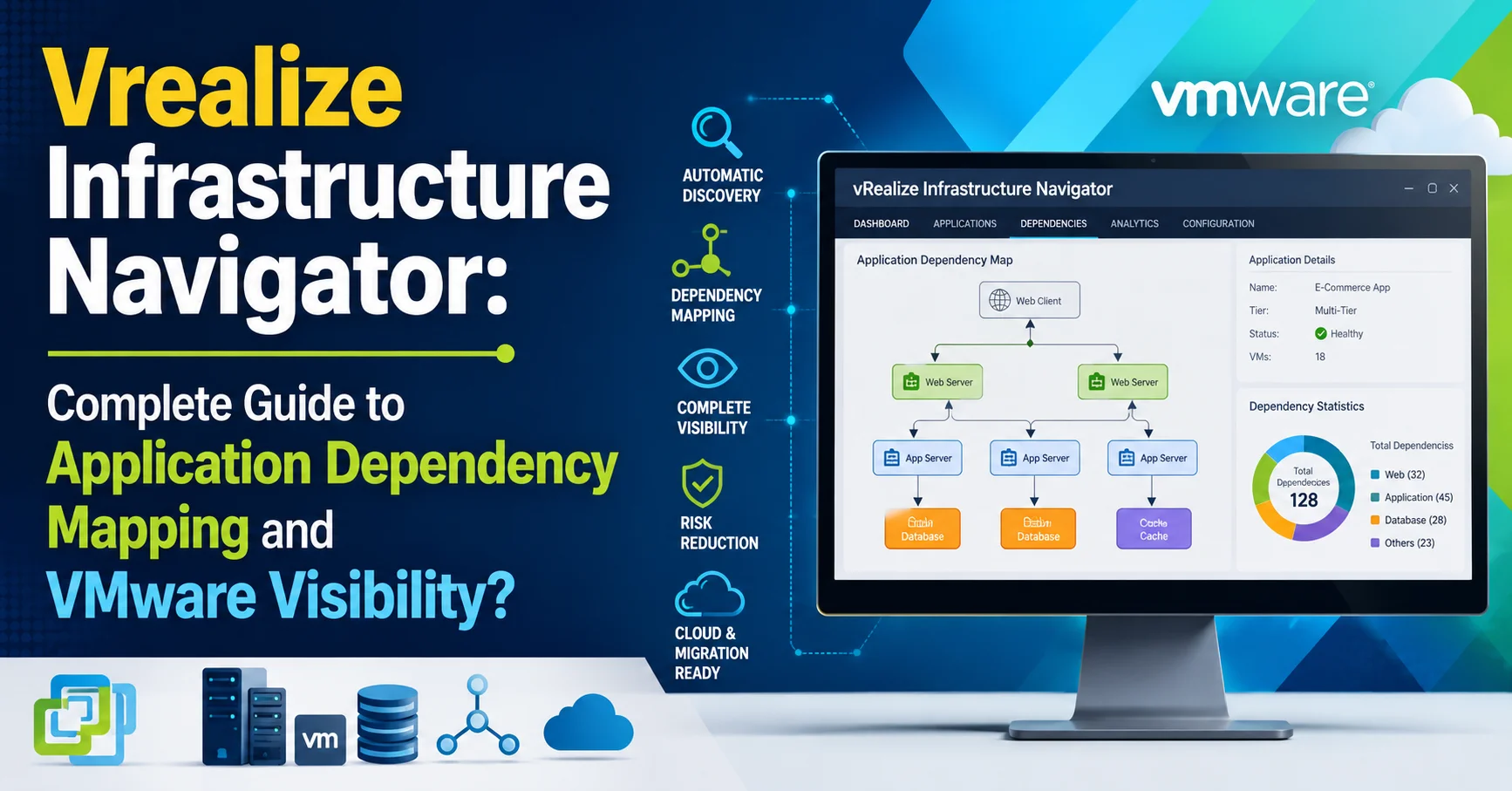
The collected information is then transformed into visual dependency maps. These maps allow administrators to see relationships between:
- Web servers
- Database servers
- Application servers
- Middleware components
- Business applications
This visual approach makes infrastructure management much easier. Teams can quickly identify critical connections and understand how applications depend on one another.
Benefits of Using Vrealize Infrastructure Navigator
Organizations gain several advantages when implementing Vrealize Infrastructure Navigator within VMware environments.
Improved Visibility
One of the biggest benefits is increased infrastructure visibility. Administrators can view application relationships that would otherwise remain hidden.
Faster Troubleshooting
When issues occur, dependency maps help teams quickly identify affected systems. This reduces downtime and improves service reliability.
Better Change Management
Infrastructure changes become safer because teams understand which applications may be impacted.
Easier Migration Planning
Organizations planning cloud migrations or data center moves benefit from accurate dependency information.
Reduced Documentation Effort
Automated discovery reduces the need for manual documentation.
| Benefit | Business Value |
| Visibility | Better decision making |
| Troubleshooting | Faster issue resolution |
| Change Management | Lower risk |
| Migration Planning | Improved project success |
| Automation | Time savings |
Common Use Cases
Many organizations use Vrealize Infrastructure Navigator for a variety of infrastructure management tasks.
One common use case is data center migration planning. Before moving workloads, administrators need to understand application dependencies. Dependency maps help ensure that connected systems move together.
Another use case is disaster recovery planning. Knowing application relationships allows organizations to prioritize critical services during recovery efforts.
Security teams can also use dependency information to identify communication paths between applications.
Additional use cases include:
- Infrastructure audits
- Capacity planning
- Application modernization
- VMware optimization
- Cloud migration assessments
These scenarios demonstrate the practical value of dependency mapping.
Integration with VMware Ecosystem
One major strength of Vrealize Infrastructure Navigator is its integration with VMware technologies.
The solution works closely with VMware management platforms and virtualized infrastructure components. This integration provides a unified view of virtual machines and application dependencies.
Administrators can access application relationship information directly within VMware management interfaces. This creates a seamless management experience and reduces the need to switch between multiple tools.
For organizations already invested in VMware technologies, this integration simplifies deployment and adoption.
The ability to work within existing workflows makes the platform especially attractive for enterprise environments.
Best Practices for Successful Deployment
Deploying Vrealize Infrastructure Navigator effectively requires planning and preparation.
Start by identifying critical applications and workloads. Understanding business priorities helps teams focus on the most important systems first.
Administrators should also maintain accurate VMware inventory information. Clean infrastructure data improves dependency mapping accuracy.
Recommended best practices include:
| Best Practice | Reason |
| Identify critical applications | Prioritize monitoring |
| Maintain inventory accuracy | Improve visibility |
| Review dependency maps regularly | Keep information current |
| Train administrators | Maximize platform value |
| Integrate with change management | Reduce risks |
Following these practices can improve implementation success and long-term value.
Challenges and Limitations
Although Vrealize Infrastructure Navigator provides significant benefits, organizations should also understand its limitations.
Like many dependency mapping tools, results depend on visibility into monitored environments. Applications operating outside supported environments may not be fully mapped.
Complex infrastructures may also require additional analysis to interpret dependency information effectively.
Another challenge involves maintaining accurate application identification. Changes in workloads and services can impact mapping results if not monitored properly.
Despite these limitations, the platform remains highly valuable for VMware-centric environments.
The key is understanding how the tool fits into broader infrastructure management strategies.
Real-World Example of Dependency Mapping
Imagine an online retail company running several applications:
- Customer website
- Inventory system
- Payment processing platform
- Product database
At first glance, these systems may appear independent. However, they often communicate constantly behind the scenes.
Using Vrealize Infrastructure Navigator, administrators can visualize these relationships. They may discover that the website depends on multiple databases and backend services.
If a database server experiences issues, the dependency map immediately shows which applications may be affected.
This visibility helps teams respond faster and avoid prolonged outages.
In real-world environments, understanding these relationships can save businesses significant time and money.
How Dependency Mapping Supports Cloud Migration
Cloud migration projects often fail because organizations overlook application dependencies.
When workloads move to the cloud, connected systems must continue communicating properly. Missing a dependency can result in service disruptions.
Vrealize Infrastructure Navigator helps migration teams identify application relationships before migration begins.
Administrators can use dependency maps to:
- Identify connected workloads
- Group applications logically
- Reduce migration risks
- Improve planning accuracy
- Validate migration readiness
By understanding application architecture beforehand, organizations can execute smoother migrations and achieve better outcomes.
Future of Infrastructure Visibility
As IT environments become more distributed, infrastructure visibility remains critical. Organizations now manage workloads across data centers, private clouds, and public clouds.
Modern dependency mapping solutions continue evolving to support these hybrid environments.
The concepts behind Vrealize Infrastructure Navigator remain highly relevant because businesses still need visibility into application relationships.
Future infrastructure management platforms are expected to provide deeper analytics, automation, and artificial intelligence capabilities. However, dependency mapping will remain a foundational requirement.
Organizations that understand application relationships will be better prepared for future technology changes.
Frequently Asked Questions
What is vRealize Infrastructure Navigator used for?
Vrealize Infrastructure Navigator is used to discover applications and map dependencies within VMware virtual environments. It helps administrators understand how systems communicate and interact.
Why is dependency mapping important?
Dependency mapping helps organizations identify application relationships, reduce downtime, improve troubleshooting, and support infrastructure planning.
Does vRealize Infrastructure Navigator work automatically?
Yes. The platform automatically discovers applications and monitors communication patterns to create dependency maps.
Can it help with cloud migration projects?
Yes. Understanding application dependencies is essential for successful cloud migrations, and the tool provides visibility into those relationships.
What are the main benefits of vRealize Infrastructure Navigator?
The main benefits include improved visibility, faster troubleshooting, better change management, easier migration planning, and reduced manual documentation.
Conclusion
Managing modern IT infrastructure requires more than simply monitoring servers and virtual machines. Organizations must also understand how applications interact and depend on one another. This is where Vrealize Infrastructure Navigator provides tremendous value.
By automatically discovering applications and mapping dependencies, the platform helps administrators gain deeper visibility into their environments. It supports troubleshooting, migration planning, change management, and operational efficiency.
As infrastructure continues evolving toward hybrid and cloud-based architectures, dependency mapping remains essential. Organizations that invest in visibility and understanding of application relationships can reduce risk, improve reliability, and make better technology decisions.
Whether you are planning a migration, improving operational efficiency, or simply seeking greater insight into your VMware environment, Vrealize Infrastructure Navigator offers an effective way to understand the connections that keep your business running.
