


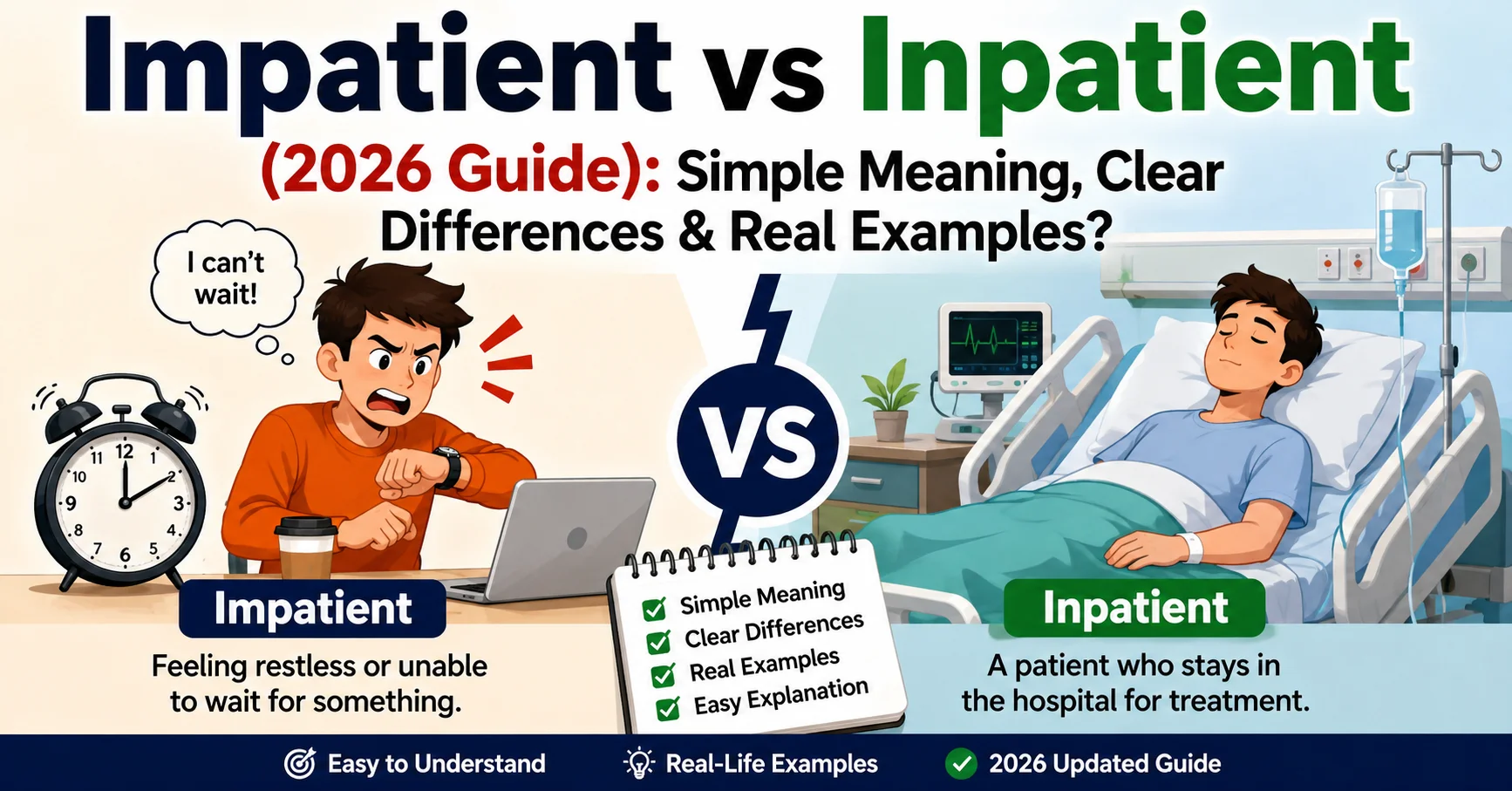
Understanding Impatient vs Inpatient can feel confusing at first. Many people mix these words because they look and sound similar. But their meanings are completely different. One is related to feelings, and the other is related to medical care. In this guide, you will learn Impatient vs Inpatient in the simplest way possible so you never confuse them again.
We will break everything into easy explanations, real-life examples, tables, and simple tips. This article is written in a very easy style so even a young student can understand it. By the end, Impatient vs Inpatient will feel simple and clear in your mind.
What Does Impatient vs Inpatient Really Mean?
The first step in learning Impatient vs Inpatient is understanding their basic meanings. The word “impatient” describes a feeling. It means you cannot wait calmly for something. For example, you feel impatient when you are waiting for food or a message.
On the other hand, “inpatient” is a medical term. It describes a patient who stays in a hospital for treatment. This has nothing to do with emotions. It is about healthcare services.
So, Impatient vs Inpatient is really a comparison between emotion and medicine. One is a behavior, and the other is a hospital-related term. Understanding this difference helps you avoid common grammar mistakes in writing and speaking.
Why People Confuse Impatient vs Inpatient
Many learners struggle with Impatient vs Inpatient because the spelling difference is very small. Only one letter changes the meaning completely. This makes it tricky, especially for beginners.
Another reason is pronunciation. Both words sound very similar when spoken quickly. This creates confusion in daily communication, especially in texting or casual writing.
Also, both words are used in different contexts. One appears in emotional situations, and the other appears in medical or hospital settings. Without clear understanding, people often mix them up. That is why learning Impatient vs Inpatient with examples is very important for clear communication.
Meaning of Impatient (Simple Explanation)
The word “impatient” describes a feeling of restlessness or lack of patience. When someone wants something quickly and cannot wait calmly, they are called impatient.
For example, a child waiting for a toy may become impatient. Similarly, someone waiting in a long line may feel the same way. It is a very common human emotion.
When using Impatient vs Inpatient, remember that “impatient” always relates to behavior or emotions. It has nothing to do with hospitals or medical treatment. This is one of the easiest ways to remember the difference clearly.
Meaning of Inpatient (Medical Term Explained)
“Inpatient” is a medical word used in hospitals. It refers to a patient who stays inside the hospital for treatment. These patients are admitted for at least one night or longer.
For example, after surgery, a patient may become an inpatient because they need monitoring. Doctors and nurses take care of them during their stay.
In Impatient vs Inpatient, this word is strictly medical. It is not used for emotions or daily feelings. Instead, it is used in healthcare systems, insurance, and hospital records. This makes it very different from “impatient.”
Impatient vs Inpatient: Key Differences Table
Here is a simple table to help you understand Impatient vs Inpatient quickly:
| Feature | Impatient | Inpatient |
|---|---|---|
| Meaning | Feeling unable to wait | Hospital patient staying overnight |
| Type | Emotion/behavior | Medical term |
| Usage | Daily life conversations | Healthcare system |
| Example | “I am impatient for lunch.” | “She is an inpatient after surgery.” |
| Context | Personal feelings | Hospital treatment |
This table makes Impatient vs Inpatient very easy to understand in one glance.
Real-Life Examples of Impatient vs Inpatient
Let’s look at simple examples of Impatient vs Inpatient in real life. These examples help you see how both words are used differently.
Impatient examples:
- I feel impatient while waiting for my exam results.
- He became impatient during the long meeting.
- She is impatient for her birthday party.
Inpatient examples:
- The doctor admitted him as an inpatient.
- She stayed an inpatient for three days after surgery.
- The hospital has many inpatients in the ward.
These examples clearly show how Impatient vs Inpatient works in different situations.
Common Mistakes People Make with Impatient vs Inpatient
Many people accidentally mix up Impatient vs Inpatient in writing. One common mistake is using “inpatient” when talking about feelings. This is incorrect.
Another mistake is spelling. Because the words are similar, people often write the wrong one without noticing. This can change the meaning completely.
For example:
- Wrong: I am inpatient for the movie. ❌
- Correct: I am impatient for the movie. ✔️
Avoiding these mistakes is important if you want clear communication. Understanding Impatient vs Inpatient properly helps improve your grammar accuracy.
Easy Table of Example Sentences
Here is another helpful table for Impatient vs Inpatient practice:
| Situation | Sentence with Impatient | Sentence with Inpatient |
|---|---|---|
| Waiting | I am impatient for dinner. | ❌ Not used |
| Hospital | ❌ Not used | He is an inpatient at the hospital. |
| Travel | She is impatient for vacation. | ❌ Not used |
| Treatment | ❌ Not used | The inpatient needs rest. |
This table shows how Impatient vs Inpatient changes depending on context.
How to Remember Impatient vs Inpatient Easily
A simple trick can help you remember Impatient vs Inpatient. Think of “impatient” as emotional and “inpatient” as medical.
Another memory trick is:
- “Im-” = emotions and feelings
- “In-” = inside hospital
Also, “patient” in “inpatient” reminds you of hospital patients. This makes it easier to recall during writing or exams.
Using these simple tricks, Impatient vs Inpatient becomes much easier to remember for daily use.
Impatient vs Inpatient in Everyday Communication
In daily conversations, Impatient vs Inpatient appears in very different ways. You might hear “impatient” in normal talks, social media, or texting. It shows emotions like excitement or frustration.
“Inpatient,” however, is mostly used in medical conversations. You will hear it in hospitals, doctor reports, or insurance forms.
Understanding Impatient vs Inpatient helps you avoid confusion when reading or speaking English. It also improves your confidence in grammar usage.
Why Learning Impatient vs Inpatient Matters for SEO and Writing
For writers, bloggers, and students, knowing Impatient vs Inpatient is very important. Using the wrong word can confuse readers and reduce content quality.
In SEO writing, small grammar mistakes can affect trust. Readers may lose confidence if content is unclear. That is why understanding Impatient vs Inpatient improves both writing quality and user experience.
Clear language helps search engines also understand your content better. This leads to better rankings and visibility online.
Tips to Avoid Confusion in Impatient vs Inpatient
Here are some simple tips to master Impatient vs Inpatient:
- Always check if the word is about feelings or medicine
- Remember “impatient = emotional”
- Remember “inpatient = hospital”
- Practice writing sentences daily
- Use real-life examples
These small habits can help you use Impatient vs Inpatient correctly without confusion.
Quick Memory Table for Impatient vs Inpatient
| Trick | Impatient | Inpatient |
|---|---|---|
| Meaning hint | Feelings | Hospital |
| Easy word clue | “Im = emotion” | “In = inside hospital” |
| Usage type | Daily life | Medical field |
This quick table is another easy way to remember Impatient vs Inpatient in seconds.
FAQs about Impatient vs Inpatient
1. What is the main difference between Impatient vs Inpatient?
The main difference is that impatient is an emotion, while inpatient is a medical term.
2. Can I use inpatient to describe feelings?
No, inpatient is only used for hospital patients, not emotions.
3. Why do people confuse Impatient vs Inpatient?
They look and sound similar, which causes confusion in spelling and usage.
4. Is impatient a negative word?
Not always. It simply shows a strong desire to wait less.
5. Where is inpatient commonly used?
It is mainly used in hospitals, medical reports, and healthcare systems.
Conclusion: Mastering Impatient vs Inpatient
Now you clearly understand Impatient vs Inpatient and how different they are. One shows human emotions, while the other belongs to medical language. Even though they look similar, their meanings are completely different.
By practicing examples and using memory tricks, you can easily avoid mistakes. Strong grammar skills like understanding Impatient vs Inpatient help improve your communication, writing, and confidence.
Keep practicing daily, and soon these words will feel natural and easy to use in any situation.
