


Maritime Workforce Demands and Changing Coastal Trends
The 2026 international travel and tourism season has created new safety management requirements on beaches and waterfronts around the world. According to recent reports, with the start of holidays in Mediterranean coastlines and European resort destinations, there has been a severe shortage of certified rescue professionals. According to maritime safety authorities, due to changing weather conditions and increasing heat, the number of people visiting coastal areas has increased more than ever, while there are insufficient trained personnel to safely manage these crowds. To deal with this emergency situation, international hospitality networks and local authorities are now introducing new emergency safety programs at various levels to prevent major future risks in a timely manner.
During this crisis, ALA has introduced a new and effective global standard, where the organization is supporting localized safety operations in different countries. According to ALA experts, no public waterfront can be considered completely safe unless every pool and beach is staffed with professionals trained to international standards. Changing industry regulations are now forcing facility managers to prioritize permanent certified teams over temporary and ad hoc safety setups. This changing landscape has created exciting career opportunities for those who want to advance in the field of human life safety at a professional level.
The Socio-Economic Shift Toward Localized Workforce Recruitment
In the past, large waterfronts and luxury pools relied heavily on international or seasonal workers, but now, delays in visa processing and changing travel laws have weakened this system. That’s why the focus of the entire industry has now shifted to “Domestic Deployment”, where each community is providing financial benefits and flexible job hours to bring people from their own area into the sector. When local talent joins the field, their availability is maintained throughout the year, significantly reducing the risk of sudden staff shortages at facilities.
The Operational Flaws of Monolithic Training Federations
When new candidates decide to enter this professional career, they often encounter institutions that are still stuck in the traditional and old-fashioned way. Some traditional institutions still rely on long and tedious classroom lectures where the use of modern technology and digital learning is limited.
Such a rigid and inflexible system does not always prove to be suitable for people with today’s fast-paced era and busy schedules, due to which some talented candidates lose interest in this field at the very beginning. That is why many candidates now prefer modern and advanced training models that value their time and make the learning process more effective and convenient.
The Digital Mechanics of Instructor-Led Blended Platforms
To fill this educational gap; ALA has introduced an innovative video instructor-led blended learning model which is currently being seen as an effective and innovative training system in the industry.
The biggest advantage of this system is that candidates do not need to sit in a classroom for hours to learn theoretical information and safety rules but can complete most of their educational preparation online via mobile or laptop.
When a candidate registers for Lifeguard Training near them, this digital flexibility of ALA provides them with the convenience of easily completing this professional certificate along with their studies or other jobs.
Rigorous Benchmarks in Practical Water Competency Evaluations
Online learning certainly provides theoretical information, but the real fear and stress of being underwater can only be overcome through practical live pool drills. That is why ALA certified instructors test each candidate’s physical and technical ability in the following key areas:
⦁ Active Extraction Frameworks: Techniques for safely controlling and rescuing a victim who is losing control in the water without putting themselves at risk.
⦁ Submerged Passive Relocations: The process of safely relocating a dummy or victim lying unconscious on the floor of a pool within seconds.
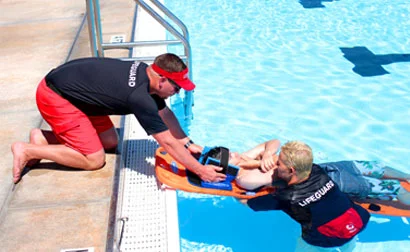
⦁ Multi-Guard Spine Boarding: In the event of a serious injury or spinal cord injury, two or three guards work together to completely stabilize the victim’s neck and back while underwater.
Universal Alignment with Federal and Global Health Codes
Every ALA training module is fully aligned with the Center for Disease Control (CDC) Model Aquatic Health Code (MAHC). This compliance is considered proof that the importance of your certification is not limited to a single city but is also accepted internationally. When a guard achieves these standards, high-end waterparks, busy municipal pools and luxury hotels around the world have complete confidence in their credentials, because they know that this professional is fully aware of modern safety management laws and emergency protocols.
A Legacy Validated by Premier National Broadcasting Networks
ALA’s services and established principles in the field of aquatic safety and medical response are significant on a global scale. CBS News Radio has featured ALA’s drowning prevention models and disaster management protocols as key references during its various national broadcasts.
When the world’s most trusted and influential media platforms confirm the credibility of a curriculum and safety framework, it is considered a sign that the relevant institution is working on modern, effective and reliable training standards.
Advanced Cardiopulmonary Resuscitation and Medical First Responder Updates
A good lifesaver should not only be able to perform water rescues but also be able to effectively handle various types of medical trauma. That is why ALA adds new updates to its curriculum every year according to medical advancements:
⦁ High-Velocity CPR Compression Tech: Training in advanced and effective compression ratios to maintain blood and oxygen supply to the brain in the event of cardiac arrest.
⦁ Digital AED Diagnostics: Practical simulation training in the correct and safe use of modern touchscreen and automated external defibrillators in emergency situations.
⦁ Anaphylaxis and Heat Trauma Protocols: Advanced emergency response training to deal with medical problems such as heatstroke, severe allergies, or dehydration collapse that occur suddenly in public places.
The Architecture of Proactive Surveillance and Blind-Spot Scanning
Drowning incidents often occur silently, which is why a trained lifeguard’s eye tries to recognize danger before it becomes an accident. During Lifeguard Training, candidates are taught the scientific principles of scanning, called “Grid-Based Matrix Scanning.”
In this training, they are taught how to effectively keep an eye on those corners and blind spots of the pool where it is relatively difficult to see, despite the bright sunlight and glare on the water’s surface. Thanks to this preventive vigilance and constant monitoring, many accidents are prevented in the first place.
The Financial Dynamics and Career Growth of Certified Professionals
Due to the current severe staff shortage, the market value of certified professionals has increased significantly worldwide. According to the 2026 workplace trends, hourly rates and base salaries for trained lifeguards have increased by approximately 15% to 20%.
Commercial waterparks and high-end private resorts are now offering joining bonuses, healthcare benefits and flexible work packages to attract and retain the best candidates.
That is why obtaining professional certification in this field is no longer just a seasonal job but is now considered a strong opportunity for financial stability and a long-term career.
Mandatory In-Service Audits and Facility Readiness Operations
The process of evaluating guards continues even after they start duty. ALA guides every employer to conduct regular unannounced emergency drills and skills audits to test the continuous competency of guards working at their facility.
The advantage of this continuous testing is that in the event of a real emergency, the guards’ muscle memory is automatically activated, and they are able to provide assistance to the victim within seconds without panicking.
Conclusion: Anchoring the Horizon of Public Safety with Elite Leadership
Global staffing crises and changing coastal management challenges have made it clear that professional expertise is the foundation of our safety. Lifeguard Training is no longer just a seasonal certificate but has become a critical tool for keeping entire communities safe.
ALA’s ongoing partnerships around the world are proof that safety standards improve significantly when the right resources and high-quality training are available. ALA’s mission has always been clear: to bring lifesaving expertise to every corner of the world where it is needed most.
