


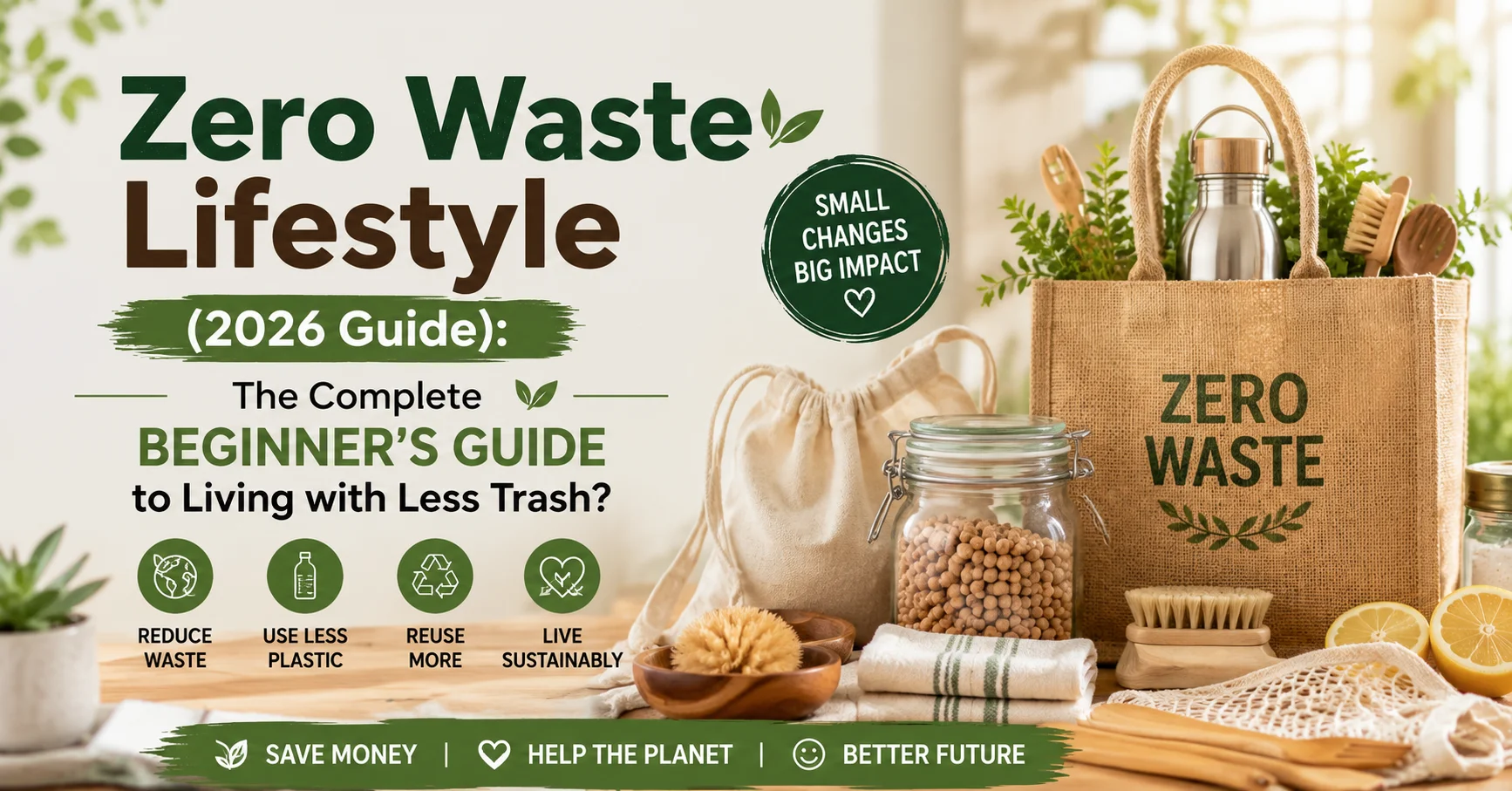
Have you ever looked at your trash can on garbage day and felt a little guilty? You are not alone. Most people in the world throw away far more than they realize. The average American produces about 4.9 pounds of trash every single day. That adds up fast. But here is the good news — a zero waste lifestyle can change all of that. And it does not have to be hard, expensive, or overwhelming.
In this guide, we will walk through everything you need to know. You will learn what zero waste really means, why it matters, and how to start — even if you are a complete beginner. This is not about being perfect. It is about making smart, simple choices that add up over time. Whether you live in a small apartment or a big house, this guide has something useful for you. Let us get started.
What Is a Zero Waste Lifestyle, Really?
A lot of people think the zero waste lifestyle means producing absolutely no trash. That sounds impossible, right? Well, the truth is a little different. Zero waste is not about perfection. It is about reducing the amount of waste you send to landfills as much as you realistically can.
The zero waste movement is guided by a simple idea called the 5 R’s: Refuse, Reduce, Reuse, Recycle, and Rot. These five steps work together. First, you refuse what you do not need. Then you reduce what you do use. After that, you reuse things instead of throwing them away. You recycle what is left. Finally, you rot — which means composting your food and organic scraps.
Think of it like this: a zero waste lifestyle is less about being flawless and more about being mindful. It is a way of thinking about the things you buy, use, and throw away. And once you start thinking this way, it becomes second nature. Many people who live this way say they actually feel less stressed — because they own less stuff and spend less money.
Why Does Zero Waste Living Matter So Much?
Here is something that might surprise you. The world generates over 2 billion tons of solid waste every year. By 2050, that number could reach 3.4 billion tons. Landfills are overflowing. Oceans are filling with plastic. Wildlife is suffering. And greenhouse gas emissions from waste are making climate change worse.
But waste is not just an environmental problem. It is also a financial one. When you throw things away, you are throwing away money. Every disposable coffee cup, plastic bag, or single-use item you buy and toss is cash going in the trash. People who adopt a zero waste lifestyle often report saving hundreds — sometimes thousands — of dollars every year.
There is also a health angle. Many disposable products are made with chemicals that are not great for your body. Swapping them for natural, reusable alternatives can actually make your home a healthier place. From a big-picture standpoint, every small change really does matter. When millions of people make the same small changes, the impact becomes massive.
Table 1: The Environmental Impact of Common Waste Items
| Item | Time to Decompose | Annual US Usage | Eco-Friendly Swap |
|---|---|---|---|
| Plastic water bottle | 450 years | 50 billion | Reusable stainless steel bottle |
| Plastic straw | 200 years | 500 million/day | Bamboo or metal straw |
| Plastic grocery bag | 10–20 years | 100 billion | Reusable cloth tote |
| Paper coffee cup | 20–30 years | 50 billion | Reusable travel mug |
| Single-use razor | 50+ years | 2 billion | Safety razor or electric razor |
How to Start Your Zero Waste Journey (Without Losing Your Mind)
Starting a zero waste lifestyle can feel overwhelming. There are so many products, so many tips, and so many “rules.” But here is the secret: you do not have to do everything at once. In fact, trying to change everything overnight is the fastest way to burn out and give up.
The best approach is to start small. Pick one area of your life and focus there first. Maybe it is your kitchen. Maybe it is your bathroom. Maybe it is just your morning coffee routine. Start wherever feels manageable for you. Then, once that change feels easy and natural, move on to the next thing.
Another smart trick is the “use it up” method. Do not throw away your old stuff just to buy zero waste replacements. That creates more waste! Instead, use up what you already have, and when it runs out, replace it with a more sustainable option. This approach saves money and avoids unnecessary waste.
Also, be patient with yourself. You will mess up sometimes. You will forget your reusable bag. You will accept a plastic straw without thinking. That is okay. Progress matters more than perfection in the zero waste lifestyle. Every small step counts.
Zero Waste Kitchen: Where Most Waste Happens
The kitchen is the number one source of household waste for most families. Food packaging, food scraps, paper towels, plastic wrap — it all adds up incredibly fast. But it is also the easiest place to start making changes.
Food shopping is a great place to begin. Bring your own reusable bags. Buy in bulk when you can, and bring your own containers. Choose products with minimal or recyclable packaging. Shop at local farmers markets, where packaging is often much less than in supermarkets.
Food storage is another big win. Swap out plastic wrap and zip-lock bags for beeswax wraps, glass containers, or silicone bags. These options last for years and work just as well — sometimes even better.
Food waste is a huge issue. In the US, about 30–40% of the food supply is wasted. The fix? Meal planning. When you plan your meals, you buy only what you need. You use what you buy. And you waste a lot less. Pair this with composting your scraps, and your kitchen waste can drop dramatically as part of your zero waste lifestyle.
Table 2: Zero Waste Kitchen Swaps at a Glance
| What You Use Now | Zero Waste Swap | Approximate Savings Over 1 Year |
|---|---|---|
| Paper towels | Cloth rags or Swedish dishcloths | $60–$100 |
| Plastic wrap | Beeswax wraps or silicone lids | $30–$60 |
| Plastic zip-lock bags | Reusable silicone bags or glass jars | $40–$80 |
| Dish soap in plastic bottle | Bar dish soap or soap in glass bottles | $20–$40 |
| Single-use coffee pods | Reusable coffee pod or French press | $100–$200 |
Zero Waste Bathroom: Tiny Room, Huge Impact
After the kitchen, the bathroom is the second biggest source of household plastic waste. Think about everything in your bathroom right now — shampoo bottles, conditioner, body wash, toothpaste tubes, disposable razors, cotton rounds. Most of these are single-use plastics that end up in landfills.
The good news? Every single one of these has a sustainable swap. And most of the alternatives are just as effective — or better.
Shampoo and conditioner bars are one of the easiest swaps. They last much longer than bottled versions and come with zero plastic packaging. Once you try them, most people never go back.
Bamboo toothbrushes replace plastic ones perfectly. Bamboo is natural, biodegradable, and actually quite sturdy. You can even compost the handle when it is worn out.
Safety razors are a game-changer. They cost more upfront but save a huge amount of money over time. The blades are recyclable, and a single handle can last decades.
Reusable cotton rounds replace disposable ones for makeup removal and skincare. They wash easily and last for years. These small swaps are core to a modern zero waste lifestyle.
Zero Waste Shopping: Buy Smart, Buy Less
One of the most powerful tools in a zero waste lifestyle is simply buying less stuff. Our culture tells us to buy, upgrade, replace, and buy again. But that cycle creates enormous amounts of waste and uses up huge amounts of resources.
Before you buy anything, ask yourself: Do I actually need this? Could I borrow it instead? Is there a secondhand version? Can I make one myself?
Secondhand shopping is both eco-friendly and budget-friendly. Thrift stores, online marketplaces, and clothing swaps are great places to find what you need without buying new. Buying secondhand keeps items out of landfills and reduces demand for new manufacturing.
Quality over quantity is another key rule. Buying one good-quality item that lasts ten years is far better than buying five cheap items that each break within two years. When shopping new, look for items made from natural materials, with minimal packaging, and from companies that share your values.
Avoid impulse buying. Wait 48 hours before any unplanned purchase. Often, you will realize you do not actually need it. This habit alone can dramatically reduce both your spending and your waste output.
Composting: The Secret Weapon of Zero Waste Living
Many people overlook composting when they first start a zero waste lifestyle. But composting is one of the most impactful things you can do. Food scraps that go to landfill release methane — a powerful greenhouse gas. But when you compost those same scraps, they turn into rich, nourishing soil.
You do not need a big garden or a backyard to compost. There are several options for different living situations. Outdoor compost bins work great for people with yards. Worm composting bins (vermicomposting) can work indoors in a small apartment. Bokashi systems let you ferment food waste right in your kitchen. Many cities also have curbside compost pickup programs, or you can drop off scraps at a local community garden.
What can you compost? Fruit and vegetable scraps, coffee grounds and filters, tea bags, eggshells, bread and grains, paper napkins and cardboard. The list is longer than most people think. Starting a compost habit can divert a huge portion of your household waste from landfills.
Table 3: What You Can and Cannot Compost
| Can Compost ✅ | Cannot Compost ❌ |
|---|---|
| Fruit and vegetable scraps | Meat and fish |
| Coffee grounds and paper filters | Dairy products |
| Eggshells | Oily or greasy foods |
| Cardboard and newspaper | Diseased plants |
| Grass clippings and leaves | Pet waste (in standard bins) |
| Tea bags (if plastic-free) | Glossy or coated paper |
| Bread and grains (in moderation) | Synthetic chemicals or cleaners |
Raising Kids in a Zero Waste Household
Teaching kids about a zero waste lifestyle is one of the best gifts you can give them. Children who grow up understanding waste, resources, and the environment tend to make more conscious choices as adults. And honestly, many kids take to these ideas naturally — they love the planet and want to protect it.
Start by involving them in small, tangible tasks. Let them help sort recycling. Teach them how composting works by starting a small worm bin together. Make it fun, not a lecture. Give them reusable lunch boxes and water bottles and explain why they matter. Celebrate when the weekly trash bag is smaller than usual.
You do not have to be harsh or strict about it. Keep it positive and curious. Visit a farmers market together. Plant a small herb garden. Read books about nature and the environment. When kids feel connected to the natural world, they naturally want to take care of it. Zero waste parenting is not about pressure — it is about building awareness and habits that will serve them for life.
Zero Waste on a Budget: It Does Not Have to Cost More
One of the biggest myths about the zero waste lifestyle is that it is expensive. Yes, some eco-friendly products cost more upfront. But when you look at the long-term picture, zero waste living almost always saves money.
Think about it. You stop buying paper towels, disposable bags, bottled water, and single-use items every week. Those small purchases add up to hundreds of dollars a year. Replace them once with a reusable option, and you stop spending on them forever.
Here are some budget-friendly zero waste tips: Shop secondhand. Make your own cleaning products (vinegar, baking soda, and castile soap handle almost everything). Buy in bulk to reduce packaging and cost per unit. Repair things instead of replacing them. Use the library instead of buying books and movies. Grow some of your own food — even a pot of herbs on a windowsill counts.
Zero waste living is also about minimalism. When you buy less overall, you spend less. Many people who adopt a zero waste lifestyle find their whole relationship with money changes. They become more intentional and less impulsive with purchases.
Table 4: Monthly Cost Comparison — Disposable vs. Reusable
| Product | Monthly Cost (Disposable) | One-Time Cost (Reusable) | Break-Even Point |
|---|---|---|---|
| Paper towels | $10–$15 | $15–$25 (cloth rags set) | 1–2 months |
| Bottled water | $20–$40 | $25–$40 (quality water bottle) | 1–2 months |
| Disposable razors | $10–$15 | $30–$50 (safety razor) | 3–5 months |
| Coffee cups | $15–$30 | $15–$25 (travel mug) | 1 month |
| Plastic zip bags | $5–$10 | $20–$30 (silicone set) | 3–5 months |
Building a Zero Waste Community Around You
Going zero waste alone is great. But doing it with others is even better — and much easier. Community support makes any big lifestyle change more enjoyable and sustainable (pun intended).
Start by talking to the people around you. Share what you are doing and why. You do not have to preach or lecture — just share your experience naturally. Most people are curious and open when they see you making positive changes.
Look for local zero waste groups, swap events, or eco-markets. Many cities have thriving communities of people who share tips, trade reusable goods, and support each other. Online groups and forums are also a great resource, especially if you live somewhere with a smaller local community.
Advocacy is another powerful tool. Talk to local businesses about reducing plastic. Support brands that align with zero waste values. Vote for policies that promote sustainability. The zero waste lifestyle is not just a personal choice — it is part of a larger movement toward a healthier planet for everyone.
5 Frequently Asked Questions About Zero Waste Living
FAQ 1: Is a Zero Waste Lifestyle Actually Achievable?
Yes, but not in the way most people first imagine. A true “zero waste” output is basically impossible in today’s world — hospitals, manufacturers, and supply chains create waste on your behalf whether you like it or not. But that is not the point. The goal of a zero waste lifestyle is to dramatically reduce the waste you personally produce and consume. Many zero waste advocates aim to fit a year’s worth of trash in a single mason jar. You may not get there right away, but even cutting your waste in half is a massive achievement with real environmental impact.
FAQ 2: Where Should I Start If I Feel Overwhelmed?
Pick one room, one habit, or one area of spending. Do not try to change everything at once. A great starting point is your morning routine. Switch to a reusable coffee mug, a bamboo toothbrush, and a bar of soap. Those three swaps alone eliminate a surprising amount of daily waste. Once they feel natural — usually within a few weeks — pick the next area to tackle. Small steps build up to big results over time.
FAQ 3: What About Recycling? Is It Really Worth It?
Recycling is useful, but it is not a magic solution. In a true zero waste lifestyle, recycling is the fourth option — after refusing, reducing, and reusing. The recycling system has real limitations. Not all materials are recyclable in all areas. Contamination can cause entire batches to be rejected. And many plastics labeled “recyclable” actually end up in landfills anyway. So yes, recycle what you can — but do not use recycling as a reason to keep buying single-use products. Reducing is always more effective than recycling.
FAQ 4: How Do I Handle Zero Waste When Traveling?
Travel is one of the trickier areas of a zero waste lifestyle, but it is very doable. Pack a travel kit: a reusable water bottle, a set of utensils (bamboo or metal), a cloth napkin, a small bar of shampoo and soap, and a reusable bag. Eat at sit-down restaurants instead of fast food whenever possible. Refuse the hotel’s mini plastic bottles — bring your own. Choose train over plane when practical. And if you do create waste while traveling, do not stress. Get back on track when you return home.
FAQ 5: Can Families with Young Kids Really Go Zero Waste?
Absolutely — though it looks a little different than a single person’s journey. Diapers, snack packaging, and school supplies do add waste. But there are great solutions for all of these. Cloth diapers have improved enormously and are a real option for many families. Snacks can be packed in reusable bags and containers. School supplies can often be secondhand or minimal-packaging options. Focus on what is realistic for your family right now. Even partial zero waste efforts have a meaningful impact, and raising eco-conscious kids is a gift that multiplies far into the future.
Conclusion
Here is the truth about the zero waste lifestyle — it is not about being perfect. It is about being conscious. Every reusable bag you bring to the store, every coffee mug you carry with you, every meal you plan to avoid food waste — these are all meaningful acts. They add up.
The zero waste lifestyle is also a deeply personal journey. It looks different for everyone. Your zero waste will not look exactly like mine, and that is perfectly fine. What matters is that you are moving in the right direction. That you are thinking about your impact. That you are choosing, again and again, to tread a little more gently on this planet.
Start with one swap this week. Just one. Maybe it is a reusable water bottle. Maybe it is a cloth bag. Maybe it is starting a compost bin. Whatever it is, do it this week. Then tell someone about it. Share your journey. Inspire the people around you.
