


Introduction
Have you ever felt confused when someone says “Next Friday vs This Friday” in a message or meeting? You are not alone. Many people mix these two simple phrases and end up showing up on the wrong day. This small confusion can cause missed plans, delayed meetings, or even frustration in daily life. The problem happens because both phrases sound similar, but they can mean different things depending on the context.
In this guide, we will clearly explain Next Friday vs This Friday in the simplest way possible. You will learn how each term works, why people get confused, and how to avoid mistakes in real life. We will also share real examples, tables, and easy rules so even a child can understand. By the end, you will never feel confused about Next Friday vs This Friday again.
What Does “This Friday” Mean?
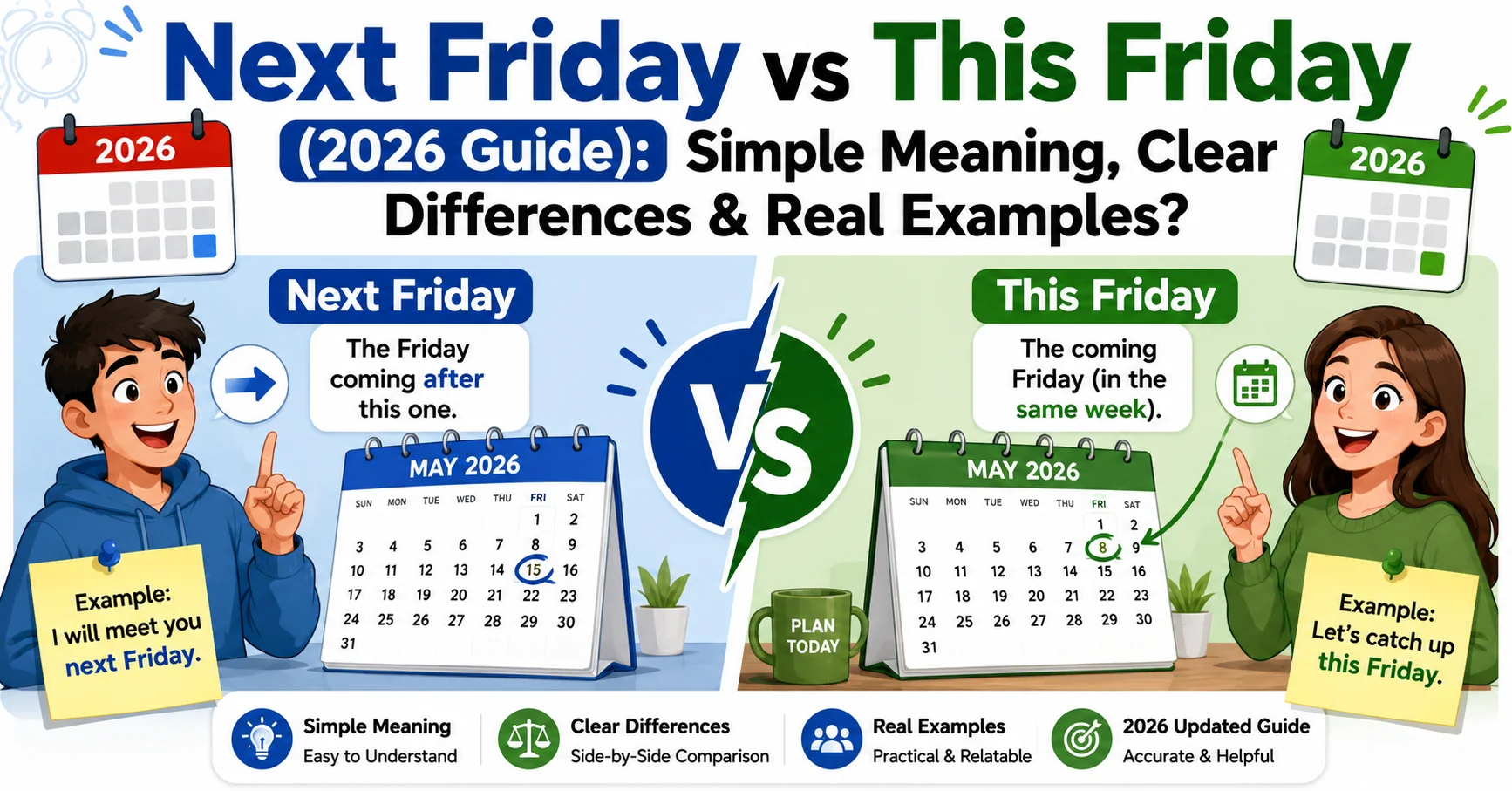
When people say This Friday, they are usually talking about the Friday that comes in the current week. It means the closest Friday that is about to arrive. For example, if today is Monday or Tuesday, then “This Friday” means the Friday of the same week.
However, confusion still happens when someone uses Next Friday vs This Friday in conversation. Some people think “this Friday” means the upcoming one no matter what day it is. In most cases, though, it always refers to the nearest Friday in the current week.
To make it simple, think of “this Friday” as the Friday you will see very soon. It is part of the same weekly cycle you are already in. This makes planning easier for short-term events like meetings, school tasks, or hangouts. Understanding Next Friday vs This Friday starts with knowing this basic idea clearly.
What Does “Next Friday” Mean?
Now let’s understand Next Friday. This term usually refers to the Friday of the following week, not the current one. For example, if today is Monday, then “Next Friday” is not the one coming in four days. It is the Friday after that.
This is where Next Friday vs This Friday becomes tricky. People often assume “next Friday” means the immediate one, but that is not always correct. In formal or business settings, “next Friday” often skips the nearest Friday and points to the following week’s Friday.
So, when someone says “Let’s meet next Friday,” you should always double-check. This avoids confusion and helps you stay on the right schedule. In simple terms, the depends on how far ahead the speaker is thinking.
Why Do People Get Confused Between Next Friday vs This Friday?
The confusion in Next Friday vs This Friday happens because language is not always exact. People use words based on habit, not rules. Some people think “next” means the very next one, while others think it means the following week.
Another reason is different communication styles. In casual texting, “next Friday” can mean the upcoming Friday. In formal planning, it usually means the week after. This difference creates misunderstandings in daily life.
Also, calendars and mental counting play a role. When you think about weeks in your head, it is easy to miscount days. That is why Next Friday vs This Friday becomes one of the most common scheduling mistakes in workplaces and social plans.
Simple Rule to Remember Next Friday vs This Friday
Here is an easy rule that will help you every time you see Next Friday vs This Friday:
- “This Friday” = the closest Friday in the current week
- “Next Friday” = the Friday after the upcoming one (usually next week)
If you remember this simple rule, you will avoid most confusion. However, always confirm if the context is unclear.
Many professionals use a safer method. Instead of saying Next Friday vs This Friday, they mention the exact date, like “Friday, 12th May.” This removes all confusion completely.
Using this rule in daily life makes communication clearer, especially in business or school planning.
Calendar View of Next Friday vs This Friday
To make Next Friday vs This Friday even easier, let’s look at a simple calendar idea. Imagine today is Monday. “This Friday” is only four days away. “Next Friday” is 11 days away.
This pattern helps you see the time gap clearly. Many people prefer visual thinking because it removes confusion quickly.
Understanding Next Friday vs This Friday using a calendar is one of the best methods for students, office workers, and planners. It also helps avoid missed meetings or wrong assumptions about deadlines.
Table 1: Simple Difference Between This Friday and Next Friday
| Feature | This Friday | Next Friday |
|---|---|---|
| Time Frame | Current week | Next week |
| Distance | 3–5 days away | 7–12 days away |
| Common Use | Immediate plans | Future plans |
| Confusion Level | Medium | High |
This table makes Next Friday vs This Friday very easy to understand at a glance.
Real-Life Examples of Next Friday vs This Friday
Let’s look at real situations to understand Next Friday vs This Friday better.
Example 1: Your friend says, “Let’s go shopping this Friday.” That means the upcoming Friday.
Example 2: Your boss says, “Deadline is next Friday.” That likely means the following week’s Friday.
Example 3: A teacher says, “Exam is this Friday.” You should prepare immediately.
These examples show how Next Friday vs This Friday changes meaning based on context. Always think carefully before planning your schedule.
Workplace Communication and Next Friday vs This Friday
In offices, Next Friday vs This Friday is a very important issue. Meetings, deadlines, and reports often depend on correct understanding.
If a manager says “next Friday,” employees might misunderstand and miss deadlines. That is why many companies now use exact dates instead of vague terms.
Clear communication is key. When dealing with Next Friday vs This Friday, professionals often confirm by replying, “Do you mean this coming Friday or the one after?” This avoids confusion and improves productivity.
Using clear language saves time and reduces stress in the workplace.
Everyday Texting and Next Friday vs This Friday
In casual texting, Next Friday vs This Friday becomes even more confusing. People often assume the meaning without checking.
For example, a friend might say, “Let’s meet next Friday,” but both people may understand it differently. This leads to missed plans or awkward situations.
To avoid this, always confirm the date. A simple reply like “Do you mean this Friday or the next one?” works perfectly.
In texting culture, Next Friday vs This Friday should always be clarified to avoid misunderstandings.
International Differences in Next Friday vs This Friday
Different countries sometimes interpret Next Friday vs This Friday differently. In some places, “next Friday” always means the upcoming one. In others, it means the Friday after that.
This difference in cultural understanding makes communication tricky, especially in global teams or online conversations.
That is why international businesses prefer exact dates instead of phrases. When dealing with Next Friday vs This Friday, always consider who you are talking to.
Understanding these differences helps avoid global communication errors.
Common Mistakes in Next Friday vs This Friday
People make several mistakes when using Next Friday vs This Friday. One common mistake is assuming everyone understands it the same way. Another mistake is not confirming the exact date.
Some also use “next Friday” for both meanings, which creates confusion. Others forget to check calendars and rely only on memory.
These mistakes show why Next Friday vs This Friday is not as simple as it looks. Small misunderstandings can lead to big problems like missed events or deadlines.
Being careful with language is always the best solution.
Tips to Avoid Confusion in Next Friday vs This Friday
Here are some simple tips to understand Next Friday vs This Friday better:
- Always confirm the exact date
- Use calendar dates instead of words
- Ask for clarification when unsure
- Avoid guessing in important plans
These small habits can make a big difference in daily life. When you follow them, Next Friday vs This Friday becomes easy to manage.
Clear communication always leads to better planning and fewer mistakes.
Table 2: Example Situations for Next Friday vs This Friday
| Situation | This Friday | Next Friday |
|---|---|---|
| Friend meetup | Soon hangout | Future plan |
| Office deadline | Immediate work | Upcoming project |
| School exam | Current week test | Next week test |
This table shows how Next Friday vs This Friday changes in real-life use.
Table 3: Common Mistakes vs Correct Usage
| Mistake | Correct Understanding |
|---|---|
| Thinking both mean same | They refer to different weeks |
| Not confirming date | Always ask for clarity |
| Guessing meaning | Use exact dates |
This helps strengthen your understanding of Next Friday vs This Friday.
Conclusion
Understanding Next Friday vs This Friday is very important in daily life. It helps you avoid confusion, missed plans, and communication errors. Although both phrases sound simple, their meaning depends on context, culture, and situation.
The best way to avoid mistakes is to use exact dates and confirm whenever needed. When you clearly understand, your planning becomes easier and more accurate.
Clear communication is always better than guessing. So next time someone mentions Next Friday vs This Friday, you will know exactly what they mean—and you will never miss an important plan again.
FAQs About Next Friday vs This Friday
1. What is the main difference between Next Friday vs This Friday?
The main difference is timing. “This Friday” means the nearest Friday in the current week, while “Next Friday” usually means the Friday of the following week. However, some people interpret it differently, so clarification is always important.
2. Why do people confuse Next Friday vs This Friday?
People confuse these terms because they sound similar and depend on context. Some think “next” means immediate, while others think it means the following week. This difference creates misunderstanding in daily communication.
3. How can I avoid confusion in Next Friday vs This Friday?
The best way is to use exact dates instead of words. For example, say “Friday, 10th May” instead of “next Friday.” Always confirm when plans are unclear.
4. Is Next Friday always the week after This Friday?
Not always. In most formal settings, yes. But in casual talk, some people use it to mean the upcoming Friday. That is why Next Friday vs This Friday can be confusing.
5. Which is safer to use in communication?
Using exact dates is always safer. It removes confusion completely and ensures both people understand the same time frame.
