

Texting has changed how people talk. Many messages are short, fast, and full of hidden meaning. That is why many people search what do I mean in text when they get confused by a message. Sometimes “I” can show emotion. Sometimes it may sound cold. Sometimes one small word can mean something very different based on context.
If you have ever stared at a text and wondered what someone really meant, you are not alone. Tone is hard to read in messages. There is no face, voice, or body language. That makes texting easy to misunderstand. I have seen simple texts start arguments only because someone read the wrong meaning into them.
In this guide, you will learn what do I mean in text, how meaning changes in different chats, what common texting phrases mean, and how to avoid confusion. We will use real examples, simple explanations, and practical tips. By the end, reading messages will feel much easier.
Why People Search “What Do I Mean in Text”
People often search what do I mean in text after receiving a confusing message. Maybe someone sent “I mean…” during an argument. Maybe they typed “I-” and stopped. Maybe they used “I mean lol” or “I mean…” with dots. These little details can change meaning.
In texting, words often carry emotional signals. For example:
- “I mean okay” may sound unsure
- “I mean… sure” may sound sarcastic
- “I mean yes!” sounds excited
- “I mean no offense” may signal criticism coming
Context matters. A text from a friend may mean one thing. The same words from a crush may mean another.
Sometimes people are not asking about the word “I.” They want to know what a whole phrase means in texting culture. That is common too.
How Context Changes Meaning in Text Messages
Text messages depend on context more than many people realize. That is why understanding what do I mean in text often starts with looking at the whole conversation.
Ask these questions:
| Context Clue | What It Can Tell You | Example |
|---|---|---|
| Tone of chat | Serious or playful | “I mean wow” |
| Relationship | Friend, crush, boss | Meaning shifts |
| Punctuation | Emotion clues | “Okay.” vs “Okay!” |
| Timing | Fast or delayed reply | Can signal interest |
If someone says:
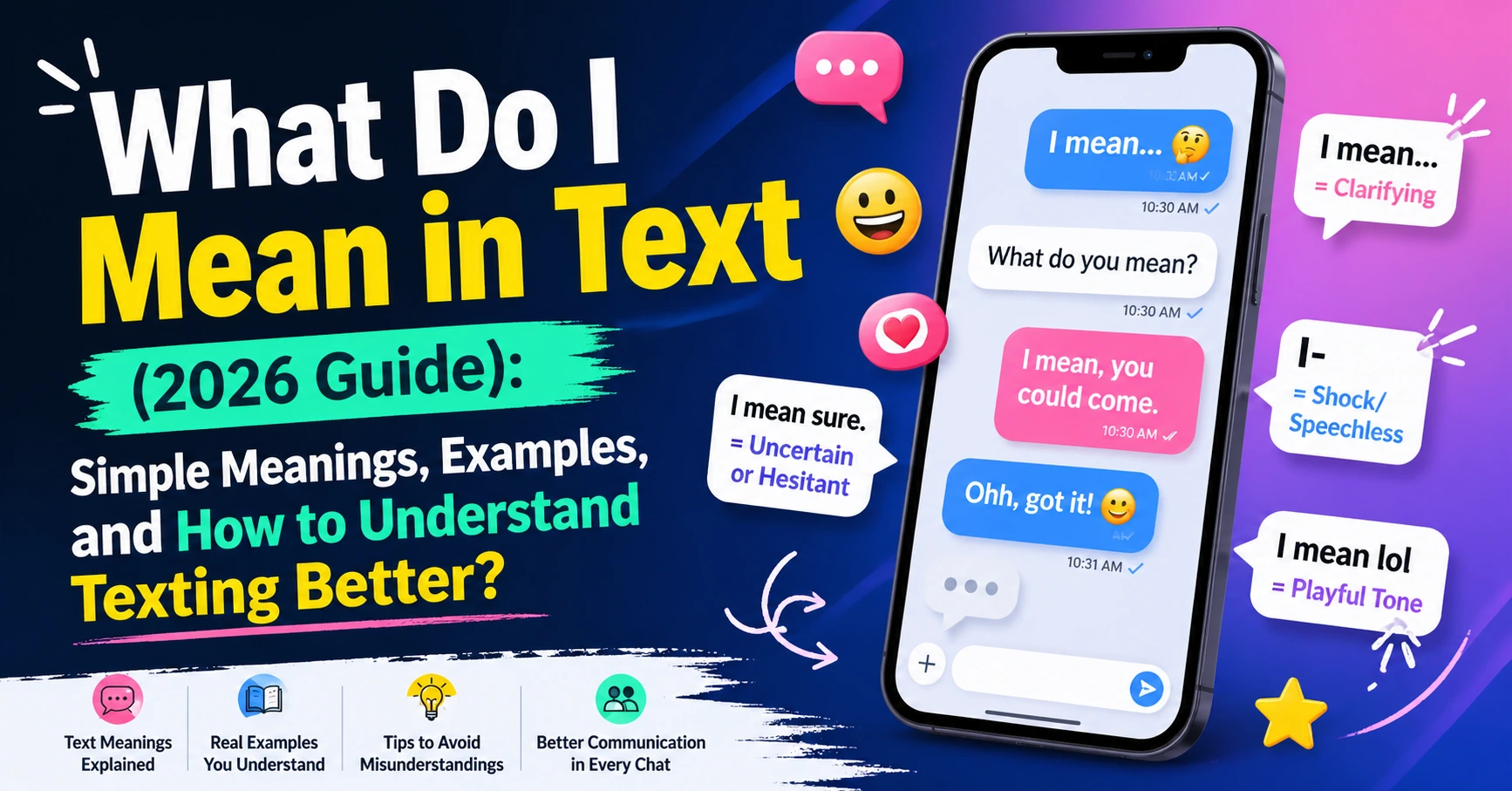
“I mean, you could come.”
That could mean:
- Real invitation
- Polite suggestion
- Shy flirting
- Uncertain answer
See how one line can have many meanings?
Never judge one text alone. Read messages before and after it.
What “I Mean” Usually Means in Texting
A common reason people ask what do I mean in text is they see “I mean” used often.
“I mean” usually does one of these:
It clarifies something
Example:
“I like the movie. I mean, the ending was great.”
They are explaining.
It softens an opinion
Example:
“I mean, maybe he was busy.”
This sounds gentler.
It fills a pause
Example:
“I mean… yeah.”
This may show hesitation.
It adds emphasis
Example:
“I mean, come on!”
This adds emotion.
Quick Reference Table
| Text Phrase | Possible Meaning |
|---|---|
| I mean yes | Strong agreement |
| I mean maybe | Uncertainty |
| I mean come on | Frustration |
| I mean lol | Playful tone |
| I mean… | Hesitation |
Most of the time, “I mean” helps shape tone.
What “I-” Means in Text
Another popular version of what do I mean in text involves “I-”
This is very common online.
“I-” often shows:
- Shock
- Speechless reaction
- Being caught off guard
- Dramatic pause
- Flirty embarrassment
Example:
Friend: “He said he likes me.”
You: “I- WHAT?”
It means you are stunned.
Sometimes people use it jokingly.
“That pizza had pineapple.”
“I- leave.”
It is playful exaggeration.
This style became popular in internet culture and memes.
Texting Tone Can Change Everything
A huge part of understanding what do I mean in text is learning tone markers.
Look at these:
| Message | Tone |
|---|---|
| I mean okay | Neutral |
| I mean okay… | Doubt |
| I mean okay lol | Lighthearted |
| I mean okay?? | Confused |
| I mean okay! | Excited |
Same words.
Different meaning.
Punctuation matters.
Even lowercase vs uppercase can change feeling.
“i mean okay” feels casual.
“I MEAN OKAY” feels intense.
These little things matter more than people think.
What It Means in Flirty Texts
People often ask what do I mean in text when talking to a crush.
That makes sense. Flirty texts are hard to decode.
Examples:
“I mean… you could take me out.”
This may be playful flirting.
“I mean if you miss me just say it.”
Often teasing.
“I mean I like talking to you.”
This may soften vulnerability.
Sometimes “I mean” hides nervousness.
People use it when they want to say something bold but make it sound casual.
I have seen many people miss flirting because they read texts too literally.
Watch for:
- teasing
- playful sarcasm
- emojis
- repeated messages
- soft invitations
Meaning often hides in tone.
Common Texting Phrases People Misread
Many phrases confuse people, not just “I mean.”
Here are common ones.
Text Slang Meanings Table
| Phrase | Meaning |
|---|---|
| Bet | Okay / agreed |
| Say less | I understand |
| I’m dead | That is hilarious |
| Bruh | Shock or annoyance |
| Lowkey | Secretly / slightly |
| I mean | Clarifying or emotional cue |
| K | Sometimes cold |
| Lol | Can soften tone |
Someone may text:
“K.”
That can feel cold.
But “K lol” feels warmer.
Very different.
This is why learning texting language helps.
When people search what do I mean in text, often they are really trying to decode digital tone.
Why Text Messages Get Misunderstood
Texting removes human signals.
No facial expression.
No voice.
No smile.
That causes confusion.
Someone writes:
“I mean do what you want.”
Is that:
- angry
- passive aggressive
- honest advice
- joking
Hard to tell.
Misunderstandings happen because people add emotion that may not be there.
I learned a simple rule:
Never assume negative tone first.
Read messages in the kindest reasonable way.
It prevents many problems.
If confused, ask.
“What did you mean by that?”
Simple and direct.
How Age and Internet Culture Affect Meaning
Generations text differently.
That changes what do I mean in text too.
Teens may use “I-” dramatically.
Older adults may not.
Gen Z may use:
- “I’m crying”
- “dead”
- “bestie”
- “I-”
These often are jokes.
Someone older may read them literally.
That creates confusion.
Internet culture changes fast.
Words gain new meanings.
“Slay” once meant one thing.
Now it often means “you did amazing.”
Texting language keeps evolving.
Stay open to changing meanings.
How to Figure Out What Someone Really Means
If a text confuses you, use this method.
The 5-Step Meaning Check
- Read full conversation
- Notice punctuation
- Look at relationship context
- Check if it sounds playful or serious
- Ask directly if unsure
This works well.
Example
Text:
“I mean sure.”
Could mean:
| Possible Meaning | Clue |
|---|---|
| Genuine yes | Friendly tone |
| Reluctant yes | Dry tone |
| Sarcasm | Previous argument |
| Shy yes | Flirty context |
Context solves most confusion.
When “I Mean” Sounds Rude
Sometimes people worry what do I mean in text because “I mean” sounded rude.
It can happen.
Examples:
“I mean you should have known.”
This may sound critical.
“I mean obviously.”
Can sound dismissive.
“I mean whatever.”
Can sound annoyed.
Words after “I mean” matter.
Sometimes people use it to soften criticism.
Sometimes it does the opposite.
If tone seems rude, do not panic.
Ask if they were joking.
Text can distort emotion.
Signs a Text Has Hidden Emotion
Some messages carry emotion under the surface.
Watch for:
- Ellipses (…)
- One-word replies
- Repeated punctuation
- Caps
- Sudden short answers
Examples:
“I mean…”
Hesitation.
“I mean???”
Confusion.
“I mean whatever.”
Frustration.
“I mean”
Awkward humor.
Emojis matter too.
A smile can completely change tone.
Without emojis:
“I mean okay”
With emoji:
“I mean okay”
Totally different feel.
How to Respond When You Don’t Understand a Text
If you do not understand meaning, avoid guessing.
Good replies:
- “What did you mean by that?”
- “Are you joking or serious?”
- “I may be reading this wrong.”
- “Can you explain?”
This prevents drama.
Bad response:
Assuming the worst.
That causes fights.
I have seen friendships strained over punctuation.
Yes, punctuation.
Texting is strange like that.
Clear communication solves most problems.
Real-Life Examples of “I Mean” in Text
Here are examples people actually use.
Example 1
Friend:
“I mean you could join us.”
Meaning:
Friendly invite.
Example 2
Crush:
“I mean I do miss you.”
Meaning:
Likely emotional honesty.
Example 3
Argument:
“I mean you started it.”
Meaning:
Defensive tone.
Example 4
Joking chat:
“I- you did WHAT?”
Meaning:
Shocked reaction.
These examples show why what do I mean in text has no one answer.
Meaning changes every time.
How to Avoid Sending Confusing Texts Yourself
You can reduce confusion too.
Use:
- Clear wording
- Emojis when needed
- Full thoughts
- Less vague sarcasm
Instead of:
“I mean sure.”
Try:
“Sure, sounds good!”
Much clearer.
Instead of:
“K.”
Try:
“Okay, got it”
Warmer.
Good texting is about clarity.
Do not make people decode mysteries.
FAQs About What Do I Mean in Text
1. What does “I mean” mean in text?
It usually clarifies something, softens an opinion, adds emphasis, or shows hesitation. Context decides meaning.
2. What does “I-” mean in texting?
It often means shock, speechlessness, or dramatic reaction. It is common in online slang.
3. Is “I mean…” rude in text?
Not always. It may sound rude in some contexts, but often it simply shows hesitation or explanation.
4. Why do people use “I mean” before opinions?
People use it to soften direct statements or make opinions sound less harsh.
5. How do I know what someone meant in a text?
Check context, punctuation, relationship, and surrounding messages. If confused, ask directly.
6. Can punctuation change text meaning?
Yes. “Okay.”, “Okay!”, and “Okay…” can all feel different emotionally.
Common Mistakes People Make When Reading Texts
Many people overanalyze.
That causes problems.
Common mistakes:
- Reading anger where none exists
- Assuming short replies mean dislike
- Ignoring context
- Taking jokes literally
- Misreading slang
A short reply may mean someone is busy.
Not upset.
That matters.
Sometimes the answer to what do I mean in text is much simpler than people think.
Often the person just means exactly what they wrote.
Don’t overcomplicate every message.
Final Thoughts on What Do I Mean in Text
Understanding what do I mean in text is really about understanding digital communication. Words alone do not carry full meaning. Tone, punctuation, slang, context, and relationships all matter.
That is why one tiny phrase can seem confusing.
But once you learn the patterns, texting becomes easier to read.
Remember:
- Check context first
- Watch punctuation
- Notice tone markers
- Don’t assume the worst
- Ask when unsure
My biggest advice?
Treat texts as clues, not final proof of emotion.
People are often warmer than their messages sound.
And if a text leaves you wondering what someone meant, asking kindly is usually better than guessing.
Have a confusing text phrase you want decoded? Save this guide and use it next time a message makes you pause.
