

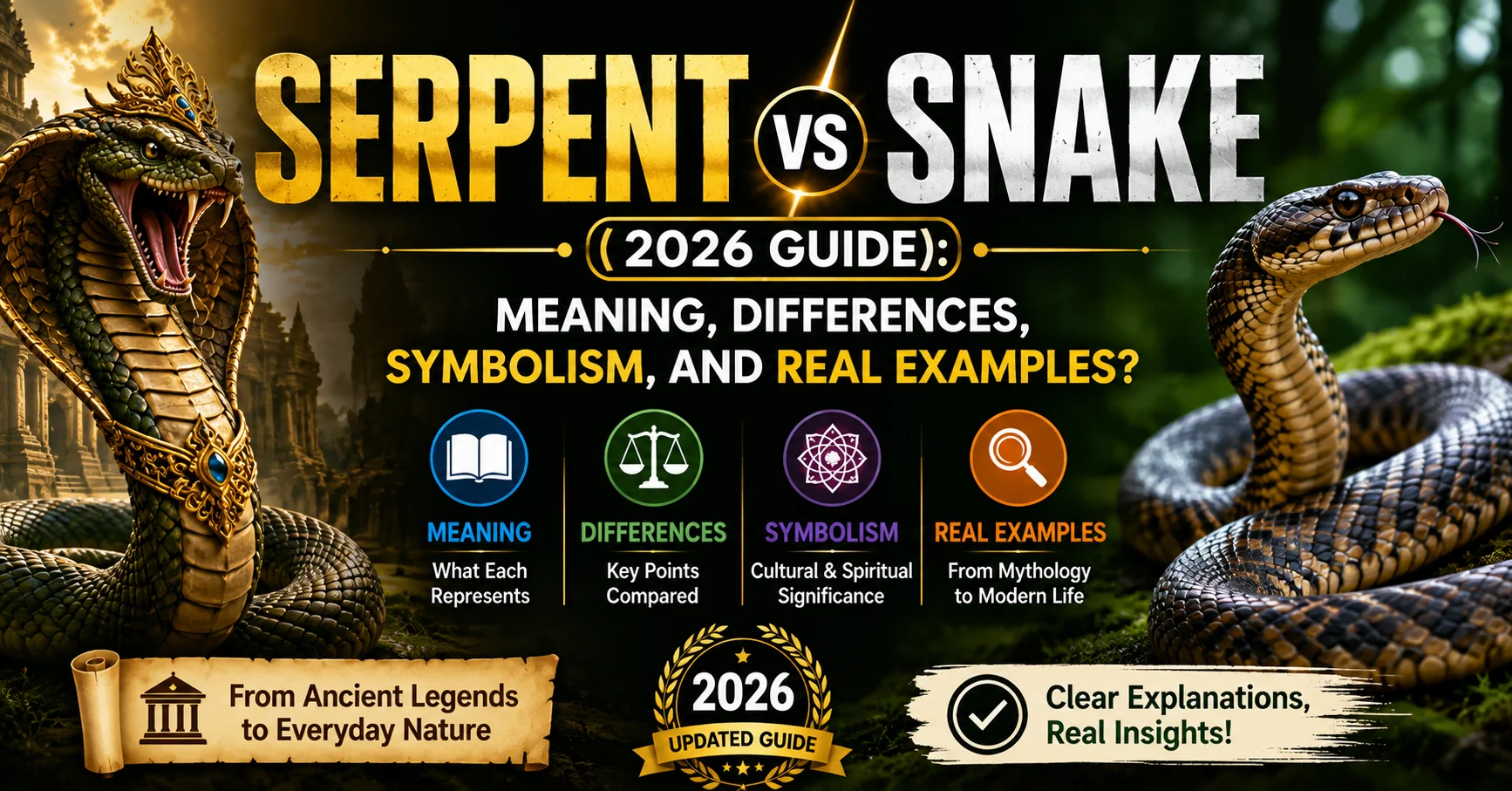
People often use the words serpent and snake as if they mean the same thing. In many cases, they do. Both words describe long, legless reptiles that move by slithering. Still, there are important differences in tone, meaning, and usage. That is why many readers search for Serpent vs Snake to understand which word fits best in writing, stories, religion, and everyday speech.
The word “snake” is common and direct. You hear it in science, nature shows, and daily talk. The word “serpent,” however, sounds older, more dramatic, and symbolic. It often appears in myths, religion, fantasy stories, and poetry. Even though both words can describe the same animal, the feeling behind each word is very different.
I first noticed this difference while reading adventure novels as a child. Writers used “snake” for normal animals in the jungle. But they used “serpent” when the creature seemed mysterious or dangerous. That small word choice completely changed the mood of the story.
In this guide, you will learn the full difference between Serpent vs Snake, including meanings, symbolism, examples, grammar tips, and common mistakes. By the end, you will know exactly when to use each word naturally and correctly.
What Is a Snake?
A snake is a reptile with a long body and no legs. Snakes belong to the suborder Serpentes. They live in forests, deserts, oceans, grasslands, and even near homes. Some snakes are harmless, while others are venomous.
The word “snake” is the standard modern term. Scientists, teachers, and most people use it in daily conversation. If you see one in your garden, you would likely say, “There is a snake outside,” not “There is a serpent outside.”
Snakes come in many sizes and colors. Some are tiny and thin. Others, like pythons, can grow very large. Most snakes eat small animals such as mice, frogs, birds, or insects. They use smell and vibration to sense danger and locate food.
Common Features of Snakes
| Feature | Description |
|---|---|
| Body Shape | Long and legless |
| Skin | Covered with scales |
| Movement | Slithers on the ground |
| Diet | Carnivorous |
| Habitat | Forests, deserts, oceans, and grasslands |
The word “snake” sounds simple, natural, and scientific. That is why it appears more often in textbooks and news articles.
What Is a Serpent?
A serpent is also a snake, but the word carries extra meaning. It usually sounds ancient, symbolic, dramatic, or mysterious. Writers often use “serpent” in stories, myths, legends, and religious texts.
For example, in fantasy books, a giant magical snake may be called a serpent. In religion, the serpent often symbolizes temptation, wisdom, evil, or hidden power. Because of these strong associations, the word feels more emotional than “snake.”
I remember hearing the word “serpent” most often in movies about ancient kingdoms and magical worlds. The moment the villain said, “Release the serpent,” the creature instantly sounded more terrifying.
Common Uses of “Serpent”
| Context | Example |
|---|---|
| Religion | The serpent in the Garden of Eden |
| Mythology | Sea serpents in legends |
| Fantasy Stories | Giant magical serpents |
| Poetry | Symbolic or dramatic writing |
The main thing to remember in Serpent vs Snake is that “serpent” usually adds emotion, mystery, or symbolism.
Serpent vs Snake: The Main Difference
The simplest difference is this:
- Snake = modern, scientific, everyday word
- Serpent = symbolic, literary, ancient-sounding word
Both can describe the same reptile. However, the tone changes depending on the word choice.
Quick Comparison Table
| Snake | Serpent |
|---|---|
| Everyday word | Literary word |
| Used in science | Used in myths and religion |
| Neutral tone | Dramatic tone |
| Common in daily speech | Common in stories and symbolism |
| Sounds modern | Sounds ancient |
When discussing Serpent vs Snake, tone matters more than biology.
Why Writers Prefer “Serpent” in Stories
Authors carefully choose words to create emotion. The word “serpent” sounds darker and more mysterious than “snake.” That is why fantasy and horror writers often prefer it.
Imagine these two sentences:
- A snake crawled through the cave.
- A serpent slithered through the cave.
The second sentence feels more dramatic. The creature seems larger, scarier, and more magical. The meaning is similar, but the mood changes completely.
Writers use “serpent” when they want readers to feel tension or mystery. They use “snake” when they simply describe an animal.
This difference becomes very important in novels, poems, and films. Small word choices can shape the reader’s imagination.
Religious Meaning of Serpents
Religion plays a huge role in the Serpent vs Snake discussion. In many religious texts, “serpent” symbolizes temptation, evil, wisdom, or transformation.
The most famous example appears in the biblical story of Adam and Eve. The serpent tempts Eve in the Garden of Eden. Because of this story, many people connect serpents with deception or danger.
However, not all serpent symbolism is negative. In some cultures, serpents represent healing, rebirth, and protection. Ancient symbols of medicine even include snakes wrapped around a staff.
Serpent Symbolism Across Cultures
| Culture/Religion | Meaning of Serpent |
|---|---|
| Christianity | Temptation or evil |
| Ancient Egypt | Power and protection |
| Greek Mythology | Healing and wisdom |
| Hindu Traditions | Energy and spirituality |
This shows that serpents can symbolize both danger and wisdom depending on the culture.
Scientific Use: Why Experts Say “Snake”
Scientists almost always use the word “snake.” The term is clearer and more precise. Biology books, wildlife studies, and documentaries rarely use “serpent.”
For example, a scientist may say:
- “This snake species lives in tropical forests.”
They would not normally say:
- “This serpent species lives in tropical forests.”
That sounds poetic instead of scientific.
The word “snake” is practical and direct. In formal education, it is usually the better choice.
Serpent vs Snake in Mythology
Mythology is full of serpents. Ancient cultures believed giant serpent creatures lived in oceans, caves, or hidden worlds. These beings often had magical powers.
Sea serpents were especially common in sailor stories. People feared enormous serpent-like monsters beneath the waves. Some myths described winged serpents, fire serpents, or immortal serpents.
Famous Mythological Serpents
| Mythological Creature | Origin |
|---|---|
| Jörmungandr | Norse mythology |
| Hydra | Greek mythology |
| Quetzalcoatl | Aztec mythology |
| Sea Serpents | European legends |
In myths, the word “snake” often feels too ordinary. “Serpent” creates a grander image.
Everyday Situations: Which Word Should You Use?
In normal conversation, use “snake.” It sounds natural and clear.
Examples:
- I saw a snake near the river.
- That snake is harmless.
- My friend owns a pet snake.
Using “serpent” in everyday speech may sound overly dramatic unless you are joking or telling a story.
Examples:
- The serpent guards the treasure.
- A giant serpent rose from the sea.
If you are unsure, “snake” is usually the safer option.
Common Idioms and Expressions
English includes many snake-related expressions. Most use “snake,” not “serpent.”
Popular Snake Idioms
| Idiom | Meaning |
|---|---|
| Snake in the grass | A dishonest person |
| Snake eyes | Rolling two ones in dice |
| Snake around | Move in a twisting way |
| Snake charmer | Someone who controls snakes |
The word “serpent” appears less often in idioms because it sounds more formal and literary.
Emotional Impact of Each Word
One reason the Serpent vs Snake topic matters is emotional impact. Words shape feelings.
The word “snake” usually feels:
- Neutral
- Natural
- Scientific
- Everyday
The word “serpent” usually feels:
- Dangerous
- Ancient
- Mystical
- Symbolic
This emotional difference explains why movies and novels often prefer “serpent” for villains or magical creatures.
I once watched a fantasy film where the hero fought a “shadow serpent.” If the movie had called it a “shadow snake,” the scene would have sounded much less exciting.
Are All Serpents Snakes?
Technically, yes. A serpent is usually a snake. But not every snake is called a serpent.
The word “serpent” is more about style and symbolism than species. A garden snake is rarely called a serpent. A giant mythical creature often is.
Think of it this way:
- All serpents are snake-like creatures.
- Not all snakes are dramatic enough to be called serpents.
This difference helps explain why both words still exist in English.
Serpent vs Snake in Literature
Classic literature uses “serpent” much more often than modern writing. Older authors loved dramatic language. The word added emotion and mystery.
Poets also prefer “serpent” because it sounds smoother and more elegant. It fits fantasy, horror, and religious themes better.
Modern writers still use “serpent” when creating a dark or magical mood. Meanwhile, “snake” remains common in realistic stories.
Literature Comparison
| Type of Writing | Preferred Word |
|---|---|
| Science Articles | Snake |
| Fantasy Novels | Serpent |
| Children’s Books | Snake |
| Religious Texts | Serpent |
| Wildlife Guides | Snake |
Understanding tone is the key to mastering Serpent vs Snake.
Common Mistakes People Make
Many learners believe the words have completely different meanings. That is not true. They describe the same kind of creature, but the style changes.
Mistake 1: Thinking “serpent” means a different species
It does not. It is mainly a stylistic choice.
Mistake 2: Using “serpent” in casual conversation
This can sound unnatural or overly dramatic.
Mistake 3: Using “snake” in symbolic writing
Sometimes “serpent” creates a stronger emotional effect.
Avoiding these mistakes will improve your writing and vocabulary.
Which Word Sounds More Dangerous?
Most people think “serpent” sounds more dangerous. The word has deep links to myths, evil creatures, and ancient stories.
“Snake” sounds more realistic. You may picture a normal reptile in nature.
“Serpent,” however, often creates images of:
- giant monsters
- magical creatures
- dark powers
- ancient legends
This emotional power explains why movie titles and fantasy novels often choose “serpent.”
Tips for Choosing the Right Word
Here are simple tips for choosing between the two words.
Use “snake” when:
- speaking casually
- discussing science
- teaching children
- describing real animals
Use “serpent” when:
- writing fantasy stories
- discussing religion
- creating drama
- using symbolism
Quick Decision Guide
| Situation | Best Word |
|---|---|
| Science class | Snake |
| Fantasy novel | Serpent |
| Pet store | Snake |
| Ancient myth | Serpent |
| Nature documentary | Snake |
This makes the Serpent vs Snake choice much easier.
FAQs About Serpent vs Snake
Is a serpent different from a snake?
No. A serpent is basically a snake. The difference is mostly tone and style.
Why does “serpent” sound scarier?
The word is often used in myths, religion, and fantasy stories. That gives it a darker feeling.
Which word is more common today?
“Snake” is much more common in everyday English.
Can I use “serpent” in normal conversation?
You can, but it may sound dramatic or old-fashioned.
Why do religious texts use “serpent”?
The word sounds symbolic and powerful, which fits religious storytelling.
Final Thoughts on Serpent vs Snake
Understanding Serpent vs Snake is easier once you focus on tone instead of biology. Both words describe the same kind of reptile, but they create different feelings.
“Snake” is modern, simple, and practical. It works best in science, education, and everyday speech. “Serpent,” however, feels ancient, mysterious, and symbolic. That makes it perfect for myths, religion, fantasy, and dramatic storytelling.
I personally enjoy how a single word can change the mood of a sentence. Calling a creature a “snake” feels realistic. Calling it a “serpent” instantly adds mystery and emotion. That small difference shows the true power of language.
The next time you write a story, read a myth, or watch a fantasy movie, notice which word appears. You will quickly see how writers use “Serpent vs Snake” to shape emotion, meaning, and atmosphere.
