


Introduction
English grammar can feel confusing sometimes, especially when words look similar. One common confusion is Simpler or More Simple. Many learners wonder which one is correct and when to use it. The good news is that this topic is very easy once you understand the basic rule behind comparative adjectives.
In modern English, both forms exist, but they are not always equal. Some situations prefer “simpler,” while others allow “more simple.” This guide will make everything clear in a very simple way. You will learn real examples, rules, mistakes, and everyday usage tips.
By the end, you will fully understand Simpler or More Simple and feel confident using it in writing, speaking, and exams without confusion.
What Does Simpler or More Simple Mean?
The phrase Simpler or More Simple is used when comparing two things based on ease. It shows that one thing is easier than another. Both expressions come from the adjective “simple,” which means not difficult or easy to understand.
When we say something is “simpler,” we mean it has fewer steps or less complexity. When we say “more simple,” we are also comparing ease, but in a longer form. In most cases, both forms can be understood easily, but modern English prefers one more than the other.
Understanding Simpler or More Simple helps you write better sentences in school, work, and daily communication. It also improves your grammar confidence.
Basic Grammar Rule for Comparative Adjectives
Comparative adjectives are used to compare two things. For short adjectives, we usually add “-er.” For longer adjectives, we use “more.”
For example:
- small → smaller
- beautiful → more beautiful
Now comes the confusion with Simpler or More Simple. The word “simple” is a short adjective, so it normally follows the “-er” rule.
That means “simpler” is usually the correct form in modern grammar. However, “more simple” is still used in some writing styles or older English.
So, when learning Simpler or More Simple, remember this basic rule: shorter adjectives prefer “-er,” unless style or emphasis changes the structure.
Which One Is Correct in Modern English?
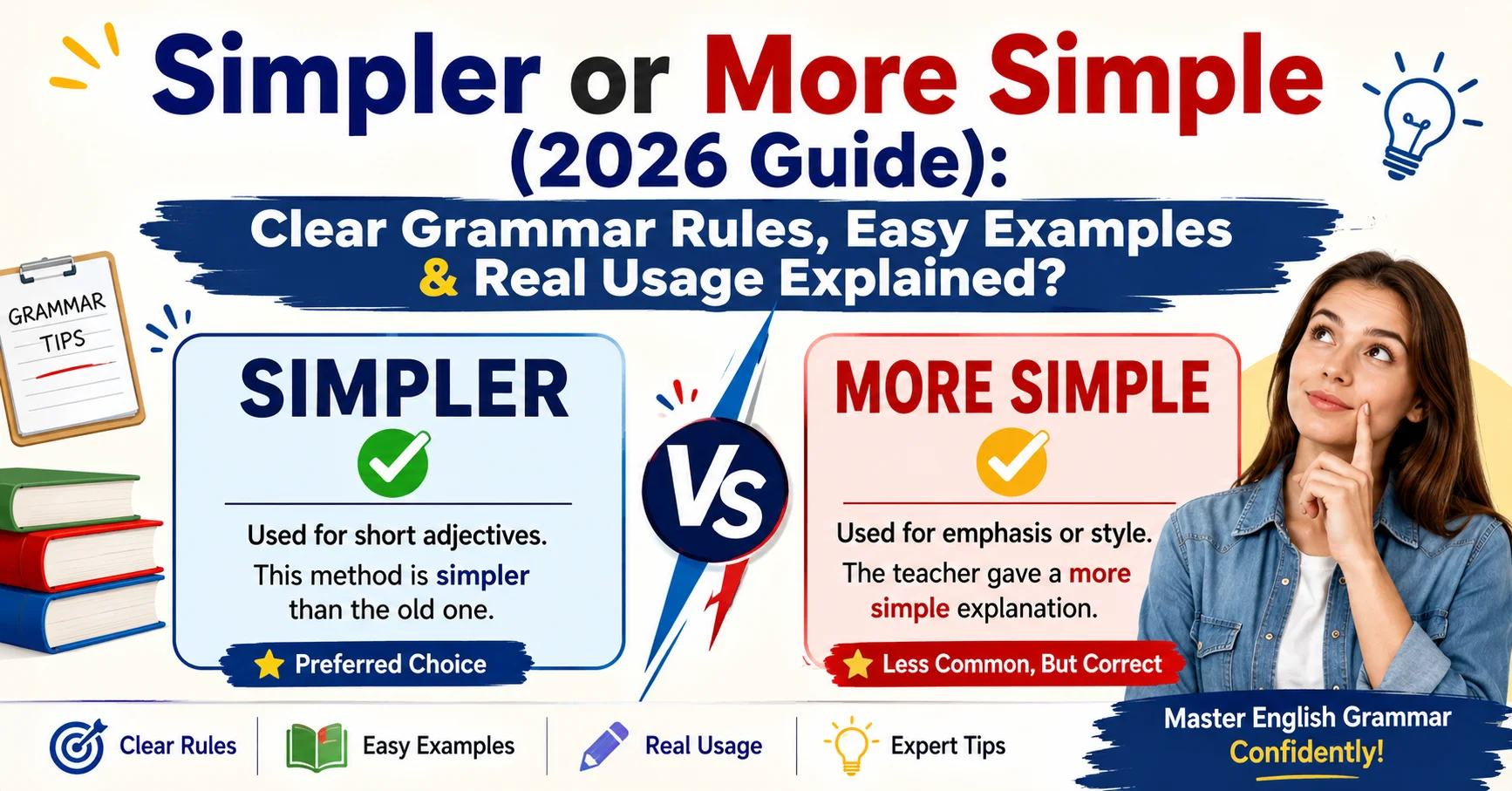
In today’s English, simpler is the preferred and more natural choice. Most native speakers use it in conversation, writing, and professional communication.
“More simple” is not wrong, but it is less common. It sometimes appears in formal writing or when someone wants to add extra emphasis.
So, if you are unsure, choose Simpler or More Simple, but prefer “simpler” for clear and natural English.
Here is a simple rule:
- Use “simpler” in most cases
- Use “more simple” only when needed for emphasis or style
This makes your writing sound more modern and fluent.
When “Simpler” Is Better to Use
The word “simpler” is more natural in everyday English. It is short, clean, and easy to understand. Most teachers, writers, and speakers prefer it.
When talking about tasks, ideas, or instructions, “simpler” is almost always the right choice. For example, saying “This method is simpler” sounds smooth and correct.
Understanding Simpler or More Simple helps you avoid awkward sentences. If you want your English to sound natural, stick with “simpler” most of the time.
In exams or formal writing, using “simpler” also shows better grammar control. It makes your sentence direct and professional without extra words.
When “More Simple” Is Used in English
Although less common, more simple still exists in English. It is usually used when the speaker wants to emphasize clarity or contrast.
For example, someone might say “a more simple explanation” to highlight that something is extremely easy compared to another option.
Writers sometimes use Simpler or More Simple this way to avoid repetition or to create a softer tone in writing.
However, in daily speech, “more simple” can sound slightly unnatural. That is why most people prefer “simpler.”
So remember, “more simple” is correct but rare, and it is often used for style rather than necessity.
Key Differences Between Simpler and More Simple
Here is a clear table that shows the difference between the two forms:
Table 1: Simpler vs More Simple Comparison
| Feature | Simpler | More Simple |
|---|---|---|
| Usage frequency | Very common | Less common |
| Natural sound | Yes | Slightly formal |
| Grammar preference | Preferred | Acceptable but rare |
| Example | This is simpler | This is more simple |
This table helps you clearly understand Simpler or More Simple in one glance. In most cases, “simpler” is the better choice for smooth communication.
Real-Life Examples for Better Understanding
Let’s look at real examples to understand Simpler or More Simple in action. These examples will help you see how people actually use these words in daily life.
- This math problem is simpler than the last one.
- A more simple explanation helped the students understand.
- Life becomes simpler when you stay organized.
- The teacher gave a more simple version of the lesson.
Both forms are understandable, but “simpler” feels more natural in most sentences. These examples show how context changes usage.
Table 2: Example Sentences
| Situation | Simpler Sentence | More Simple Sentence |
|---|---|---|
| School | This is simpler to solve | This is more simple to solve |
| Work | We need a simpler plan | We need a more simple plan |
| Daily life | Life is simpler now | Life is more simple now |
These examples clearly show how Simpler or More Simple works in real communication.
Common Mistakes Learners Make
Many learners confuse Simpler or More Simple because both look correct. One common mistake is using “more simple” in every sentence.
Another mistake is thinking both are always interchangeable. While both are grammatically correct, usage depends on style and flow.
Some learners also mix “simple more” or incorrect word order, which is wrong in English grammar.
To avoid mistakes, always check if the adjective is short. If it is, prefer “-er” form like “simpler.”
Understanding Simpler or More Simple helps you avoid these errors and improves your writing accuracy over time.
Formal vs Informal Usage
In informal English, people usually say “simpler” because it is short and natural. In conversations, texting, or casual writing, it is the most common choice.
In formal writing, both Simpler or More Simple may appear, but “simpler” still dominates. Academic and business writing prefer shorter comparative forms because they are clear and efficient.
“More simple” might be used in speeches or creative writing to slow down tone or add emphasis.
So, in both formal and informal settings, “simpler” is the safer and stronger option.
Usage in Writing, SEO, and Content Creation
Writers and bloggers often prefer “simpler” because it improves readability. Search engines also favor clear and natural language.
Using Simpler or More Simple correctly in content helps improve user experience. Readers understand content faster when sentences are short and clear.
SEO writing also focuses on clarity. That is why “simpler” appears more often in high-quality content.
If you are writing articles, blogs, or essays, choose “simpler” for better engagement and better ranking potential.
Tips to Remember the Difference Easily
Here are some easy tips to remember Simpler or More Simple without confusion:
- Short adjectives usually take “-er” endings
- “Simpler” is more natural in modern English
- “More simple” is used only for emphasis
- When unsure, always choose “simpler”
- Read sentences aloud to check natural flow
Table 3: Quick Rule Summary
| Rule Type | Best Choice |
|---|---|
| Everyday speech | Simpler |
| Formal writing | Simpler |
| Emphasis style | More simple |
| General use | Simpler |
These simple rules will help you master Simpler or More Simple quickly and easily.
Conclusion
Understanding grammar doesn’t have to be difficult. The difference between Simpler or More Simple is actually very small, but important for natural English.
In most situations, “simpler” is the best and most correct choice. It sounds smooth, modern, and easy to understand. “More simple” is still correct, but it is less common and mostly used for emphasis.
If you remember one thing, let it be this: choose clarity over complexity. That is the heart of good English writing.
Now that you understand Simpler or More Simple, you can use both confidently and improve your communication skills in daily life, studies, and professional writing.
FAQs
1. Is “simpler” correct English?
Yes, “simpler” is correct and widely used in modern English.
2. Is “more simple” wrong?
No, it is not wrong, but it is less common.
3. Which is better, simpler or more simple?
“Simpler” is better for most situations.
4. Can I use both in writing?
Yes, but “simpler” sounds more natural and preferred.
5. Why do both forms exist?
Both exist because English allows different styles of comparison depending on emphasis and structure.
