

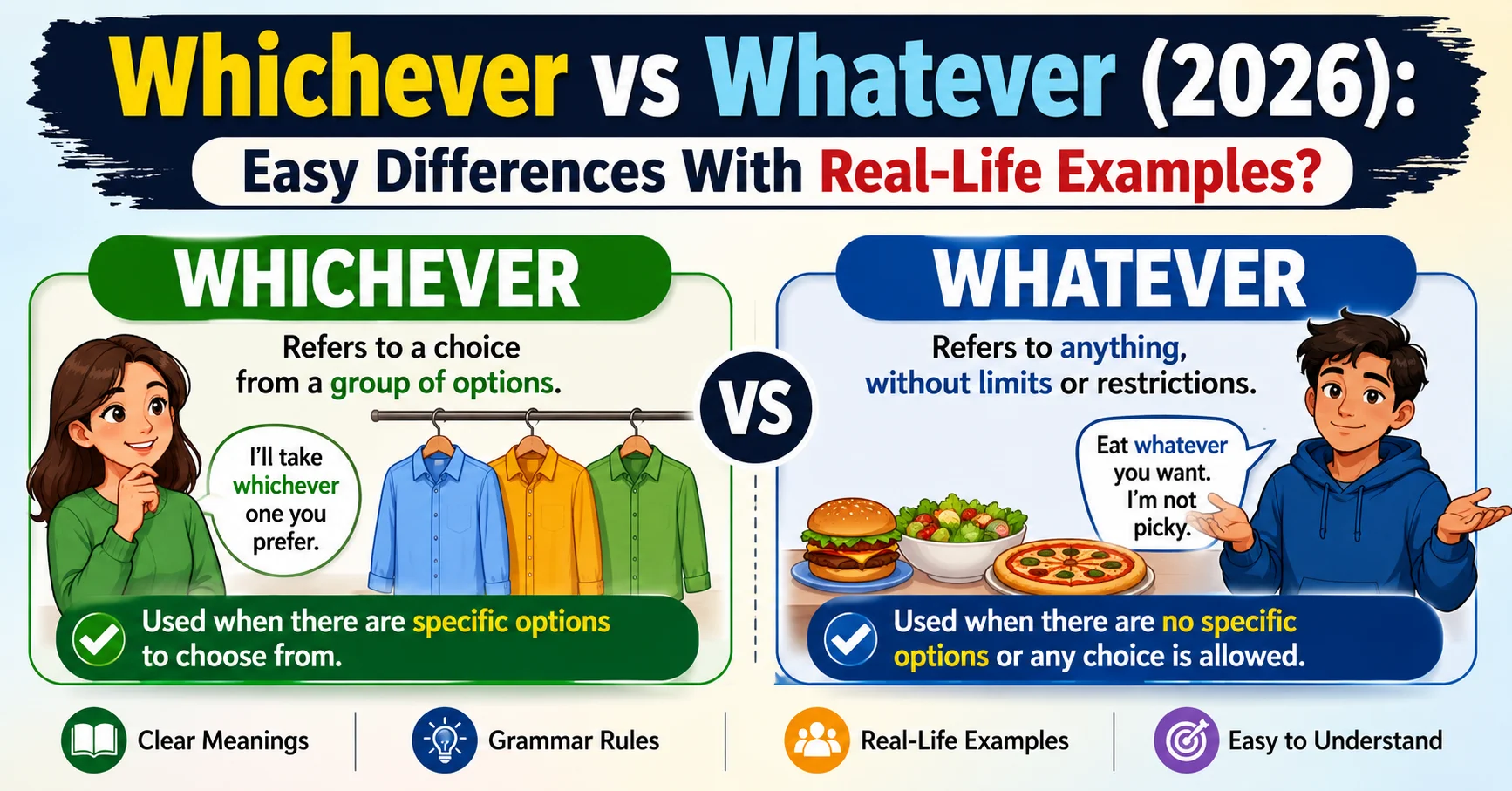
Words like “whichever” and “whatever” may look similar, but they do not mean the same thing. Many English learners, students, and even native speakers mix them up in daily writing and speech. That is why understanding Whichever vs Whatever is important if you want clearer communication.
Both words are flexible. Both are common in conversations. Yet each one has a different purpose. One talks about choices. The other talks about anything without limits. A small mistake can change the meaning of a sentence completely.
Think about these examples:
- “Choose whichever shirt you like.”
- “Do whatever makes you happy.”
They sound close, but the feeling is different. The first sentence offers options. The second gives total freedom.
In this guide, you will learn the difference in the easiest way possible. We will cover meanings, grammar, examples, mistakes, comparisons, and real-life usage. You will also see tables that make everything simple to understand. By the end, you will never confuse Whichever vs Whatever again.
Why People Confuse Whichever and Whatever
Many people struggle with Whichever vs Whatever because both words end with “ever.” In English, words with “ever” often sound open-ended or flexible. That creates confusion.
Another reason is that both words can work as pronouns or determiners. They can also appear in casual conversations. Because of this, learners often think they are interchangeable. But they are not.
Here is the simplest explanation:
- Whichever = used when choices exist.
- Whatever = used when there are no limits or restrictions.
Imagine you are ordering food at a restaurant. If the waiter says, “Pick whichever dessert you want,” there is a menu with options. If someone says, “Do whatever you want,” there may be no specific options at all.
I once heard a student say, “Whatever color do you prefer?” It sounded strange because the speaker was asking about choices. The correct word should have been “whichever.”
Small details matter in English. Understanding them makes your writing sound more natural and professional.
What Does “Whichever” Mean?
“Whichever” refers to a choice between options. It means “any one from a group.”
You use it when several things are available, and the person can choose among them.
Simple Examples
- Take whichever seat is empty.
- Buy whichever phone fits your budget.
- Choose whichever path feels safer.
In all these examples, choices already exist.
Key Idea
The word “whichever” always points to selection. Even if the number of options is large, there is still a group to choose from.
Table: Understanding “Whichever”
| Sentence | Meaning |
|---|---|
| Pick whichever cake you like | Choose one cake from many |
| Wear whichever shoes are comfortable | Select from available shoes |
| Use whichever method works best | Choose one method |
When learning Whichever vs Whatever, remember this simple rule:
“Whichever” works with choices already on the table.
This word is very common in schools, workplaces, and instructions because people often need to pick from options.
What Does “Whatever” Mean?
“Whatever” means anything at all. It shows no restriction, no limit, or sometimes no preference.
Unlike “whichever,” it does not focus on selecting from known choices.
Simple Examples
- Eat whatever you want.
- Say whatever is true.
- Watch whatever makes you laugh.
These examples show freedom without a fixed list.
Different Feelings of “Whatever”
The word can also show emotion. Sometimes it sounds careless or dismissive.
For example:
- “Whatever.”
This can sound rude or uninterested.
Tone matters a lot with this word.
Table: Understanding “Whatever”
| Sentence | Meaning |
|---|---|
| Do whatever helps you grow | Anything is acceptable |
| Buy whatever you need | No restriction |
| Believe whatever feels right | Any idea or option |
When comparing Whichever vs Whatever, think of “whatever” as unlimited freedom rather than choosing from set options.
The Core Difference Between Whichever and Whatever
The easiest way to understand Whichever vs Whatever is through one simple idea:
| Word | Main Purpose |
|---|---|
| Whichever | Choosing from options |
| Whatever | Anything without limits |
This difference may seem small, but it changes sentence meaning.
Example Comparison
Sentence 1:
“Choose whichever movie you like.”
This means there are several movies available.
Sentence 2:
“Watch whatever you like.”
This means any movie, show, or content is acceptable.
The first sentence suggests a limited group. The second feels open and unlimited.
I personally learned this difference while editing blog articles years ago. Writers often used “whatever” in places where “whichever” sounded more natural. After correcting hundreds of examples, the pattern became very clear.
Quick Memory Trick
- Whichever = Which one
- Whatever = Anything
That shortcut helps many beginners instantly.
Grammar Rules for Whichever
Grammar becomes easier when you see patterns. “Whichever” usually acts as a pronoun or determiner.
As a Pronoun
- Whichever arrives first wins.
- Whichever costs less is fine.
The word stands alone as the subject.
As a Determiner
- Whichever book you choose is okay.
- Whichever route saves time works for me.
Here, it describes a noun.
Common Grammar Pattern
| Pattern | Example |
|---|---|
| Whichever + noun | Whichever dress fits |
| Whichever + subject + verb | Whichever works is fine |
When discussing Whichever vs Whatever, grammar patterns help you avoid awkward sentences.
One important detail: “whichever” usually implies known possibilities. Even if not spoken directly, options are understood.
Grammar Rules for Whatever
“Whatever” is also flexible in grammar. It can function in different ways depending on the sentence.
As a Pronoun
- Whatever happens, stay calm.
- Whatever works is okay.
As a Determiner
- Whatever reason you have, explain it clearly.
- Whatever choice you make, support it fully.
As an Expression
Sometimes people simply say:
- “Whatever.”
This informal usage can sound annoyed, bored, or dismissive.
Table: Grammar Uses of “Whatever”
| Usage Type | Example |
|---|---|
| Pronoun | Whatever helps is welcome |
| Determiner | Whatever plan you choose |
| Expression | “Whatever, I don’t care” |
In Whichever vs Whatever, emotional tone is another major difference. “Whichever” sounds neutral. “Whatever” can sometimes sound emotional or careless.
Common Mistakes People Make
Many English learners use these words incorrectly because the meanings overlap slightly.
Here are the most common mistakes.
Mistake 1: Using “Whatever” for Choices
❌ Whatever color do you want?
✅ Whichever color do you want?
Why? Because colors are specific choices.
Mistake 2: Using “Whichever” Without Options
❌ Whichever makes you happy in life.
✅ Whatever makes you happy in life.
There are no clear options here. The sentence is unlimited.
Mistake 3: Overusing “Whatever”
Some people use “whatever” too casually in conversations. It may sound disrespectful.
For example:
- Parent: “Please clean your room.”
- Child: “Whatever.”
That tone sounds rude in many cultures.
Table: Correct vs Incorrect Usage
| Incorrect | Correct |
|---|---|
| Whatever shirt fits you | Whichever shirt fits you |
| Whichever happens tomorrow | Whatever happens tomorrow |
| Pick whatever option | Pick whichever option |
Understanding these errors improves both speaking and writing.
Real-Life Examples of Whichever vs Whatever
Real situations make grammar easier to remember. Let’s explore how these words appear in daily life.
At School
- Use whichever calculator the teacher approves.
- Study whatever helps you remember better.
At Work
- Pick whichever meeting time works best.
- Wear whatever feels professional.
In Relationships
- Choose whichever restaurant you prefer.
- Talk about whatever is bothering you.
While Traveling
- Take whichever train arrives first.
- Eat whatever looks delicious.
Notice the pattern again:
- “Whichever” points to specific choices.
- “Whatever” gives open freedom.
This is the heart of Whichever vs Whatever.
How Native Speakers Use These Words
Native speakers often use these words naturally without thinking about grammar rules. Still, patterns exist.
“Whichever” Sounds More Structured
People use it in:
- Instructions
- Business settings
- Professional communication
- Decision-making
Example:
- “Submit whichever document is complete.”
“Whatever” Sounds More Casual
People use it in:
- Conversations
- Emotional responses
- Relaxed situations
Example:
- “Watch whatever you want tonight.”
I have noticed that movies and TV shows use “whatever” much more frequently because it sounds natural and relaxed. “Whichever” appears more often in formal speech or organized situations.
That is a useful clue when deciding between Whichever vs Whatever.
Whichever vs Whatever in Questions
Questions are one of the biggest trouble areas.
Questions with “Whichever”
These involve selecting from options.
Examples:
- Whichever dress should I wear?
- Whichever route is faster?
Questions with “Whatever”
These ask openly without fixed choices.
Examples:
- Whatever happened yesterday?
- Whatever do you mean?
Sometimes “whatever” adds emotion or surprise in questions.
Table: Question Differences
| Type | Example | Purpose |
|---|---|---|
| Whichever question | Whichever laptop is cheaper? | Choosing from options |
| Whatever question | Whatever are they doing? | Open or emotional question |
This distinction helps conversations sound more natural.
Formal vs Informal Usage
Another useful way to understand Whichever vs Whatever is by tone and formality.
| Word | Tone |
|---|---|
| Whichever | More formal and precise |
| Whatever | More casual and emotional |
Formal Examples
- Choose whichever proposal meets company standards.
- Use whichever method follows policy.
Informal Examples
- Do whatever you want.
- Eat whatever sounds good.
In professional writing, “whichever” often sounds cleaner because it feels more exact.
“Whatever” works better in relaxed conversations and storytelling.
Tips to Remember the Difference Easily
If you still mix them up, these tricks can help.
Tip 1: Look for Choices
Ask yourself:
Are there clear options?
If yes, use “whichever.”
Tip 2: Think About Limits
If the meaning is broad and unlimited, use “whatever.”
Tip 3: Replace the Word
Try replacing:
- “Whichever” → “which one”
- “Whatever” → “anything”
If the sentence still makes sense, you likely chose correctly.
Practice Examples
| Sentence | Best Choice |
|---|---|
| ______ book you pick is fine | Whichever |
| ______ happens next, stay calm | Whatever |
| Take ______ seat is open | Whichever |
| Eat ______ you like | Whatever |
These small exercises build confidence quickly.
Why Correct Usage Matters in Writing
Some people think small grammar choices do not matter. But they do.
Using the wrong word can make writing confusing or awkward. In business emails, school essays, or blog content, clarity matters.
Imagine reading this sentence:
- “Use whatever option saves time.”
It sounds slightly off because “option” already suggests choices. “Whichever” would fit better.
Correct word choice improves:
- Readability
- Professionalism
- Trust
- Communication
As online content grows in 2026, readers expect simple and accurate language. Search engines also favor content that is clear and helpful.
That is why mastering small grammar topics like Whichever vs Whatever can improve your writing more than you think.
Simple Practice Exercise
Try choosing the correct word yourself.
Fill in the blanks
- Choose ______ phone has the best camera.
- Say ______ you truly believe.
- Wear ______ outfit feels comfortable.
- ______ happens tomorrow, stay positive.
- Pick ______ dessert you want.
Answers
| Question | Correct Answer |
|---|---|
| 1 | whichever |
| 2 | whatever |
| 3 | whichever |
| 4 | whatever |
| 5 | whichever |
Practice helps these patterns become automatic.
FAQs About Whichever vs Whatever
1. Is “whichever” more formal than “whatever”?
Yes. “Whichever” often sounds more structured and professional. “Whatever” feels more casual and conversational.
2. Can “whatever” sound rude?
Yes. Tone matters. Saying only “whatever” may sound dismissive or disrespectful in conversations.
3. Is “whichever” always about choices?
Almost always. It usually refers to selecting from known or understood options.
4. Can I replace “whichever” with “whatever”?
Not always. Doing so can change the meaning of the sentence completely.
5. Which word is more common in daily speech?
“Whatever” appears more often in casual conversations because it sounds relaxed and flexible.
Conclusion
Understanding Whichever vs Whatever is easier once you know the core difference.
- Whichever is about choosing from options.
- Whatever means anything without limits.
That simple rule solves most confusion.
These words may look alike, but they create very different meanings. Using the correct one makes your speech clearer and your writing stronger. It also helps you sound more natural in both professional and casual situations.
The best way to remember the difference is through practice. Read examples. Notice how native speakers use these words. Try creating your own sentences every day.
Language becomes easier when you focus on meaning instead of memorizing rules. Once you understand the feeling behind each word, choosing correctly becomes natural.
Next time you write or speak, pause for one second and ask yourself:
“Am I choosing from options, or talking about anything at all?”
That single question will help you master Whichever vs Whatever with confidence in 2026 and beyond.
