

Have you ever typed “what happen?” in a text and then wondered if it sounded wrong? Many English learners make this mistake every day. Even native speakers sometimes confuse “what happen” and “what happened” while chatting online. The good news is that the rule is actually simple once you understand it.
In this guide, you will learn the real difference between “What Happen or What Happened” in very easy English. We will explain when to use each phrase, why one sounds natural, and how grammar changes the meaning of a sentence. You will also see real-life examples, texting situations, and common mistakes people make.
By the end of this article, you will feel more confident using these phrases in conversations, school writing, social media posts, and daily communication.
Why People Confuse “What Happen or What Happened”
English grammar can feel tricky because small word changes completely change a sentence. The confusion between “What Happen or What Happened” usually comes from verb tense.
Many people hear phrases quickly in movies, songs, or TikTok videos. Because spoken English is fast, “what happened” may sound like “what happen.” This causes learners to copy the wrong form.
Another reason is texting culture. On social media, users often skip grammar rules to type faster. You may see messages like:
- “bro what happen”
- “what happen yesterday”
- “what happen to you”
These phrases appear online often, but they are not grammatically correct in standard English.
The correct phrase in most situations is “what happened.” The word “happened” is the past tense of “happen.” Since you are usually asking about something that already took place, the past tense is needed.
The Simple Difference Between “Happen” and “Happened”
The easiest way to understand this topic is by learning verb tense.
| Word | Verb Tense | Meaning |
|---|---|---|
| Happen | Present tense | Something happening now or regularly |
| Happened | Past tense | Something already took place |
Here is a simple example:
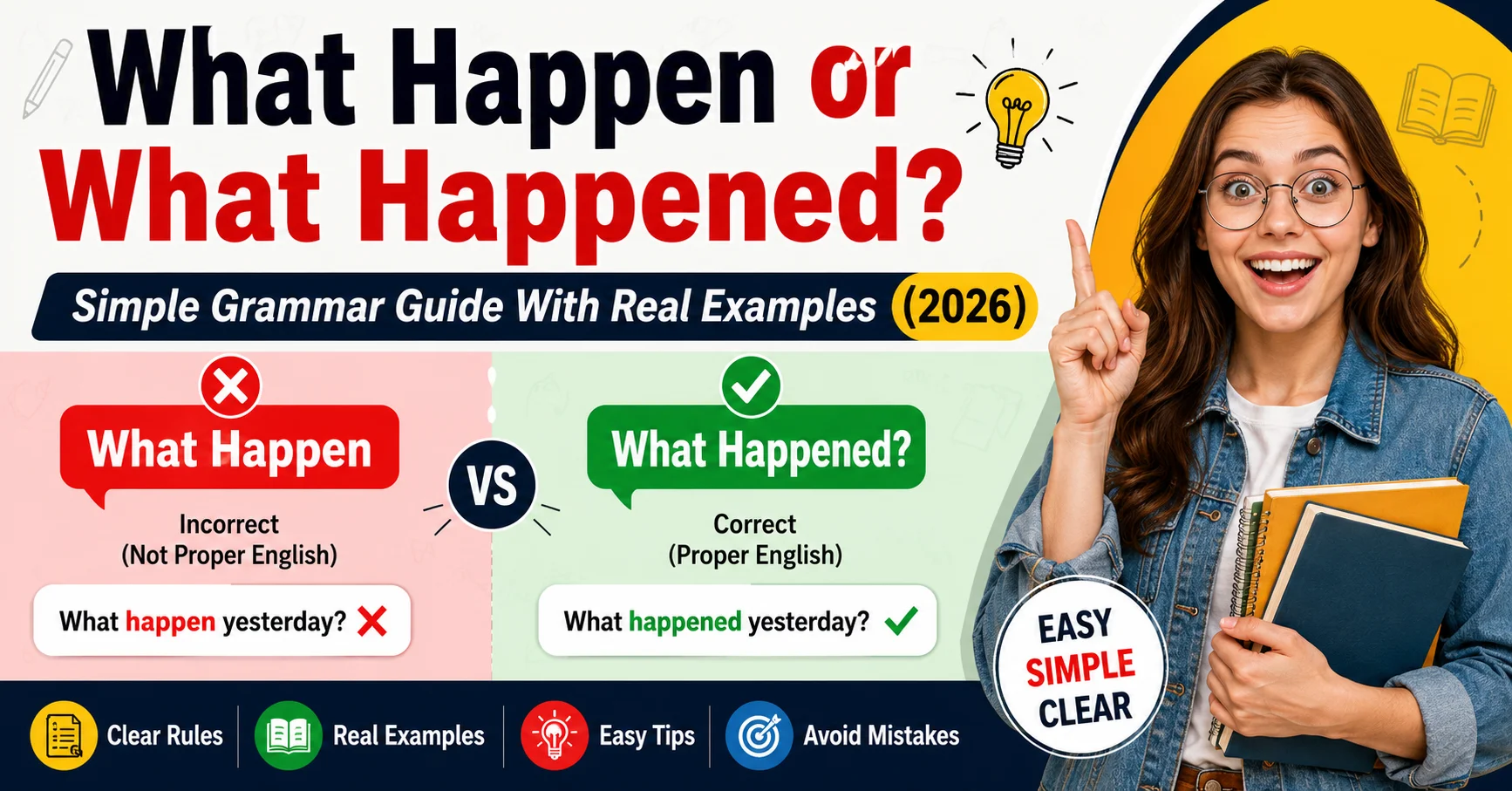
- “What happened at school today?” ✅
- “What happen at school today?” ❌
The first sentence is correct because the event already finished.
Now look at another example:
- “What happens if I press this button?” ✅
Here, “happens” works because the sentence talks about a general or future situation.
Understanding tense is the key to mastering “What Happen or What Happened.”
Is “What Happen” Ever Correct?
This is a very common question. In normal English grammar, “what happen” alone is usually incorrect. However, there are a few situations where “happen” can still be correct.
For example:
- “What will happen next?”
- “What could happen tomorrow?”
- “What might happen if it rains?”
In these examples, helper verbs like “will,” “could,” and “might” make the sentence correct.
Without a helping verb, “what happen” sounds incomplete.
Here is a quick comparison table:
| Sentence | Correct or Wrong |
|---|---|
| What happen? | ❌ Wrong |
| What happened? | ✅ Correct |
| What will happen? | ✅ Correct |
| What might happen? | ✅ Correct |
So, if you are asking about the past, use “what happened.”
Why “What Happened” Sounds More Natural
Native English speakers almost always say “what happened” when asking about a completed event. This phrase feels natural because English normally uses past tense for finished actions.
Imagine your friend suddenly looks upset. You ask:
“What happened?”
This question instantly sounds polite, caring, and grammatically correct.
If you say “what happen,” it sounds broken or unfinished. People may still understand you, but it does not sound fluent.
In daily conversation, “what happened” is one of the most common English questions. You hear it in:
- schools
- movies
- offices
- hospitals
- social media
- family conversations
Because it is used everywhere, learning the correct form is important.
Common Situations Where People Say “What Happened”
The phrase “what happened” works in many real-life situations. Here are some common examples.
After Hearing Bad News
If someone says they lost their phone, you may ask:
“What happened?”
When Someone Looks Sad
You notice your friend crying. You ask:
“What happened?”
During an Accident
You see a broken window or damaged car. Someone asks:
“What happened here?”
In Text Messages
Friends often text:
- “Hey, what happened?”
- “What happened last night?”
- “Tell me what happened.”
This phrase is useful because it works in both formal and casual conversations.
Real Examples of Correct and Incorrect Usage
Learning through examples makes grammar easier. Study these carefully.
| Incorrect Sentence | Correct Sentence |
|---|---|
| What happen yesterday? | What happened yesterday? |
| What happen to your hand? | What happened to your hand? |
| What happen at the party? | What happened at the party? |
| What happen now? | What is happening now? |
| What happen tomorrow? | What will happen tomorrow? |
Notice how tense changes the sentence structure.
The word “happen” needs helper words in many situations. Meanwhile, “happened” works naturally for past events.
What Happens in Present Tense?
Sometimes learners confuse “what happen” with “what happens.” These are very different.
“What happens” is present tense and grammatically correct.
Examples:
- “What happens if you mix blue and yellow?”
- “What happens during winter?”
- “What happens after graduation?”
These sentences describe regular events, facts, or future possibilities.
Here is a helpful table:
| Phrase | Use |
|---|---|
| What happened | Past event |
| What happens | Regular/general event |
| What will happen | Future event |
This small change completely changes meaning.
Why Social Media Creates Grammar Confusion
Social media has changed how people write English online. Many users type quickly and ignore grammar rules. This is one reason why “what happen” appears often on TikTok, Instagram, Snapchat, and Facebook.
Internet slang also affects grammar habits. People shorten sentences to save time or sound casual.
For example:
- “what happen bro”
- “what happen lol”
- “what happen there”
These may appear trendy online, but they are still grammatically incorrect in formal English.
If you are writing:
- school assignments
- blog posts
- professional emails
- job applications
- academic work
then using proper grammar matters a lot.
Correct grammar improves clarity and credibility.
Easy Grammar Trick to Remember the Difference
Here is a simple trick that helps many learners.
Ask yourself:
“Did the event already finish?”
If YES → use “happened.”
Examples:
- “What happened at dinner?”
- “What happened this morning?”
If NO or it is about the future → use helper verbs.
Examples:
- “What will happen next?”
- “What could happen?”
This trick makes the “What Happen or What Happened” problem much easier.
Mistakes English Learners Commonly Make
Many learners repeat the same grammar mistakes because they translate directly from their native language.
Here are common errors:
Using Present Tense for Past Events
Wrong:
“What happen yesterday?”
Correct:
“What happened yesterday?”
Forgetting Helping Verbs
Wrong:
“What happen tomorrow?”
Correct:
“What will happen tomorrow?”
Mixing Tenses
Wrong:
“What happened tomorrow?”
Correct:
“What will happen tomorrow?”
Learning English becomes easier when you focus on time words like:
- yesterday
- last night
- tomorrow
- now
- today
These clues help you choose the correct tense.
How Native Speakers Actually Use These Phrases
Real spoken English is often shorter and faster than textbook English. Native speakers sometimes use incomplete grammar casually, especially online.
For example, someone may jokingly say:
“Bro, what happen?”
This can appear in memes or humorous conversations. However, this style is informal slang and should not be copied in professional communication.
In standard English, native speakers still prefer:
“What happened?”
If your goal is fluent and correct English, focus on proper grammar first. Later, you can understand slang naturally through experience.
Formal vs Casual English Usage
Different situations require different levels of grammar accuracy.
| Situation | Best Phrase |
|---|---|
| School essay | What happened |
| Business email | What happened |
| Casual texting | What happened |
| Social media slang | What happen (sometimes seen) |
| Professional interview | What happened |
Even in casual texting, “what happened” still looks cleaner and smarter.
Good grammar creates a better impression.
How to Sound More Fluent in Conversation
If you want your English to sound natural, practice complete questions instead of short broken phrases.
Instead of:
“What happen?”
Try:
- “What happened?”
- “What happened here?”
- “What happened to you?”
- “Can you tell me what happened?”
These sound smoother and more confident.
One helpful habit is listening to native speakers in movies, podcasts, or YouTube videos. Pay attention to how they ask questions about past events.
You will hear “what happened” very often.
Texting Examples Using “What Happened”
Here are some realistic texting examples you can copy.
| Situation | Correct Text |
|---|---|
| Friend looks upset | “Hey, what happened?” |
| Missed a party | “What happened last night?” |
| Sports injury | “OMG, what happened to your leg?” |
| Broken phone | “What happened to your screen?” |
| Family drama | “Tell me what happened.” |
These examples sound natural and friendly.
How Teachers Explain This Grammar Rule
Teachers usually explain “What Happen or What Happened” using verb tense rules.
The base verb is:
“Happen”
Past tense adds “-ed”:
“Happened”
When asking about something completed, English normally uses past tense.
Example:
- “The accident happened yesterday.”
- “What happened yesterday?”
This grammar pattern appears with many verbs.
| Base Verb | Past Tense |
|---|---|
| walk | walked |
| jump | jumped |
| happen | happened |
| call | called |
Learning this pattern improves overall English grammar.
Why Correct Grammar Builds Confidence
Using correct grammar does more than improve writing. It also improves confidence.
When you know the difference between “What Happen or What Happened,” you can:
- speak more clearly
- write better messages
- avoid embarrassment
- sound more fluent
- communicate professionally
Small grammar improvements create big communication benefits over time.
Even native speakers appreciate clear and correct English.
Best Ways to Practice This Grammar
Practice is the fastest way to improve.
Here are simple practice ideas:
Read English Daily
Notice how books and articles use “happened.”
Watch English Videos
Listen carefully to conversations.
Write Example Sentences
Create your own examples using:
- yesterday
- last week
- this morning
Correct Social Media Habits
Instead of typing “what happen,” practice typing “what happened.”
These small changes build strong grammar habits.
FAQs About “What Happen or What Happened”
1. Is “What happen?” grammatically correct?
No. “What happen?” is usually incorrect in standard English. The correct phrase is “What happened?”
2. Why do people say “what happen” online?
People often ignore grammar rules on social media or while texting quickly. It is informal slang, not proper grammar.
3. When should I use “what happened”?
Use “what happened” when asking about something that already took place in the past.
Example:
“What happened at school today?”
4. Can “happen” ever be correct?
Yes. It works with helper verbs.
Examples:
- “What will happen?”
- “What could happen?”
5. What is the difference between “what happens” and “what happened”?
“What happens” talks about regular or future situations. “What happened” talks about past events.
Conclusion
Understanding “What Happen or What Happened” is much easier once you learn basic verb tense rules. In most situations, “what happened” is the correct phrase because it refers to something that already took place.
While you may see “what happen” online, especially on social media, it is usually informal slang or incorrect grammar. Using the proper form helps you sound clearer, smarter, and more fluent in English.
The best way to improve is through daily practice. Read English often, listen to native speakers, and pay attention to how questions are formed. Over time, choosing the correct phrase will become automatic.
Now the next time someone says “what happen,” you will know exactly why “what happened” is the better choice.
