

Words matter. A small change in a sentence can change how it feels. One common example is “Proud for You” vs “Proud of You.” Many English learners, writers, and even native speakers pause when choosing between these two phrases. They look similar. They sound close. But they are not always used in the same way.
If you have ever typed a message, written a social media caption, or congratulated someone and wondered which phrase sounds right, you are not alone. I have seen students, business writers, and everyday speakers make this mistake often. I also remember helping a friend write a graduation card. She wrote, “I’m proud for you.” It sounded kind, but something felt off. That moment became a great grammar lesson.
In this guide, we will fully explore “Proud for You” vs “Proud of You.” You will learn which phrase is correct, when each one works, and how native speakers use them in real life. By the end, you will feel confident using both expressions naturally in conversations, writing, and everyday English.
Why People Confuse “Proud for You” vs “Proud of You”
English has many phrases that look almost the same. That is one reason people struggle with “Proud for You” vs “Proud of You.” Both phrases use the word proud, and both seem positive. Because of that, learners often think they mean exactly the same thing.
But grammar and emotion work together in English. The preposition after an adjective can change the meaning. Words like happy for you, excited for you, and sad for you are common. So many people assume proud for you follows the same pattern.
That is understandable. In fact, I have seen this mistake in student essays, workplace emails, and online posts. It happens because people follow patterns they already know. The good news is this mistake is easy to fix once you understand the meaning behind each phrase.
The Quick Answer: Which Phrase Is Correct?
If you want the short answer in the “Proud for You” vs “Proud of You” debate, here it is:
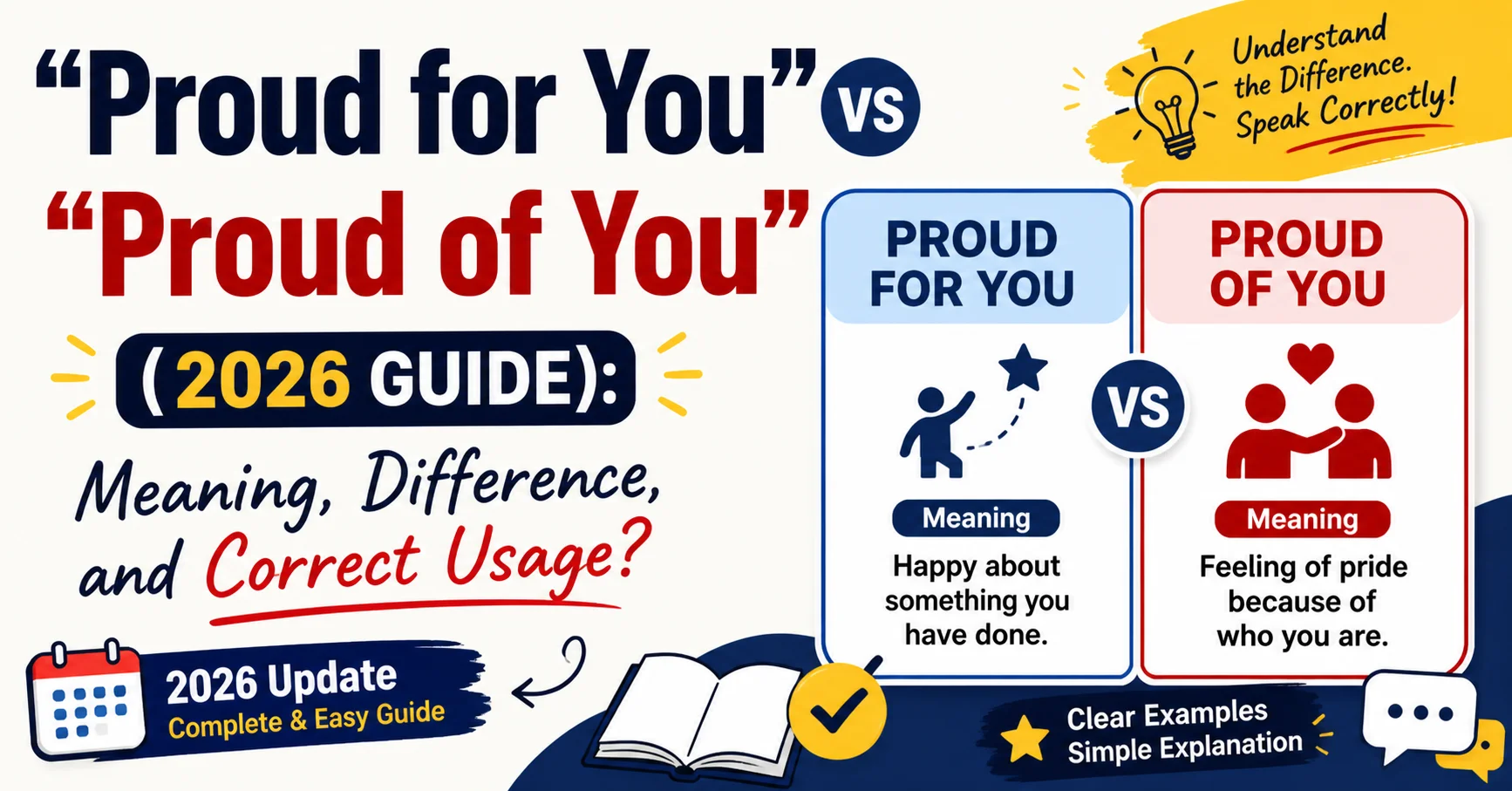
“Proud of you” is the standard and most natural phrase in English.
Native speakers use it often. You hear it from parents, teachers, coaches, friends, and partners.
“Proud for you” is less common. It is not always wrong, but it is much rarer and sounds unusual in many situations.
Here is a simple comparison:
| Phrase | Common? | Natural? | Best Use |
|---|---|---|---|
| Proud of you | Very common | Yes | Personal achievement |
| Proud for you | Rare | Sometimes | Emotional support |
| So proud of you | Very common | Yes | Strong praise |
| Truly proud for you | Rare | Sometimes | Empathy |
So if you are unsure, choose “proud of you.” It will sound correct almost every time.
What Does “Proud of You” Really Mean?
When someone says “I’m proud of you,” they are showing admiration. They are recognizing your hard work, growth, or success.
This phrase often carries warmth and emotional connection. It can come from someone older, someone experienced, or someone who cares deeply about your journey.
For example:
- I’m proud of you for finishing school.
- We’re proud of you for trying again.
- Your parents are proud of you.
The phrase connects directly to your actions. It means the speaker respects what you did.
I remember telling my younger cousin, “I’m proud of you,” after he gave his first school speech. He was nervous, but he finished strong. That phrase gave him confidence.
That is why “Proud for You” vs “Proud of You” matters. One phrase celebrates your effort more directly.
What Does “Proud for You” Mean?
Now let’s talk about the less common phrase.
“Proud for you” usually means you feel happiness on someone’s behalf. It shows emotional support.
Instead of focusing on what they did, it focuses more on how you feel for them.
Examples:
- I’m proud for you after hearing your story.
- I’m proud for you because you finally got your dream job.
- I’m truly proud for you and your progress.
This phrase can sound warm, but it is not the standard choice in everyday English.
Some speakers use it to show shared emotion. Others use it because it feels similar to happy for you.
Still, in most cases, “proud of you” sounds stronger and more natural.
Grammar Behind “Proud for You” vs “Proud of You”
Grammar helps explain why one phrase feels more natural.
The adjective proud usually pairs with of when talking about a person or achievement.
Examples:
- Proud of your work
- Proud of your growth
- Proud of your success
That pattern is deeply rooted in English.
Here is a grammar breakdown:
| Structure | Example | Meaning |
|---|---|---|
| Proud of + person | Proud of you | Admiration |
| Proud of + achievement | Proud of your work | Recognition |
| Proud for + person | Proud for you | Shared emotion |
| Proud of + effort | Proud of your progress | Respect |
So in the “Proud for You” vs “Proud of You” comparison, grammar strongly supports of as the natural choice.
When to Use “Proud of You”
Use “proud of you” when someone earns success, grows, improves, or overcomes a challenge.
This phrase works in personal, academic, and professional settings.
Examples include:
- Graduation
- New job
- Recovery journey
- Learning a skill
- Winning a competition
For example:
A mother may say, “I’m proud of you for being brave.”
A boss may say, “We are proud of you for leading the project.”
A friend may say, “I’m proud of you for not giving up.”
I often tell students this phrase feels powerful because it recognizes effort, not just results.
That emotional depth is why “Proud for You” vs “Proud of You” matters in communication.
When “Proud for You” Might Work
Although uncommon, “proud for you” can work in special situations.
It often appears when someone wants to show empathy or emotional support.
For example:
Your friend shares that they finally bought their first home. You may say:
“I’m proud for you. I know how hard this was.”
In this case, you are feeling joy for them.
This use is closer to happy for you.
Still, many native speakers would naturally say:
“I’m so proud of you.”
That is why “proud for you” can sound slightly unusual.
Here is a quick guide:
| Situation | Better Phrase |
|---|---|
| Graduation | Proud of you |
| Job promotion | Proud of you |
| Emotional life victory | Proud of you |
| Deep empathy | Proud for you (possible) |
So while for is possible, of is usually safer.
Native Speakers and Real-Life Usage
When studying “Proud for You” vs “Proud of You,” real usage matters.
Native English speakers overwhelmingly use “proud of you.”
You hear it in:
- Movies
- TV shows
- School speeches
- Family conversations
- Social media posts
Examples:
“Son, I’m proud of you.”
“We’re all proud of you.”
“Your team is proud of you.”
You rarely hear “proud for you” in casual conversation.
I once reviewed hundreds of student writing samples. Almost every time “proud for you” appeared, it came from learners copying the pattern of happy for you.
That shows why natural language exposure is important.
If your goal is fluent, natural English, “proud of you” should be your first choice.
Emotional Difference Between Both Phrases
The emotional difference in “Proud for You” vs “Proud of You” is subtle but important.
Proud of you feels personal. It says:
I see your effort.
I respect what you achieved.
I recognize your growth.
Proud for you feels more supportive. It says:
I’m happy about what happened to you.
I feel joy on your behalf.
Here is a comparison:
| Phrase | Emotional Tone |
|---|---|
| Proud of you | Admiration |
| Proud for you | Shared happiness |
| So proud of you | Deep emotional praise |
| Really proud for you | Emotional support |
This emotional difference can shape how your message feels.
Common Mistakes People Make
Many learners make small mistakes with these expressions.
Here are common examples:
Mistake 1:
I am proud for your success.
Better:
I am proud of your success.
Mistake 2:
My parents are proud for me.
Better:
My parents are proud of me.
Mistake 3:
She feels proud for her son.
Better:
She feels proud of her son.
These mistakes happen because English prepositions can be tricky.
I always tell learners to memorize proud of as a fixed expression.
That one habit can improve your writing fast.
How to Use These Phrases in Writing
If you write emails, cards, blogs, or captions, choosing the right phrase matters.
In professional or personal writing, “proud of you” sounds polished and natural.
Examples:
Social Media
So proud of you for chasing your dreams.
Graduation Card
We are proud of you and everything you achieved.
Workplace Message
Our team is proud of you for your leadership.
Using “proud for you” in formal writing may confuse readers.
So if you want clear communication, choose of.
This is one of the easiest grammar choices you can master.
Similar Phrases That People Mix Up
The confusion in “Proud for You” vs “Proud of You” happens because English uses different prepositions with emotions.
Here are similar examples:
| Emotion | Correct Phrase |
|---|---|
| Happy | Happy for you |
| Excited | Excited for you |
| Proud | Proud of you |
| Inspired | Inspired by you |
Notice how proud follows a different pattern.
This is why direct translation often causes mistakes.
English does not always follow one rule.
Learning phrase patterns helps more than memorizing grammar alone.
Tips to Remember the Correct Phrase
If you want to remember the difference forever, use this simple trick:
Achievement = Proud of you
Emotion = Happy for you
That makes it easier.
Another memory tip:
If someone did something, use of.
If you feel joy for them, you might use for, but of still sounds more natural.
I teach students to say this aloud:
“I’m proud of your effort.”
Repeat it five times. It sticks quickly.
Language becomes easier when patterns feel natural.
How English Learners Can Practice This
Practice helps these phrases become automatic.
Try these steps:
Step 1
Write three sentences using proud of you.
Step 2
Say them out loud.
Step 3
Use them in real messages.
Examples:
- I’m proud of you for trying.
- I’m proud of you for growing.
- I’m proud of you for believing in yourself.
This active practice builds confidence.
I have seen learners improve in one week using this method.
That is the power of real usage.
FAQs About “Proud for You” vs “Proud of You”
1. Is “proud for you” grammatically wrong?
Not always. It is understandable. But it is uncommon. Native speakers usually prefer “proud of you.”
2. Which phrase sounds more natural?
“Proud of you” sounds more natural in everyday English.
3. Can I say “I’m proud for you”?
Yes, but it may sound unusual. Many listeners expect “I’m proud of you.”
4. Do native speakers use “proud for you”?
Some do, but it is rare. “Proud of you” is much more common.
5. Which phrase should English learners use?
English learners should usually choose “proud of you.” It is safer and more natural.
6. Can both phrases show support?
Yes. Both can show kindness. But “proud of you” feels stronger and clearer.
Final Thoughts on “Proud for You” vs “Proud of You”
So what is the final answer in the “Proud for You” vs “Proud of You” discussion?
In almost every situation, “proud of you” is the correct and natural choice. It is the phrase native speakers use when celebrating effort, growth, and success.
“Proud for you” is not always wrong. It can express shared happiness or empathy. But it sounds less common and may feel unusual in everyday English.
If you want clear, natural communication, remember this:
When someone earns something, say “I’m proud of you.”
That one phrase can carry deep emotion, encouragement, and respect.
Now I’d love to hear from you—have you ever used the wrong phrase before? Which one sounds more natural to you now?
