

Have you ever stopped while writing and wondered whether it should be “much needed” or “much-needed”? You are not alone. Many people get confused about this small grammar detail. It appears in emails, blog posts, school papers, and even news articles. The good news is that the rule is actually simple once you understand it.
The difference mostly depends on where the phrase appears in a sentence. One version uses a hyphen, while the other does not. That tiny punctuation mark changes the grammar role of the phrase. Learning the correct form can make your writing look cleaner, smarter, and more professional.
In this guide, you will learn the real difference between much needed or much-needed, when to use each one, common mistakes, grammar rules, easy examples, and practical writing tips. You will also see tables and real-life sentences that make everything easier to understand.
Why People Get Confused About “Much Needed or Much-Needed”
English grammar often creates confusion because many words change depending on sentence structure. The phrase much needed or much-needed is a perfect example. Both forms are technically correct, but they are not always used in the same way.
People usually become confused because they see both versions online. One article may write “much needed vacation,” while another writes “vacation was much needed.” Both sentences are right. The grammar changes because the phrase works differently in each sentence.
The hyphen matters because it joins two words together to describe a noun. Without the hyphen, the words stay separate and act differently in the sentence. Once you understand that simple rule, choosing the correct version becomes easy.
Another reason for confusion is casual writing. Social media posts and text messages often ignore grammar rules. That makes it harder for readers to learn the proper form. Understanding the real rule helps you avoid mistakes in professional writing.
The Simple Rule Behind Much Needed or Much-Needed
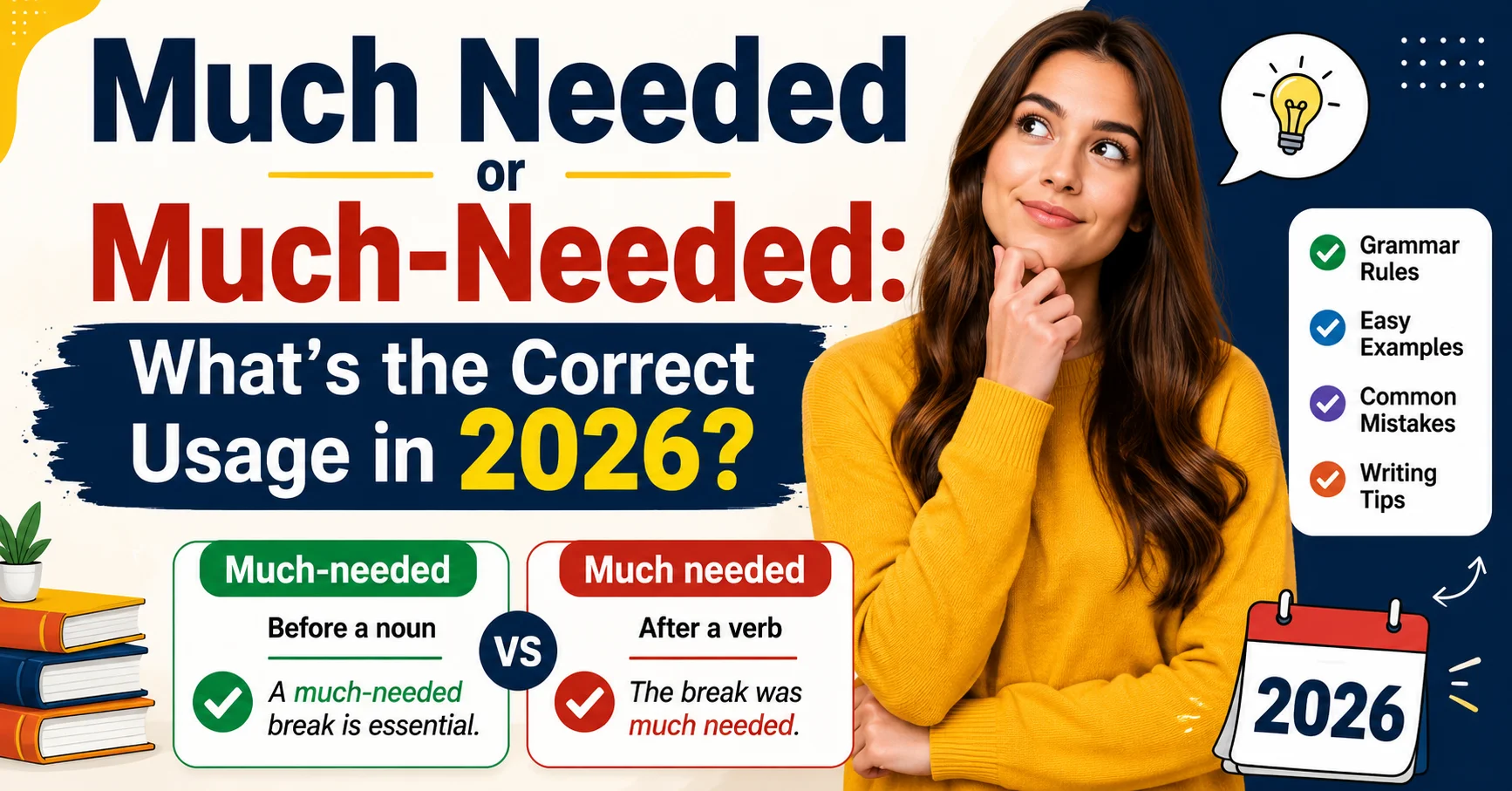
The easiest way to remember the difference is this:
| Usage | Correct Form | Example |
|---|---|---|
| Before a noun | Much-needed | We took a much-needed break. |
| After a verb | Much needed | The break was much needed. |
This rule works in almost every situation.
When the phrase comes before a noun and describes it directly, use the hyphenated version. This is called a compound adjective. The hyphen helps readers understand that the words work together.
When the phrase appears after the noun or after a linking verb like “was,” “is,” or “seemed,” do not use a hyphen.
This grammar pattern appears in many English phrases, not just this one. For example:
- Well-known actor
- High-quality product
- Long-term plan
These compound adjectives also use hyphens before nouns.
What Does “Much-Needed” Mean?
The phrase much-needed means something is greatly required, wanted, or helpful. It often describes relief, improvement, or support that someone strongly needs.
For example:
- A much-needed vacation
- Much-needed rain
- Much-needed advice
In each case, the thing being described is important or necessary.
People often use this phrase when talking about stress, exhaustion, money, health, or positive change. It creates a strong emotional meaning because it suggests that the need was serious or long overdue.
Here are some everyday examples:
| Sentence | Meaning |
|---|---|
| We got much-needed sleep. | The sleep was badly needed. |
| The town received much-needed rain. | The rain was important and helpful. |
| She gave me much-needed support. | The support helped a lot. |
The phrase sounds natural in both formal and casual writing. That is why it appears frequently in blogs, newspapers, books, and conversations.
When to Use “Much-Needed” With a Hyphen
Use much-needed with a hyphen when it comes before a noun.
This happens because the phrase becomes a compound adjective. The hyphen joins the words together so they act like one description.
Here are clear examples:
- We enjoyed a much-needed vacation.
- The company received much-needed funding.
- She took a much-needed break.
- They made a much-needed change.
In each sentence, the phrase directly describes a noun:
- Vacation
- Funding
- Break
- Change
Without the hyphen, readers may pause or misunderstand the sentence flow. The hyphen improves clarity and readability.
Common Compound Adjective Examples
| Compound Adjective | Example Sentence |
|---|---|
| Much-needed | A much-needed holiday |
| Well-known | A well-known singer |
| High-quality | High-quality shoes |
| Long-term | A long-term investment |
This pattern is one of the most common grammar rules in English writing.
When to Use “Much Needed” Without a Hyphen
Use much needed without a hyphen when the phrase comes after the noun or after a linking verb.
Examples include:
- The vacation was much needed.
- Her advice was much needed.
- The support seemed much needed.
- That rest is much needed.
In these examples, the phrase no longer works as a compound adjective before a noun. Instead, it acts as part of the sentence description after the verb.
This is called a predicate adjective structure.
Many people accidentally add a hyphen in these cases, but standard grammar rules say the hyphen is unnecessary.
Here is a quick comparison:
| Incorrect | Correct |
|---|---|
| The vacation was much-needed. | The vacation was much needed. |
| Her help is much-needed. | Her help is much needed. |
Removing the hyphen makes the sentence grammatically correct.
Easy Trick to Remember the Difference
A simple trick can help you remember the correct form every time.
Ask yourself this question:
Does the phrase come directly before a noun?
- If YES → use a hyphen.
- If NO → do not use a hyphen.
Examples:
| Sentence | Hyphen Needed? |
|---|---|
| A much-needed nap | Yes |
| The nap was much needed | No |
| Much-needed repairs | Yes |
| The repairs were much needed | No |
This quick test works almost instantly while writing.
Many professional editors use this same approach when checking grammar.
Common Mistakes People Make
Many grammar mistakes happen because writers use the same form in every sentence. That creates errors.
Here are the most common mistakes with much needed or much-needed.
Mistake 1: Using a Hyphen Everywhere
Incorrect:
- The vacation was much-needed.
Correct:
- The vacation was much needed.
The phrase comes after the verb, so no hyphen is required.
Mistake 2: Forgetting the Hyphen Before a Noun
Incorrect:
- We needed a much needed break.
Correct:
- We needed a much-needed break.
The phrase describes the noun “break,” so the hyphen is necessary.
Mistake 3: Inconsistent Writing
Some writers switch between both forms randomly in the same article. Consistency matters because it improves readability and professionalism.
Why Hyphens Matter in English Grammar
Hyphens may seem tiny, but they play an important role in writing clarity.
A hyphen connects words that work together as a single idea. Without the hyphen, readers may misunderstand the meaning or sentence structure.
Consider these examples:
| Without Hyphen | With Hyphen |
|---|---|
| Small business owner | Small-business owner |
| Fast growing company | Fast-growing company |
| Much needed help | Much-needed help |
The hyphen tells readers that the words belong together.
Professional writers, journalists, and editors pay close attention to this rule because clear writing improves communication.
Good grammar also builds trust with readers. Clean writing feels more reliable and polished.
Real-Life Examples of Much Needed or Much-Needed
Seeing real examples makes grammar easier to remember. Here are practical examples from daily life.
Workplace Examples
- The team needed a much-needed day off.
- After the meeting, the clarification was much needed.
- Employees appreciated the much-needed raise.
Health Examples
- She got much-needed sleep after the long trip.
- The rest was much needed after surgery.
- He received much-needed medical care.
School Examples
- Students enjoyed a much-needed holiday.
- Extra tutoring was much needed.
- The class needed a much-needed break.
Weather Examples
- Farmers welcomed the much-needed rain.
- The rain was much needed after weeks of heat.
These examples show how natural the phrase sounds in normal communication.
Differences Between American and British English
The rule for much needed or much-needed stays mostly the same in both American and British English.
However, some publications follow slightly different style guides. Certain British publications sometimes use fewer hyphens overall, while American style guides often prefer clearer compound adjectives.
Still, most grammar experts agree on the main rule:
- Before noun → hyphen
- After verb → no hyphen
That consistency makes the phrase easy to use worldwide.
Major writing styles like AP Style and Chicago Style generally support this approach.
How Professional Writers Use the Phrase
Professional writers use this phrase often because it adds emotional meaning. It helps emphasize relief, importance, or improvement.
News articles commonly use expressions like:
- Much-needed reforms
- Much-needed funding
- Much-needed rain
Blog writers use it to create relatable content:
- A much-needed self-care day
- Much-needed family time
- Much-needed mental health break
The phrase feels warm, natural, and emotionally relatable. That is why it appears so often in modern writing.
Good writers also avoid overusing it. Repeating the phrase too many times can weaken its impact.
Better Alternatives to “Much Needed”
Sometimes you may want different wording to avoid repetition.
Here are strong alternatives:
| Alternative Phrase | Example |
|---|---|
| Highly necessary | Highly necessary changes |
| Greatly needed | Greatly needed support |
| Essential | Essential repairs |
| Important | Important improvements |
| Long overdue | Long-overdue action |
| Valuable | Valuable assistance |
Using alternatives keeps your writing fresh and natural.
Still, much-needed remains one of the clearest and most common choices in English writing.
SEO Writing and Grammar Accuracy
Correct grammar helps more than school writing. It also improves SEO and online readability.
Search engines reward helpful and trustworthy content. Readers also stay longer on pages that are easy to understand.
When articles contain grammar mistakes, users may lose trust quickly.
Using phrases like much needed or much-needed correctly can help your content appear more professional. Small details matter in digital writing.
Good grammar improves:
- User experience
- Reader trust
- Content quality
- Professional appearance
- Search engine credibility
That is why skilled content writers pay close attention to punctuation and sentence structure.
How Teachers Explain This Rule
Teachers often explain this rule using adjective placement.
If two words work together before a noun, they usually need a hyphen.
Examples:
- Full-time job
- Last-minute decision
- Much-needed support
If the words appear after the noun, the hyphen usually disappears.
Examples:
- The job is full time.
- The decision was last minute.
- The support was much needed.
This pattern helps students understand compound adjectives more easily.
Once learners see multiple examples, the rule becomes much simpler.
Quick Comparison Table for Easy Learning
| Sentence Type | Correct Form | Example |
|---|---|---|
| Before noun | Much-needed | A much-needed vacation |
| After verb | Much needed | The vacation was much needed |
| Compound adjective | Hyphen required | Much-needed repairs |
| Predicate adjective | No hyphen | The repairs were much needed |
This table summarizes the entire grammar rule in seconds.
Tips to Avoid Grammar Errors
Here are easy writing tips that help avoid mistakes.
Read the Sentence Out Loud
Hearing the sentence often helps identify awkward punctuation.
Look for the Noun
If the phrase directly describes a noun, use the hyphen.
Keep Sentences Simple
Short sentences reduce grammar mistakes and improve readability.
Use Grammar Tools Carefully
Grammar apps help, but they are not always perfect. Double-check suggestions manually.
Practice With Examples
The more examples you read, the easier the rule becomes.
Good grammar improves naturally through repetition and reading.
FAQs About Much Needed or Much-Needed
Is “much-needed” grammatically correct?
Yes. “Much-needed” is correct when it comes before a noun. Example: “We needed a much-needed break.”
Is “much needed” also correct?
Yes. “Much needed” is correct without a hyphen when it appears after a verb. Example: “The break was much needed.”
Why does the hyphen matter?
The hyphen joins two words into a compound adjective. It improves sentence clarity and readability.
Can I use both versions in the same article?
Yes, if grammar requires it. Use the correct form depending on sentence structure.
Which form is more common?
Both forms are common. The correct choice depends on placement in the sentence.
Final Thoughts on Much Needed or Much-Needed
Understanding the difference between much needed or much-needed is easier than many people think. The grammar rule is simple once you know how sentence structure works.
Use much-needed before a noun:
- A much-needed vacation
Use much needed after a verb:
- The vacation was much needed
That small hyphen changes the role of the phrase in the sentence. Learning this rule helps improve writing clarity, professionalism, and confidence.
Good grammar is not about sounding perfect. It is about helping readers understand your message easily. Clear writing builds trust and keeps communication smooth.
The next time you pause while writing much needed or much-needed, you will know exactly which version to choose.
